



AI isn’t slowing down, and neither is Google. Just when you think Gemini has hit its stride, the company drops another round of updates, this time making the AI smarter, more global, and easier to use in everyday life
The company just rolled out a fresh set of Gemini-powered updates that touch three of its core products: the Gemini app, Search’s AI Mode, and its research assistant, NotebookLM.
Audio finally comes to Gemini
To be honest, I never noticed this, but for the longest time, Gemini didn't have audio support. But that changes now as Google has announced audio support for the Gemini app. As expected, this means you can upload audio files directly for transcription, analysis, or even AI-driven conversations. Free users can upload clips up to 10 minutes long, capped at five prompts a day, while Pro and Ultra subscribers get up to three hours per file. Plus, the app now accepts multiple file types—even ZIP archives—making it easier to throw different resources into one session.
Until now, users could only interact through text or images. Voice-based chat was possible with Gemini Live for a minute, but you couldn’t feed in audio files. It was only NotebookLM, Google's research-oriented tool, which supported audio uploads, but bringing it into the main Gemini app opens it up to more casual users. Think students recording lectures, journalists transcribing interviews, or anyone trying to turn a voice memo into searchable AI dialogue.
 Emmanuel Oyedeji
Search goes global with new languages
Google is also expanding its recently announced AI Mode in Search by adding five widely spoken languages: Hindi, Indonesian, Japanese, Korean, and Brazilian Portuguese. Powered by Gemini 2.5, this move extends AI-driven search to millions more people across Asia and Latin America.
For those unfamiliar, AI Mode in Search is like an enhanced version of Google search that lets you ask complex, conversational questions and get synthesised answers instead of just a list of links. It can pull together information from across the web, explain it in plain language, and even suggest follow-up questions to keep the exploration going. Think of it like having Gemini itself in your search bar and having the chatbot give you answers purely based on search results, rather than just one-off summaries
It’s a smart move considering rivals like OpenAI and Anthropic have been aggressively pushing their global reach, too. By lowering the language barrier, Google makes its Search AI more inclusive and competitive in fast-growing markets.
NotebookLM becomes a content generator
Lastly, NotebookLM, Google’s research-oriented tool, is evolving beyond analysis. It started off like a slightly AI-powered learning platform, but now, it looks like Google wants to have a bit more 'power'. The platform can now generate structured reports in over 80 languages, with formats ranging from study guides and briefing notes to blog posts, quizzes, and flashcards.
Users can adjust the tone, style, and structure, arguably making it far more useful than before. This shift makes NotebookLM less of a passive research aid and more of a full-fledged content creation tool.
 Ogbonda Chivumnovu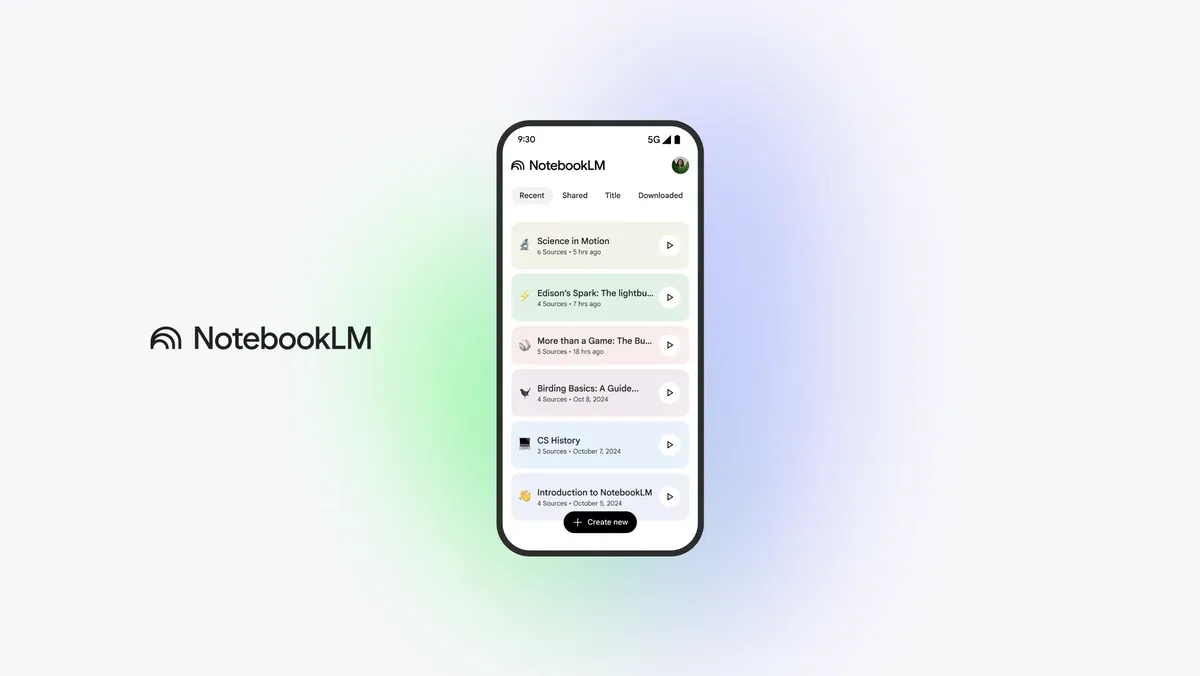
Conclusion
These announcements cap off a busy few months for Google’s AI division. In August, Gemini added memory to recall user preferences, while free users gained access to Workspace’s video generator, Vids. September saw Photos upgraded with Veo 3, letting free users create short videos from stills.
Now, with audio, language expansion, and smarter reports, it's clear that Google has bigger plans for Gemini than for it to just be a little chatbot you go to when you need help. With time, we'll see how these updates pan out.


