



Google wants to make it easier for you to curate your news diet, though whether that’s a blessing or a bubble is up for debate.
The search giant has begun rolling out a feature called "Preferred Sources" in the U.S. and India for English-language searches, giving you the ability to choose which news sites and blogs you want to see in your Top Stories. Once you switch it on, you’ll get more content from the outlets you trust right at the top of your search results.
When you search for a topic, a little star icon will appear next to the Top Stories section. And when you tap it, you can start adding sources by searching for them directly.
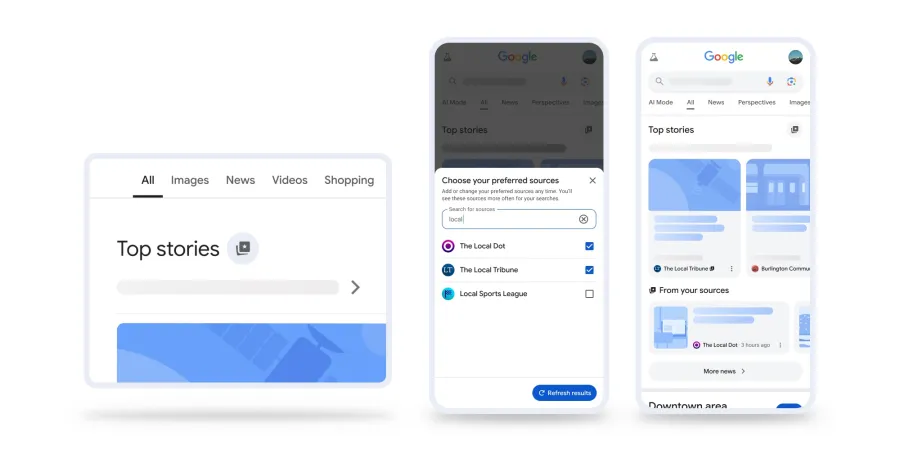
After you’ve made your picks, simply refresh the results to watch them fill with articles from your chosen lineup. In some cases, you’ll even see a dedicated “From your sources” section just below Top Stories.
During its early test phase in Google’s experimental Search Labs program, they found that over half of participating users selected at least four sources. That shows people aren’t just picking one or two favorites, they’re curating a mini news ecosystem of their own. Now, instead of being hidden behind an opt-in experiment, the feature is open to everyone in the two launch countries.
 Oluwaseun Bamisile
While competitors have explored similar territory, none have done it quite like Google. Microsoft Edge, for instance, lets you curate your news feed by picking topics and blocking unwanted sources, and Brave takes it a step further by letting you boost trusted sites in your ranking system. But these features live outside the search box, unlike Google’s.
What's hard to ignore is the downside of such personalization. On one hand, you’re less likely to wade through outlets you don’t care about, and more likely to discover updates from publications you value. This setup, though, could limit your view by giving you more of what you already agree with and blocking out voices that disagree with you or that you don't know. Preferred Sources may provide you with precisely what you desire, but not necessarily what you require.
Whether you see it as a tool for cutting through noise or a potential echo chamber, Google’s new feature marks another step in the ongoing struggle between personalization and diversity of information. And, as with most changes to the way we get our news, the real impact will depend less on the technology itself and more on how we, the readers, choose to use it.


