


In a world where AI is quickly becoming the backbone of economies, Nigeria’s infrastructure gap was laid bare as the much-anticipated Gulf Information Technology Exhibition (GITEX) kicked off this week in Abuja.
The conversations that dominated the event cut to the heart of Nigeria’s most pressing challenge in the AI era: building the right infrastructure. Back in April 2025, the country's Minister of Communications, Innovation, and Digital Economy, Bosun Tijani, launched the country’s National AI Strategy, which is basically a plan to develop Nigeria’s AI ecosystem alongside 150 domestic experts.
At GITEX Nigeria 2025, Tijani, who was recently listed as one of the people that are shaping our world through groundbreaking advances in artificial intelligence by TIME magazine, noted that Nigeria can only compete with other countries if she invests in an AI strategy. "Other countries have begun heavy investments in their AI strategies. As such, we risk losing competitiveness if we don't adopt the same tools. If we cannot close the gap in our output, we risk being dependent on other economies," Tijani said.
Other speakers at the event highlighted the reality of the country’s limited access to GPUs, critical chips that power AI training and deployment, with one noting that Africa is home to about a thousand of them or thereabouts.
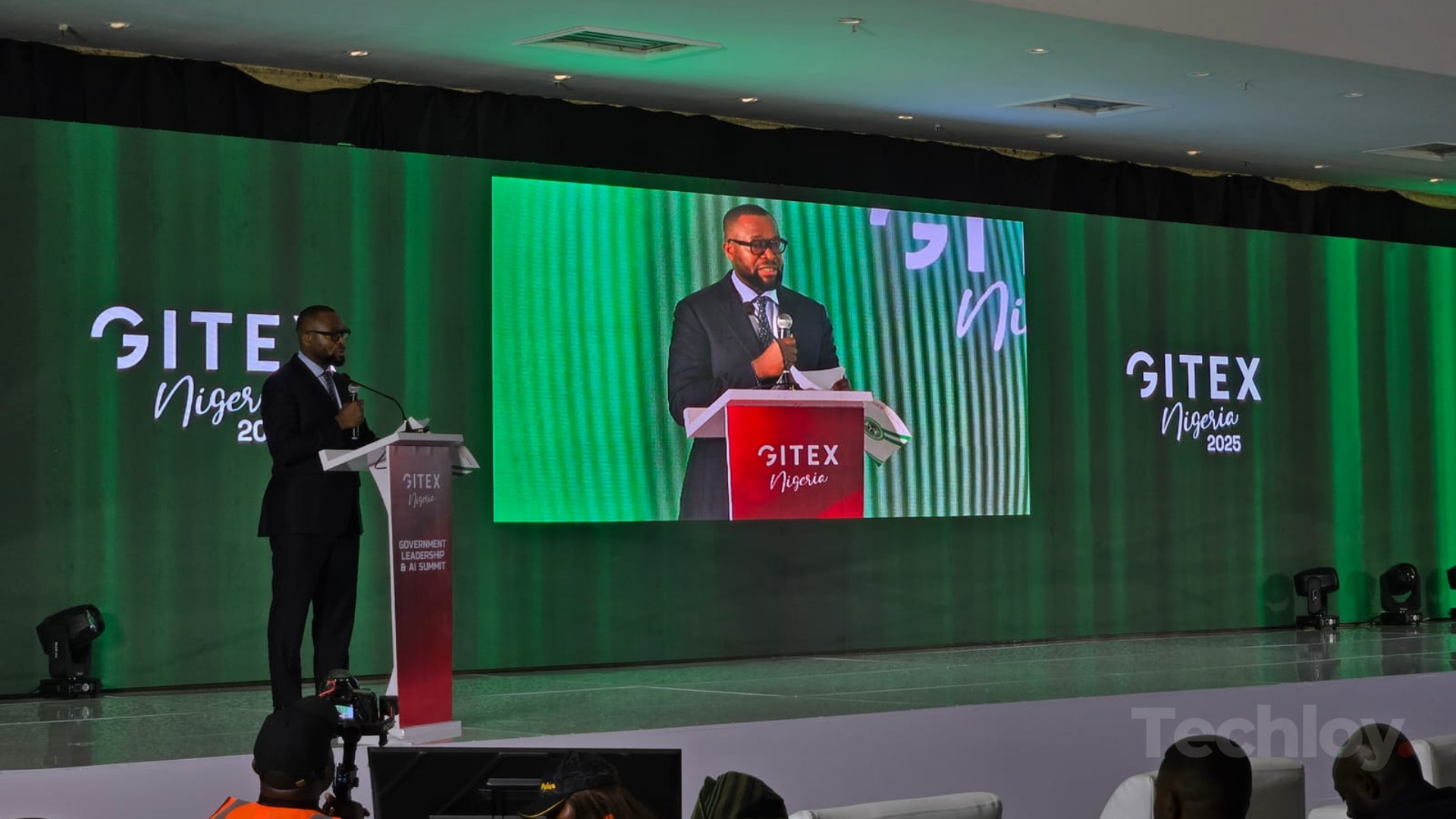
Dr. Oluwatobi Olabiyi, the Director of AI Engineering at NVIDIA, said that this scarcity has become one of the biggest bottlenecks for startups looking to compete globally in AI development. While cloud infrastructure can bridge some of the gap in the short term, the long-term vision lies in local data centers and on-premise solutions, especially for use cases like government services and healthcare, where privacy and security are critical. However, they admitted that developing those solutions will take time.
“In the next couple of years, we expect that we will have inference problems and training problems and figure out what solution works for different use cases,” Olabiyi added, hinting at a mixed approach of cloud-first access and gradual development of local hardware infrastructure.
 Louis Eriakha
Beyond the hardware limitations
Of course, having the hardware is one thing, but funding and finding the talent to handle it effectively were other major issues that were brought up. Access to GPUs alone won’t mean much if there aren’t enough skilled developers, regulators, and cybersecurity experts to put them to use.
At GITEX Nigeria 2025, this point came up repeatedly: beyond the lack of hardware, the problems of policy, regulation, and trust were identified as some of the biggest blockers slowing AI infrastructure in Nigeria. Without clear frameworks, strong cybersecurity defenses, and a digitally skilled workforce, the technology risks stalling before it can scale.
Charmaine Houvet, a senior director for Africa at Cisco, told Techloy that the company has been focusing on three areas: policy guidance, cybersecurity, and digital skills. For instance, Cisco was involved in publishing two major reports, Elevating Africa's Cyber Resilience and AI in the Workforce for Africa, both of which lay out how governments, private companies, and academia can collaborate to strengthen the continent’s AI future.
These reports argue for more flexible regulation through sandboxes rather than rigid bans, while also highlighting the urgency of equipping people with the skills to use AI responsibly. On regulation, Houvet stressed the need for flexibility rather than rigid restrictions:
"...enabling policies, regulation that should be more nuanced with sandboxes, not hard fast regulation. In this day and age it's sad we're still getting different entities asking us how do we slow down AI, what regulation can I put in place to limit AI because students are cheating? We want to bring real thought leadership to say that AI is more than just Gen Z or Gen Y figuring out how to crack the code. Therefore, let’s put in protected trust processes in place."
 Louis Eriakha
Other speakers at the event also stressed how important such regulation is. Kashifu Inuwa Abdullahi, the Director General of NITDA, mentioned how the country would need to ramp up adoption and "get PPP into infrastructure development." By PPP, he meant Public-Private Partnership.
Beyond policy, Cisco has also backed up its words with programs on the ground. Through its Networking Academy program, the company claims it has trained over 1.6 million Africans in areas ranging from AI to cybersecurity and entrepreneurship. Houvet noted that the program has already reached many in Nigeria, including some government officials and industry leaders, and discussions are ongoing with the Ministry of Communications, Innovation, and Digital Economy to establish new Cisco centers in Abuja, expanding on existing hubs in Lagos.
What's next for Nigeria's AI ambitions?
What GITEX Nigeria 2025 made clear is that while AI might be the future, Nigeria’s readiness will depend on how quickly it can close the gap on infrastructure, policy, and skills. GPU access remains a technical hurdle. Regulations and trust remain policy hurdles. And digital skills remain a human capital hurdle.
But progress is happening. The first step towards solving any problem is to first know what the issue is, and this event was able to highlight many pain points, so the path forward is evidently being charted. It may be gradual, but the conversations at GITEX Nigeria 2025 signalled a new seriousness in Nigeria’s approach to AI.
Reporting by Emmanuel Oyedeji; Writing by Louis Eriakha; Editing by Loy Okezie


