



Two sellers. Same wording, same size, same glowing product shot. One quotes $180. The other wants $520.
Reviews won't explain that gap. Both shops can carry thousands of honest five-star ratings and a wall of real customer photos, because reviews tell you how a company handles orders. They don't tell you what's going on inside the sign it's about to build for you.
The gap lives in components and processes, and almost none of it makes it onto a product page. Checking custom LED neon sign quality before you buy online is really about knowing which five questions force the spec sheet into the open.
The Power Supply Fails Long Before the LEDs Do
It's almost never the light. It's the driver, that small black brick that steps mains power down to the low voltage the sign runs on.
LED neon flex runs at 12V or 24V DC. Glass neon, the older technology it replaced, needs a transformer pushing somewhere between 2,000 and 15,000 volts, which is why the old stuff needed a specialist and the new stuff hangs on a plasterboard wall.
So, two questions.
Which voltage? 24V holds brightness better across longer runs. On 12V, a wide design can look noticeably dimmer at the end furthest from the power inlet. Installers call it voltage drop. For a name above a desk, irrelevant. For a three-meter logo across a reception wall, it's the difference between a sign that looks finished and one that looks broken.
Does the driver have headroom? Standard practice is to size the power supply around 20 to 30 percent above the sign's actual draw so it runs cooler and lasts longer. A driver working flat out at full capacity is a driver on a countdown.
Check the adapter for a certification mark while you're at it. UL, ETL, or CE, depending on your market. A seller who can't tell you which one they carry usually hasn't looked.
Read the IP Rating as a Number, Not a Promise
"Waterproof" on its own means nothing. The IP code means something specific, and it comes from an international standard called IEC 60529.
Two digits. They aren't interchangeable.
A shop advertising an outdoor sign without naming the code is asking you to take its word for it.
And the rating has to cover the whole installation, not just the tube. Sealed end caps matter. So does an outdoor-rated driver. Plenty of failures trace back to an IP65 sign wired to an indoor power supply left out in the weather.
The Backing Board Says More Than the Glow
Photos flatter every sign. Nobody photographs the acrylic, which is precisely why it's where corners get cut.
Five millimeters is the industry default, with most makers offering anywhere from 3mm up to 8mm. The thin end of that range flexes in transit and can arrive cracked around the mounting holes. Ask which one you're getting instead of assuming.
Then ask about the cut. A plain rectangle is cheaper to produce. Cut-to-shape, where the acrylic traces the outline of the lettering, is what makes a sign read as floating text rather than a lit-up sheet of plastic. Both are legitimate. The choice should just be yours, not a delivery surprise.
Confirm the mounting hardware too. Pre-drilled holes with screws and wall plugs are the norm. Standoff mounts, which float the sign a couple of centimeters off the wall, cost more and look better in an office.
Ask for a Design Proof Before Production Starts
Most buyers skip this one. It's the check that prevents the expensive category of mistake.
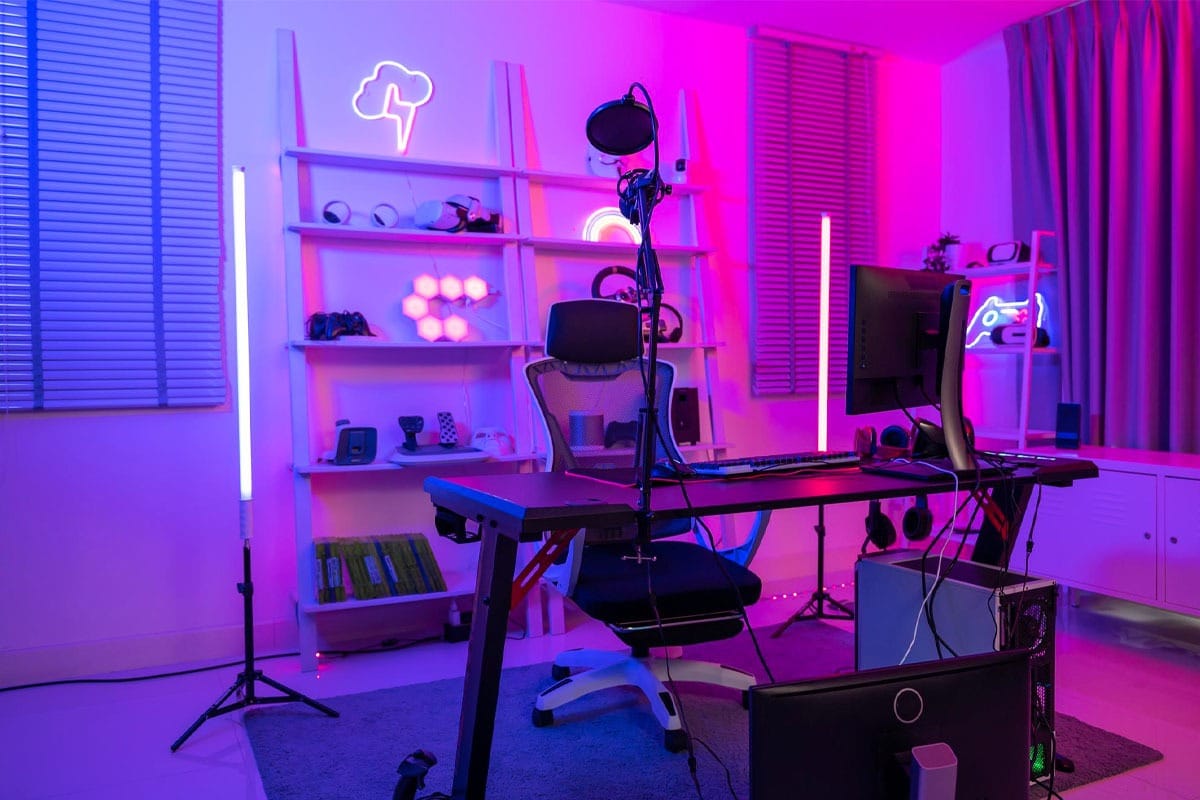
A proof is a to-scale mock-up of your exact wording, in the exact font, at the exact dimensions. Read it for letter spacing, because script fonts with tight kerning turn to mush at small sizes. Read it for stroke width, because thin display fonts rarely survive being rebuilt from tubing that has a minimum bend radius.
Read it for color, since a warm white glowing on a black screen and a warm white glowing on your wall are two different experiences. And read the dimensions, which is where most people discover their sign is bigger than the space they had in mind.
Any sign-making company that makes custom LED neon signs sends a proof or mock-up as standard and revises it before cutting anything. A seller who takes payment and goes quiet until the courier arrives is telling you how the rest of the process will go.
Read the Warranty and the Returns Policy Together
Two-year cover is common in the trade. Some suppliers offer three. Scope matters more than the number, though. Does it cover the driver, the part most likely to fail? And can that driver be swapped on its own, or does one dead component turn the whole sign into scrap?
Read the returns policy in the same sitting. The two only make sense together. Custom items are usually non-returnable, which is fair enough. Nobody else wants a sign carrying your business name. But it does mean the proof stage is the only real quality gate you get.
Ask about transit while you're there. Acrylic and silicone travel fine in a proper box with corner protection. Find out how it's packed and whether damage is covered.
The Five Checks Worth Making Before You Pay
- Driver spec
- IP code
- Acrylic thickness and cut
- Design proof
- Warranty scope
That's the whole list, and it's about ten minutes of emailing. Run it past both quotes and the $180 sign and the $520 sign stop looking like the same product. Sometimes the cheap one holds up fine, and you've saved yourself a few hundred. Sometimes you find out exactly why it was cheap. Either way, you'll know before you pay rather than eighteen months later.


