



We're all drowning in content but starved for time. The average person wastes nearly an hour on every video they watch and loses another twenty minutes to each interruption that breaks their focus. After testing dozens of productivity systems and AI tools, I've discovered that the right combination of strategies can transform how you work and learn.
This isn't about working harder—it's about building systems that multiply your effectiveness.
The Video Learning Problem
Most of us approach educational videos the wrong way. We sit through sixty minutes of content to extract maybe ten minutes of actual value. The solution? A three-step process that turns hour-long videos into actionable knowledge in just fifteen minutes.
Start by using an AI video summarizer to generate a complete overview before you invest any real time. Paste your YouTube link, and within seconds you get a roadmap of the content with clickable timestamps and key takeaways. The best tools include source links for every insight, so you can verify information directly.
Armed with this overview, jump straight to the sections that matter most. Research shows that roughly twenty percent of most video content delivers eighty percent of its value. Focus your attention there, using interactive Q&A features to ask follow-up questions about concepts that need clarification.
Finally, integrate what you've learned using active note-taking methods. The Cornell Method works well here: main notes with timestamps, your questions about the material, and a brief summary of essential takeaways. Studies show this active approach boosts retention by fifty percent compared to passive review.
What Makes AI Tools Actually Useful
Not all video summarizers are created equal. After extensive testing, here's what separates the useful from the worthless.
The most important feature is source-grounded accuracy. Every summary point should link to the exact video moment where it was discussed. This eliminates AI hallucinations and lets you verify insights instantly.
Look for tools that understand more than just words—they should grasp visual content, slides, on-screen text, and even silent demonstrations. The best services work across multiple languages and handle various video formats, from YouTube to local files.
Interactive features matter too. The ability to ask follow-up questions and get timestamped answers transforms passive watching into active learning. Some tools even generate mind maps or structured outlines for different learning styles.
Most quality services offer generous free tiers, often enough to process a few hours of content immediately without requiring payment information.
Top AI Tools for Video Summarization
Based on extensive testing, here are the most reliable AI tools for video summarization options for different needs:
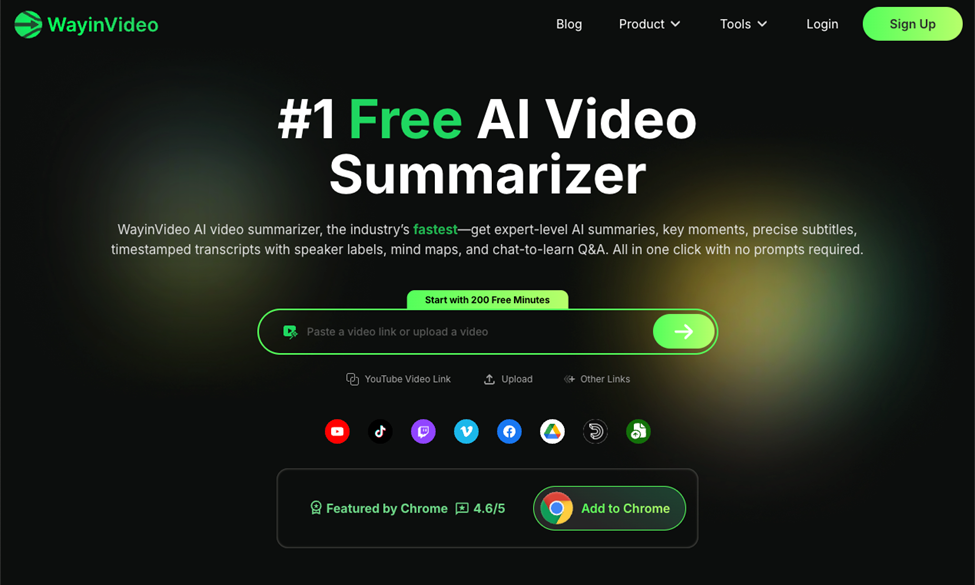
WayinVideo stands out with its source-grounded approach—every summary point links to the exact video moment, eliminating AI hallucinations entirely. It understands visual content, slides, and on-screen text, making it perfect for educational content. New users get 200 welcome credits plus 30 daily credits for free.
Eightify excels at quick overviews with its signature "8 Key Points" format. It's streamlined for YouTube but limits insights to eight per video, which works well for rapid content triage.
Recall offers structured summaries with 10 free monthly analyses. It handles academic content particularly well but has stricter usage limits than other options.
NoteGPT targets students with flashcard and mind map generation. While excellent for visual learners, accuracy can dip on highly technical topics.
The key difference between basic and premium tools comes down to verification and interactivity. Choose based on whether you need simple overviews or deep learning capabilities with evidence-based insights.
Beyond Videos: Taming Your Calendar
Video content is just one time drain. Poorly managed meetings can waste just as much time. The average meeting loses twenty-two minutes to inefficiency, but this is entirely fixable.
Start every meeting with crystal clear objectives and hard stop times. Research shows that meetings with defined goals finish significantly earlier than open-ended discussions. Use a "parking lot" to capture off-topic ideas without derailing the conversation, and always close with specific action items, owners, and deadlines.
AI tools can help here too. Services that transcribe meetings and identify action items automatically can save hours of follow-up work. Even simple approaches like using ChatGPT to summarize meeting notes into key decisions can be remarkably effective.
The Focus Problem
Modern life is designed to fragment our attention. Each interruption costs us nearly twenty-five minutes of recovery time. The solution isn't willpower—it's architecture.
Batch similar tasks into focused blocks. Instead of constantly checking email throughout the day, process it three times in dedicated sessions. Group creative work into specific time blocks when your energy is highest. This context-switching reduction alone can save several hours weekly.
For those dealing with attention challenges or mental health issues, traditional productivity advice often fails. The key is working with your brain, not against it. Track your energy patterns and schedule demanding tasks during your peak focus windows. Use "if-then" plans for difficult days: if concentration fails, switch to a predefined backup task.
Building Your Personal System
The most effective productivity systems are personalized. Start by measuring your current patterns. Where does your time actually go versus where you want it to go? Which activities leave you energized versus drained?
Create simple weekly reviews to assess your energy levels, time allocation, and friction points. Identify one thing to experiment with each week—maybe it's batching email, trying video summarization, or implementing structured meeting formats.
Environment matters too. Optimize your physical space by keeping essential items within reach and distractions away. Use digital tools strategically—browser extensions that block distracting sites during focus periods, grayscale mode to reduce visual stimulation, or scheduled "do not disturb" hours.
Even the most productive people need unstructured time. Research shows creative insight spikes after periods of mental wandering. Schedule time for aimless exploration without agenda. This isn't laziness—it's strategic incubation for your best ideas.


