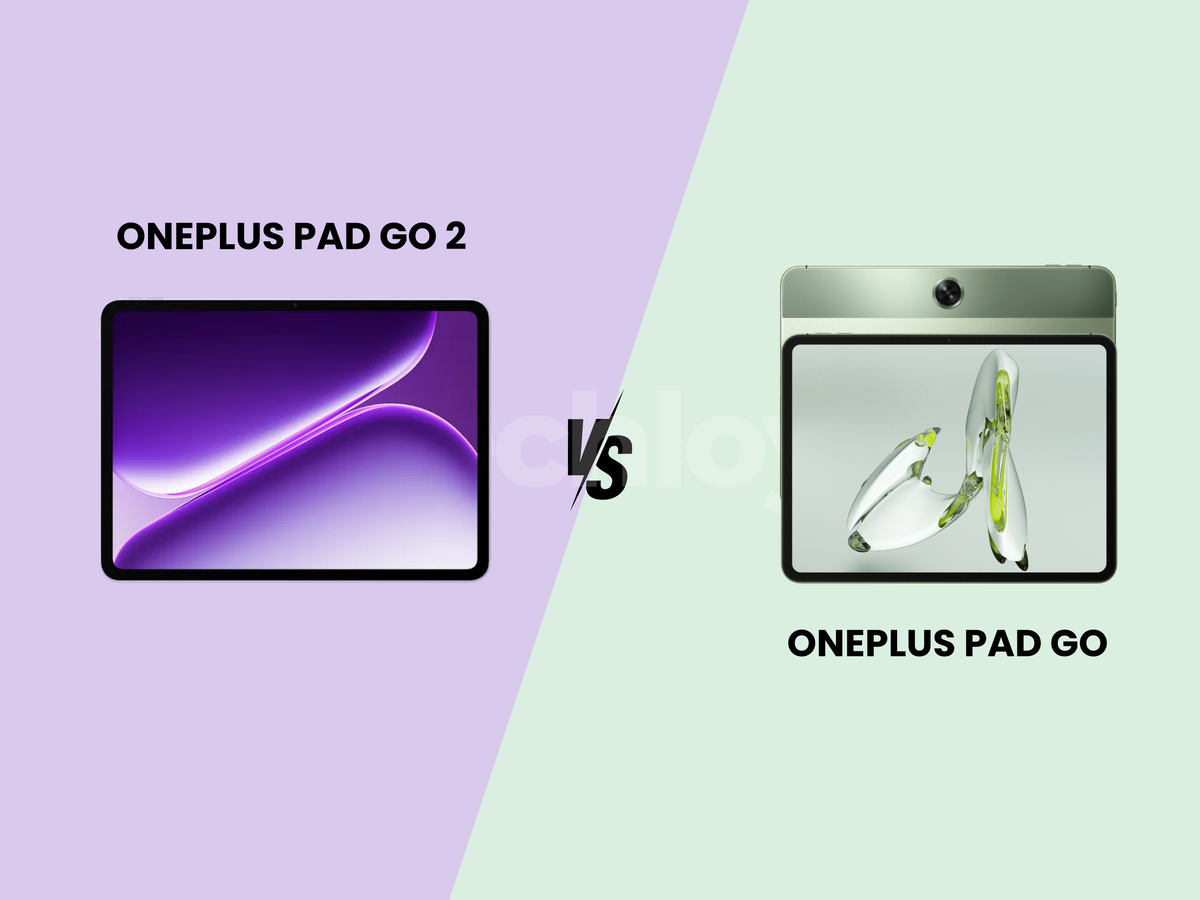
Maybe you’re tired of small phone screens and want something bigger, but not as bulky or expensive as a laptop. A tablet can be the perfect middle ground — especially if you’re not looking to splurge on a premium model. That’s where budget tablets come in, offering solid value without breaking the bank.
Enter the Huawei MatePad 11.5 (2026) and the OnePlus Pad Go 2.
The Huawei MatePad 11.5 (2026) positions itself as a modern, productivity-focused tablet with a smooth display, long battery life, and support for accessories like a stylus and keyboard. It’s lightweight, sturdy, and designed for everyday tasks, with fast charging and an optional anti-glare display variant.
The OnePlus Pad Go 2, meanwhile, leans into performance and ecosystem appeal. It offers a large, high-quality display, a massive battery, and a familiar Android-based experience. It also integrates well with OnePlus phones, making it an interesting option for users already in that ecosystem.
While both offer similar features, they hardly offer the same experience. In this guide, we will compare the two devices to determine which one best fits the needs of someone looking to buy a budget tablet.
/1. Display
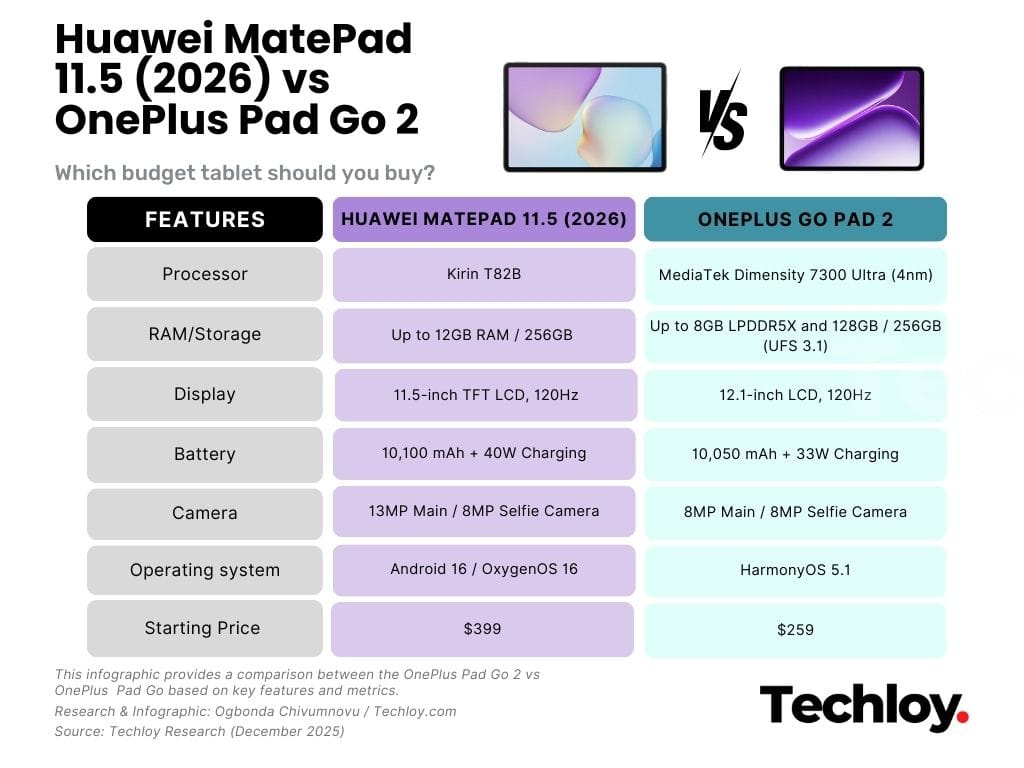
Both tablets offer similar specs in this category. The Huawei MatePad 11.5 (2026) features an 11.5-inch TFT LCD with a 120Hz refresh rate, making scrolling and animations feel smooth and responsive. Its 1600 × 2456 resolution is sharp enough for streaming and casual content consumption. Peak brightness tops out at 600 nits, which works well indoors but can struggle under direct sunlight.
The OnePlus Pad Go 2 steps ahead with a larger 12.1-inch display, also running at 120Hz. It delivers a higher resolution of 1980 × 2800 pixels and significantly brighter output at up to 900 nits, making it more usable outdoors.
/2. Performance
Huawei powers the MatePad 11.5 (2026) with its in-house Kirin T82B chipset, paired with 8GB of RAM. It handles everyday tasks smoothly and can manage light gaming, including titles like Genshin Impact at lower settings. Integrated cooling helps maintain stable performance.
The OnePlus Pad Go 2, on the other hand, runs on the MediaTek Dimensity 7300 Ultra, built on a 4nm process. Combined with 8GB RAM, it delivers better efficiency and smoother gaming performance, including consistent 1080p gameplay.
/3. Battery and Charging
The Huawei MatePad 11.5 (2026) packs a 10,100mAh battery with 40W fast charging, capable of lasting up to two days with heavy use.
Conversely, the OnePlus Pad Go 2 comes with a slightly smaller 10,050mAh battery and 33W charging, usually lasting around a full day even with intensive use.
/4. Cameras
Huawei equips its tablet with a 13MP rear camera and an 8MP front camera, delivering serviceable photos and video calls.
The OnePlus Pad Go 2 uses 8MP sensors on both the front and rear, producing similar results, though with less detail on the back camera.
/5. Software and extra features
The Huawei MatePad runs HarmonyOS 5.1, which is smooth and polished but more restrictive, with limited app availability and some pre-installed bloatware. Huawei focuses heavily on productivity and learning features, including AI-powered study tools, optional PaperMatte anti-glare displays, and seamless multi-device collaboration within its ecosystem.
The OnePlus Pad Go 2 ships with OxygenOS 16, based on Android 16. It feels fluid, customisable, and familiar. Advanced AI features like Mind Space are missing, likely reserved for phones, but basics like AI Translate and AI VoiceScribe are present. AI Writer showed limited compatibility, while the Photos app offers tools like AI Recompose and AI Eraser.
/6. Memory & Storage
The Huawei MatePad 11.5 (2026) is available in various storage and RAM configurations, offering options with up to 12GB of RAM and 256GB of internal storage. The tablet does not include a card slot for expandable storage. Enough storage for apps, media and multitasking.
The OnePlus Pad Go 2 comes with 8GB of LPDDR5X RAM and two internal storage options: 128GB or 256GB of UFS 3.1 storage. A key feature is the inclusion of a dedicated microSDXC card slot, allowing for significant storage expansion, up to 1TB according to some sources. Almost the same as the Huawei only difference is that OnePlus offers expandable storage.
/7. Price and Availability
The Huawei MatePad 11.5 (2026) is currently available for pre-order in China, with sales starting December 25, 2025. Pricing starts at around $259 for the base model, though global availability remains unclear.
The OnePlus Pad Go 2 is available across the US, UK, Europe, and India, with prices starting at around $399.
Conclusion
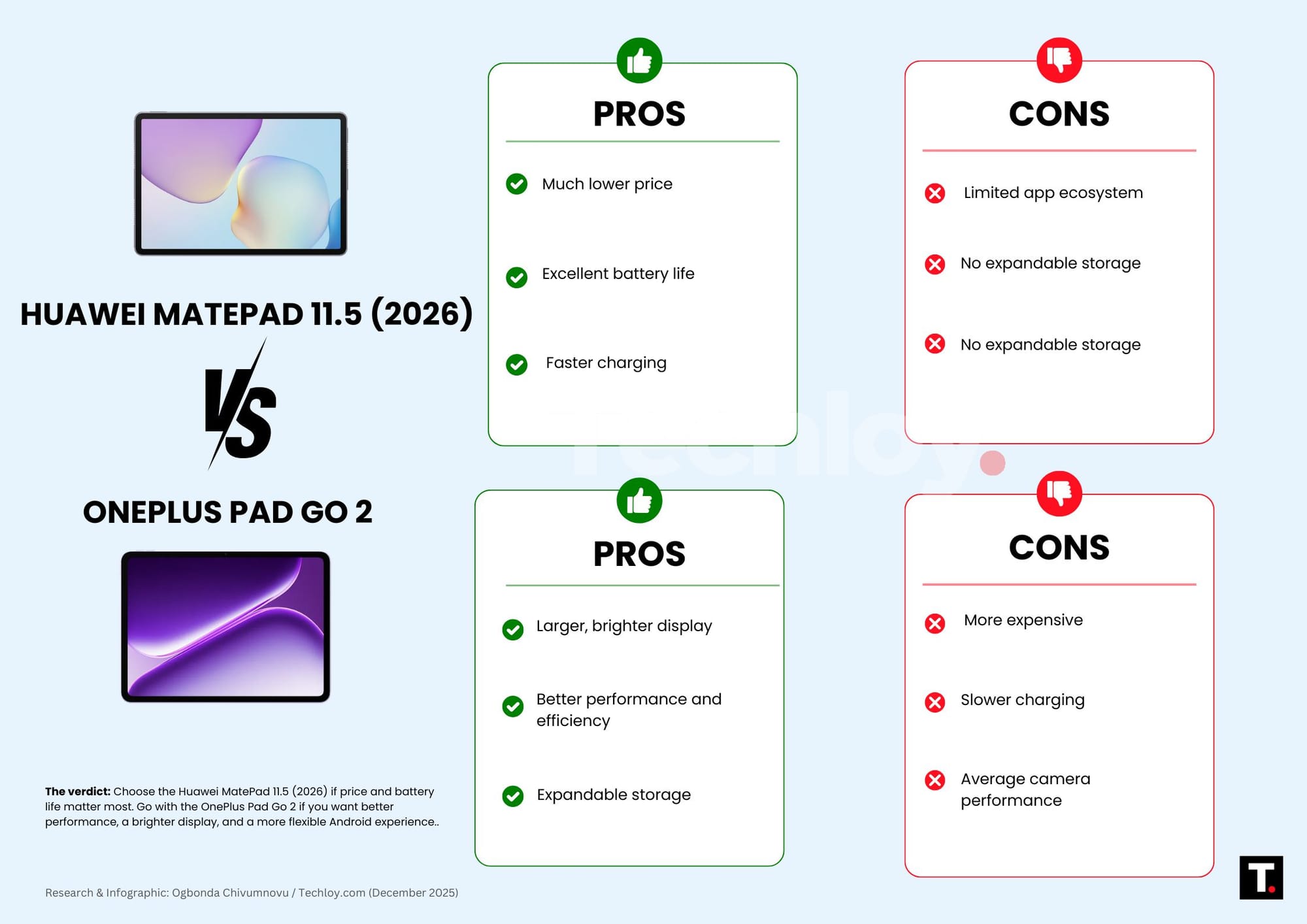
Both tablets deliver strong value, but they cater to different buyers. The Huawei MatePad 11.5 (2026) shines with its lower price, longer battery life, and productivity-focused features, making it appealing for students and users already invested in Huawei’s ecosystem. However, its software restrictions and limited global availability may be dealbreakers.
The OnePlus Pad Go 2, while more expensive, offers better performance, a superior display, expandable storage, and a familiar Android experience. It’s the safer pick for users who want flexibility, gaming performance, and long-term app support.
Ultimately, the better choice depends on whether you value affordability and battery life, or performance and software freedom.
 Ejiro Onose