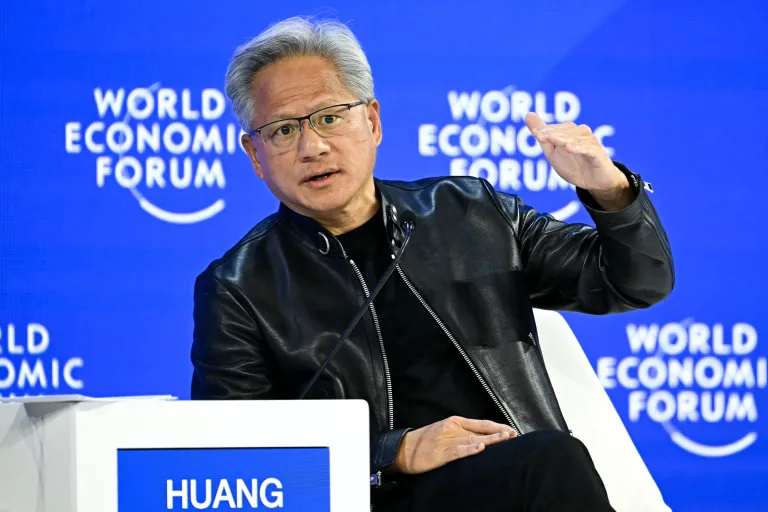
NVIDIA CEO Jensen Huang just confirmed what Wall Street feared. Speaking with the Special Competitive Studies Project, Huang said the company's AI chip market share in China has collapsed to zero percent.
"In China, we have now dropped to zero," Huang said. Two years ago, Nvidia controlled 95% of China's AI accelerator market. Now it's gone.
Huang didn't hold back on what he thinks went wrong. "Conceding an entire market the size of China probably does not make a lot of strategic sense, so I think that has already largely backfired," he told lawmakers. "Maybe it made sense at the time, but I think the policy really needs to be dynamic and needs to stay with the times."

Why Nvidia China AI Market Share Collapsed to Zero
US export restrictions that started in 2022 kept tightening. On April 9, 2025, the US government told Nvidia it needed a license to export even its H20 chips to China. Those chips were specifically designed to comply with earlier restrictions.
NVIDIA took a $4.5 billion charge in Q1 fiscal 2026 tied to H20 excess inventory and purchase obligations it could no longer move.
Earlier this year, Bernstein estimated Nvidia's share of China's AI GPU market would fall from 66% in 2024 to around 8%. Huang's statement suggests the decline went even further than analysts expected.
Meanwhile, Nvidia's most advanced B300 servers now cost approximately $1 million in China. That's nearly double the roughly $550,000 US price, according to Reuters sources. The price surge followed the US authorities' March prosecution of a Supermicro co-founder, which disrupted the grey market that had been a key supply channel.
Nvidia Stock Price Holds Despite China Loss
Despite losing what Huang called a massive market opportunity, Nvidia's stock sits at around $198. That's just 9% below its all-time high of $216.61 hit on April 27, 2026.
According to CNN, based on 70 analyst ratings, 91% gave Nvidia a Buy rating with an average price target of $267.50.
The company reports Q1 fiscal 2027 earnings on May 20. Management is guiding for 77% revenue growth, an extraordinary rate for a company with a nearly $5 trillion market cap.
Chinese companies, including Huawei, Cambricon, Moore Threads, and MetaX, are building local alternatives to fill the gap Nvidia left behind. But Huang warned against underestimating China's AI capabilities even without American chips. "They have cheaper energy. They have incredible talent," he said. "The number of AI researchers in China is quite extraordinary; it's one of their national treasures."