The web browser hasn’t changed much in decades. Most still have tabs, searches, bookmarks, and the same structure we’ve lived with since the early 2000s. But OpenAI thinks that’s due for a rewrite.
The company just rolled out ChatGPT Atlas, a new browser with ChatGPT built directly into its core. Instead of jumping between tabs or copying snippets to ask a question, you can now talk to ChatGPT straight from the sidebar or even the address bar. What used to be a separate search experience is now laced into everything you do online.
Atlas can understand your browsing context (with your permission), remember what you’ve seen across pages, and help you get things done, all without leaving the window. If you lose track of an article you read, ChatGPT can find it. If you want to plan a trip, it can compare options and build a list for you.
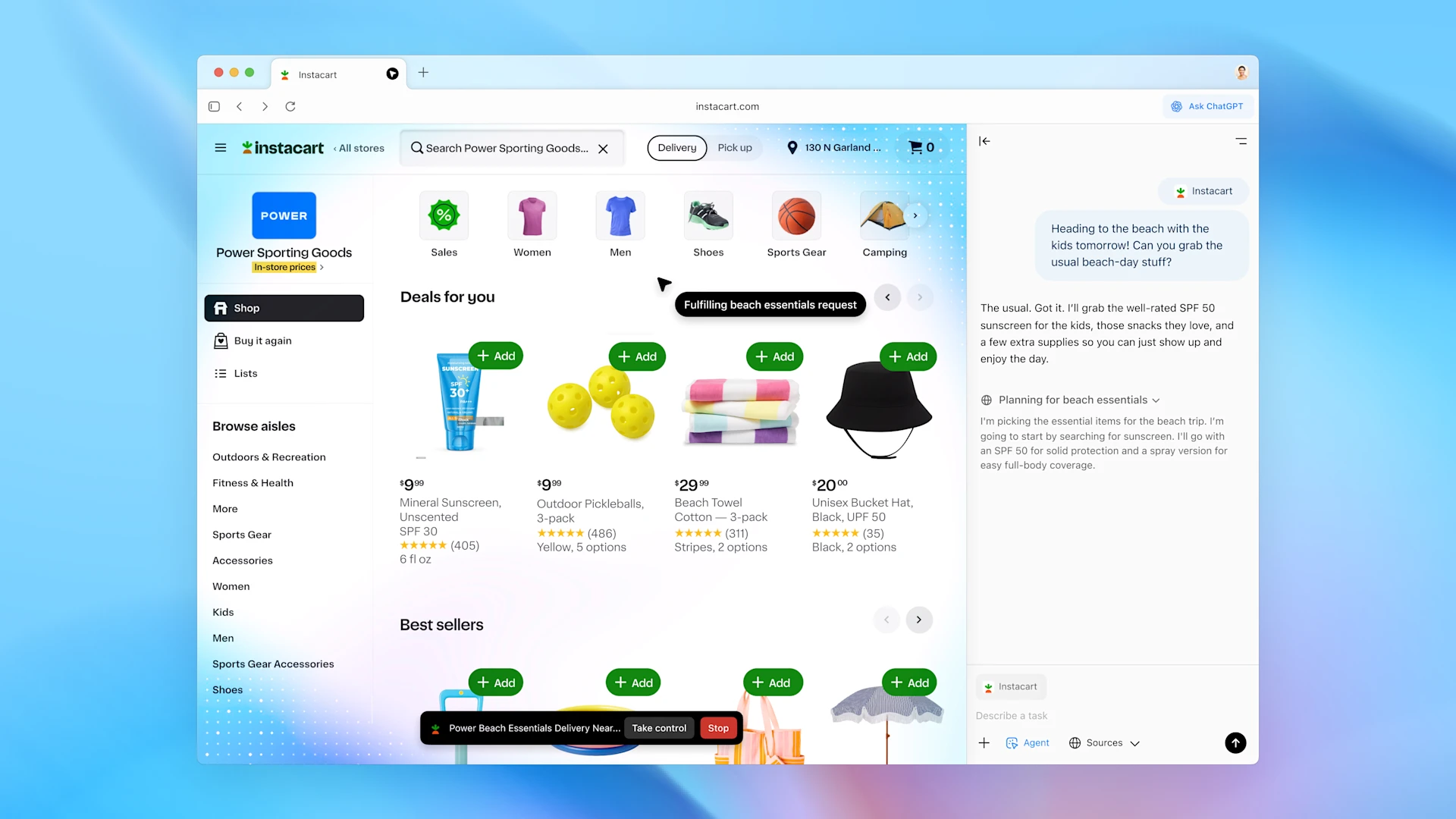
But its most intriguing feature is Agent Mode. Instead of only responding to questions, ChatGPT can take actions for you, opening tabs, clicking links, filling forms, and even completing purchases. It turns the browser into something more like a digital co-pilot than a passive tool.
OpenAI adds that privacy and control remain central to its approach, so Atlas lets you decide what ChatGPT can see or remember. You can turn memory off, delete history, or switch to incognito mode at any time. By default, Atlas doesn’t use your browsing content to train OpenAI’s models unless you opt in.
Atlas is rolling out first on macOS, with Windows, iOS, and Android versions coming soon. It’s available to Free, Plus, Pro, and Go users, while Business, Enterprise, and Education accounts can access it in preview through their administrators.
 Oyinebiladou Omemu
At the same time, Atlas signals OpenAI’s biggest challenge yet to Google Chrome. While Chrome still dominates with ~3.83 billion users, Atlas imagines a different kind of browser, one that doesn’t just render pages, but understands and acts on them. Investors clearly took notice, too, as Alphabet’s shares fell about 3% after OpenAI's announcement.
But Google isn’t just sitting still. It’s been integrating AI into Chrome through Gemini and a series of smaller updates, racing to keep pace in a world where browsing itself is becoming AI-native.
Ultimately, if users start living their online lives entirely within Atlas, OpenAI won’t just be a chatbot company anymore; it’ll be a browser company too. And that might be the boldest shift of all.
 Emmanuel Oyedeji