OpenAI will strip ChatGPT's upcoming "adult mode" of its ability to generate images, voice, or video, limiting the controversial feature to text-only erotic conversations after the company's age-verification system failed to properly identify minors 12% of the time.
With roughly 100 million users under 18 on ChatGPT each week, the error rate could allow millions of kids to access sexual content meant exclusively for verified adults, according to a Wall Street Journal report published Sunday.
The company confirmed to the Journal that it will launch adult mode with what it calls "smut rather than pornography," blocking all visual and audio generation. That contrasts sharply with competitors like Elon Musk's xAI, which announced Thursday its Grok chatbot would generate content "allowed in an R-rated movie" through video tools.
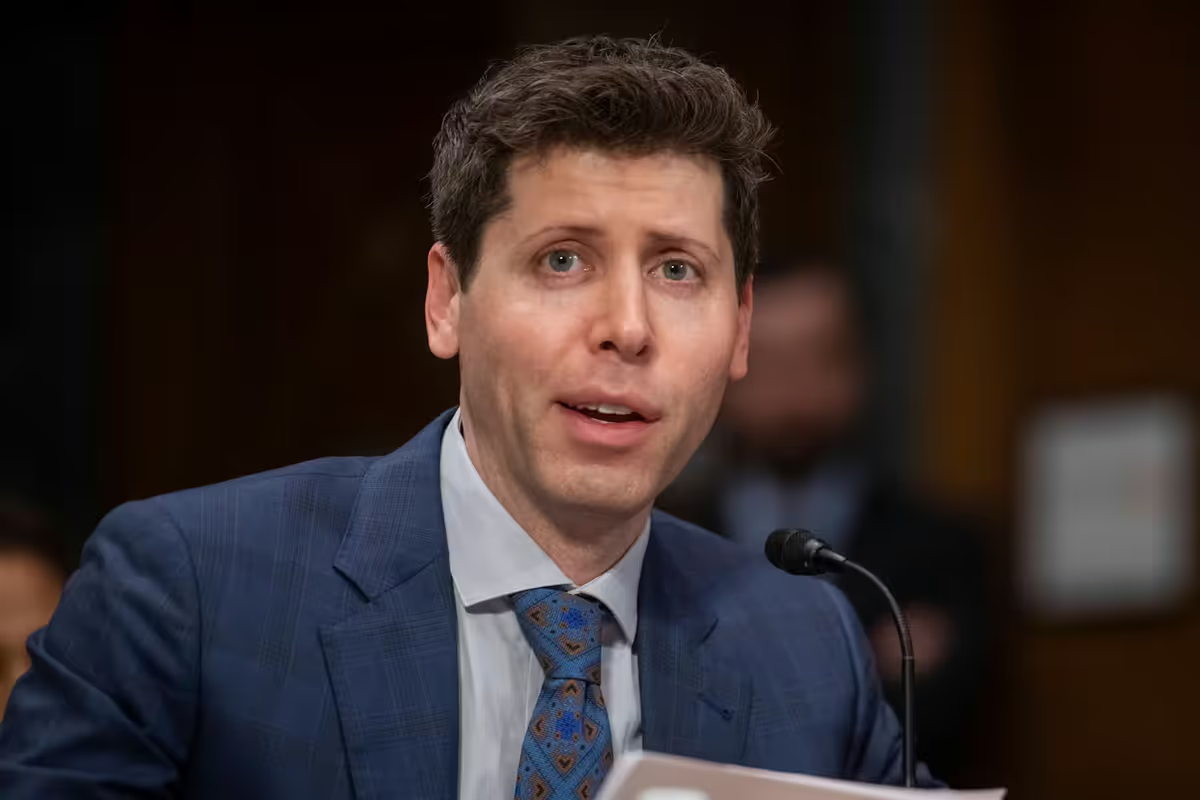
OpenAI originally planned to launch the feature in the first quarter of 2026 after CEO Sam Altman announced it in October, claiming the company had solved enough "serious mental health issues" to let adults have erotic conversations with ChatGPT. The company said earlier this month it would delay the rollout to focus on other products, but per the report, internal documents show safety failures and explosive pushback from mental health experts drove the decision.
 Damilare Odedina
Mental Health Council Warned of "Sexy Suicide Coach"
In January, OpenAI's handpicked council of well-being advisers, experts in psychology and cognitive neuroscience, unanimously opposed moving forward with adult mode. “They were furious,” the Journal reports.
The council warned AI-powered erotica could create unhealthy emotional dependence on ChatGPT and that kids would find ways around age checks. One adviser went further, citing cases where ChatGPT users developed intense bonds with the bot before taking their own lives. OpenAI, the adviser said, risked building a "sexy suicide coach."
The Journal also reports that OpenAI staffers identified compulsive use, emotional overreliance on the chatbot, users seeking increasingly extreme content, and people replacing real relationships with AI conversations as potential risks.
OpenAI told the Journal it has hired mental health experts, built a youth well-being team, and trains its models to discourage exclusive relationships while reminding users they need real-world connections. The company has also developed a plan to monitor long-term effects.
Text-Only Approach Addresses Multiple Challenges
Beyond age verification problems, OpenAI is wrestling with how to allow mainstream erotica while blocking content it wants prohibited, including nonconsensual scenarios and child sexual abuse material, the report claims, citing people familiar with the matter.
Keeping adult mode text-only gives OpenAI several advantages. Written content is easier to moderate than images or video, sidesteps deepfake concerns, and may help the company navigate laws like the UK's Online Safety Act, which requires age verification for pornographic images but not written erotica.
An OpenAI spokesperson acknowledged to the Journal that age prediction systems "will never be completely foolproof" but claimed the company's algorithms perform similarly to industry standards.
The delay will push adult mode's launch at least a month past the original first-quarter timeline, the report claims. OpenAI told the Journal that it still believes in "treating adult users like adults" but that "getting the experience right will take more time."
 Damilare Odedina