Porsche is expanding its electric SUV lineup again, this time with a coupe-style version of its flagship Cayenne, a move that reflects both strong demand for sportier SUVs and the company’s broader push into high-performance EVs.
The company unveiled the Cayenne Coupé Electric at Auto China 2026 in Beijing, where it confirmed the model will arrive with three variants when sales begin globally later this year.
The new model follows a formula Porsche already knows works. When the company introduced a coupe version of the gasoline-powered Cayenne in 2019, the design quickly gained traction with buyers. Within a year it captured about 20% of Cayenne sales, and today the coupe version accounts for around 40% of the lineup, according to Porsche. The electric version keeps the same design philosophy, borrowing visual cues from the iconic Porsche 911.
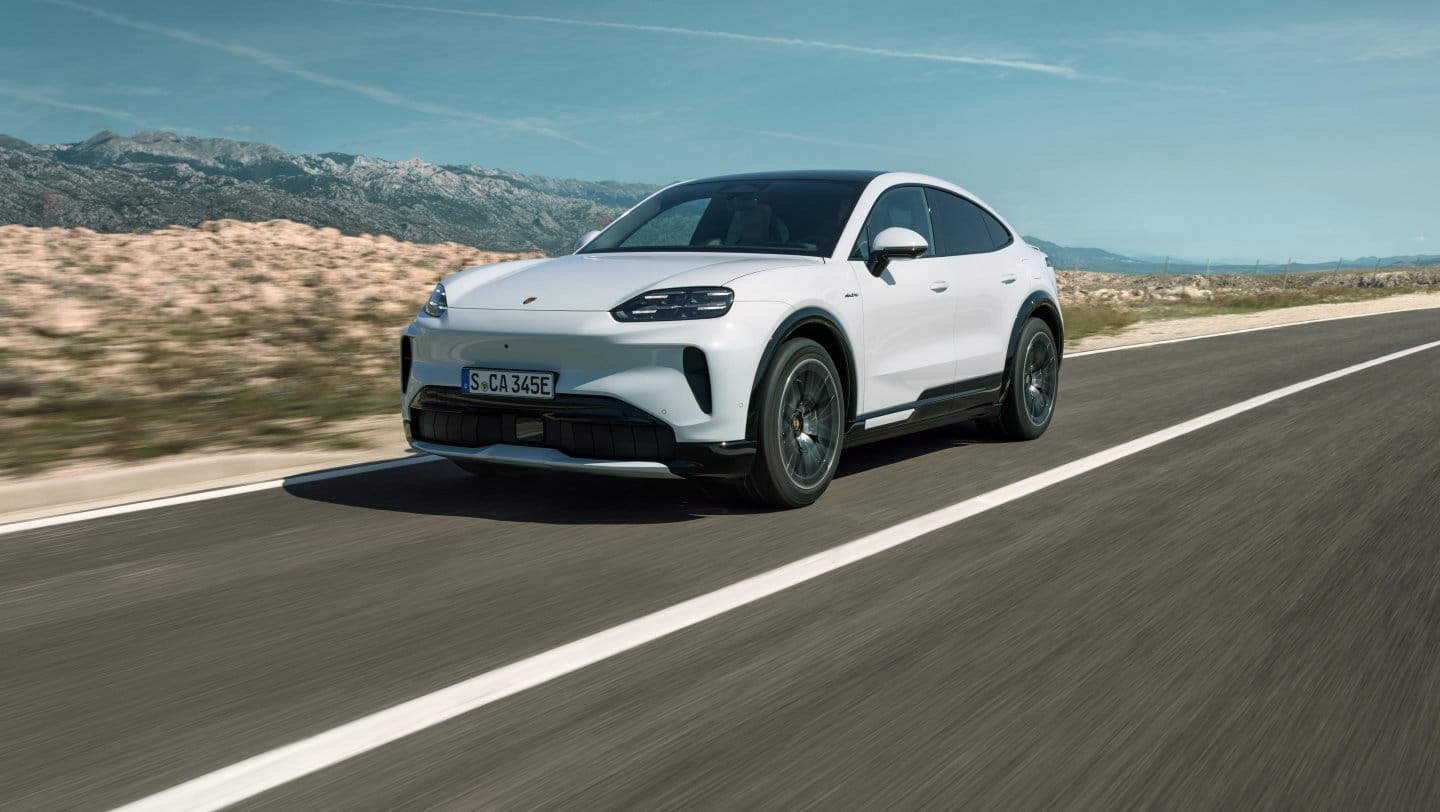
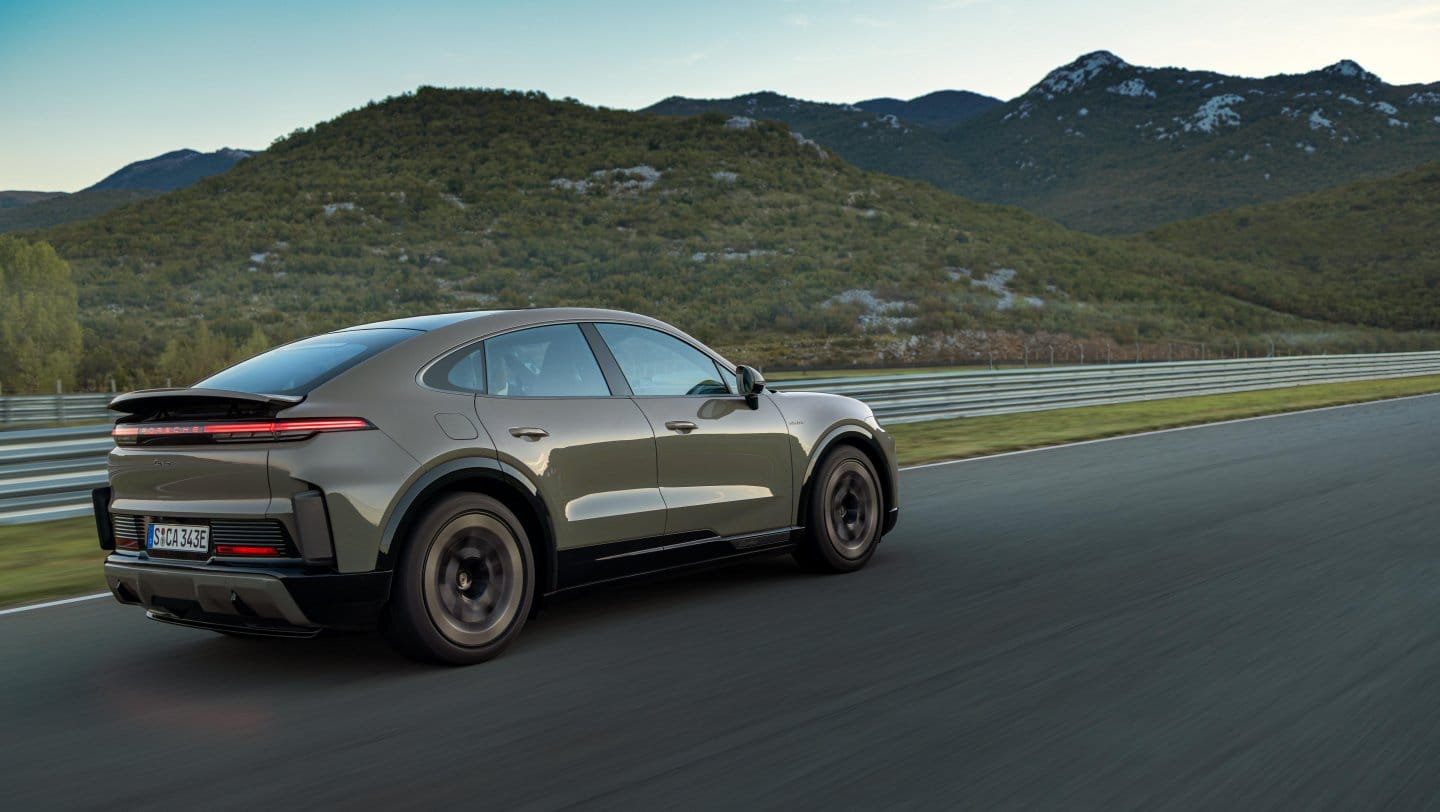
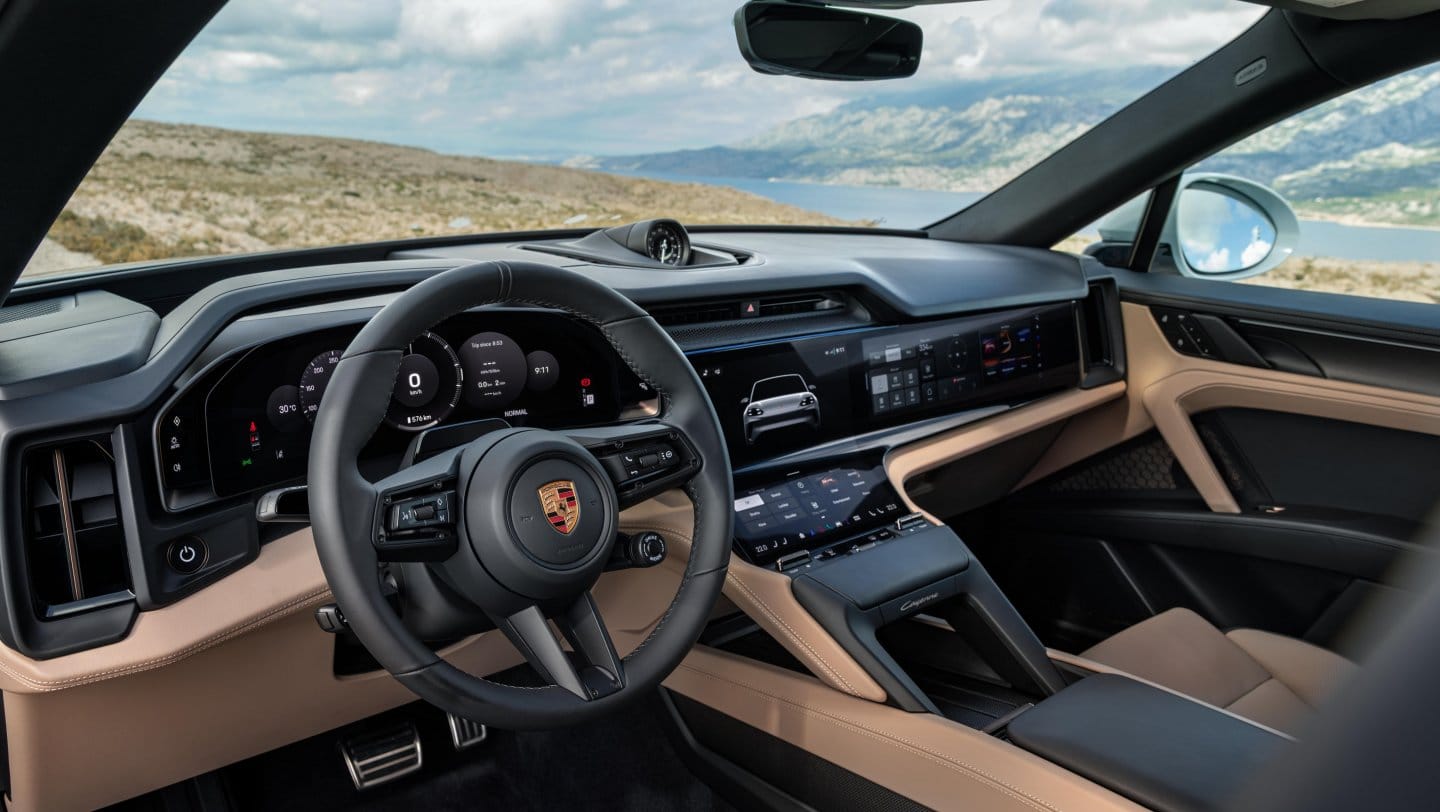
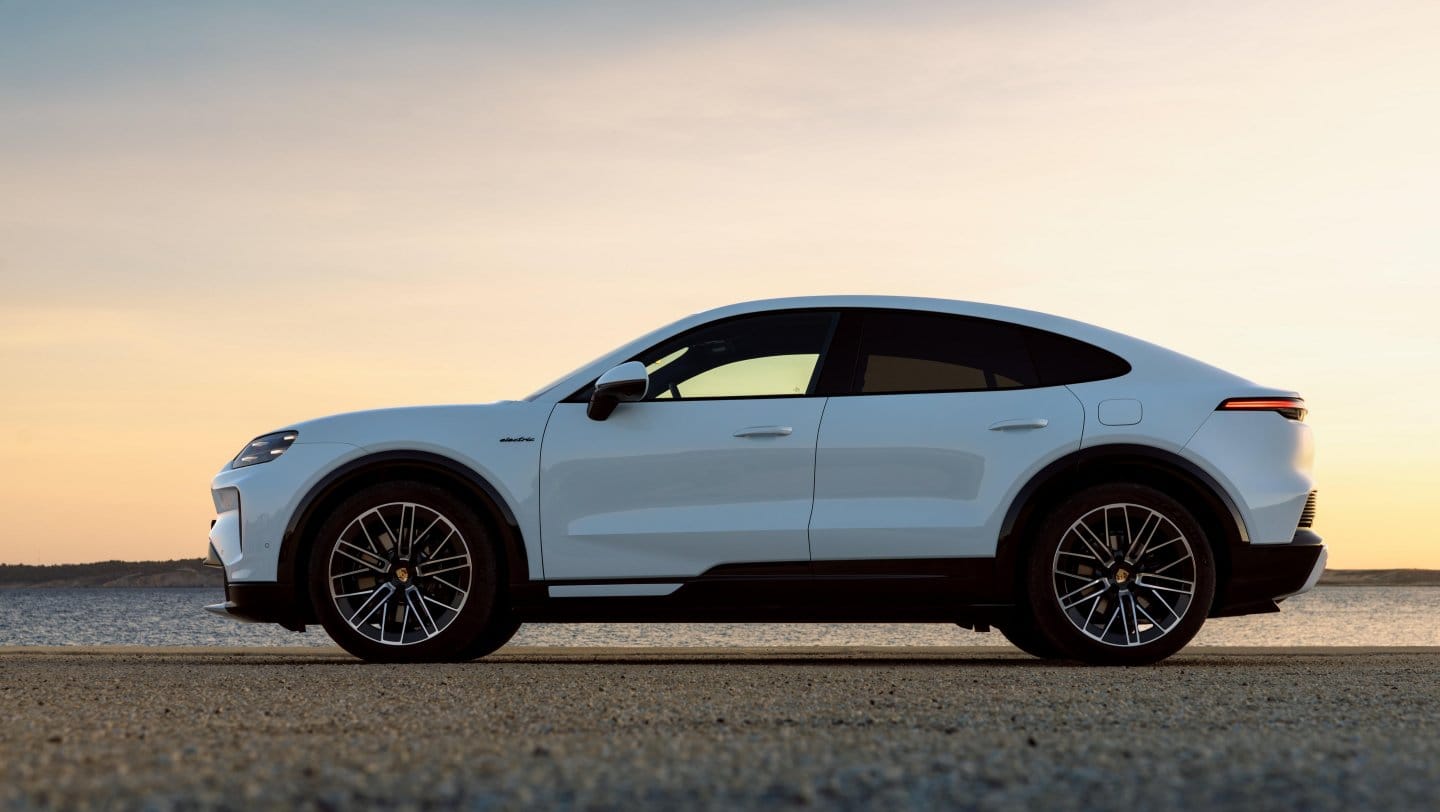
Image credit: Porsche
“Inspired by the iconic shape of the 911 and its characteristic flyline, the new Cayenne Coupé Electric models combine powerful proportions with exceptional e-performance,” Porsche said in its announcement. The coupe differs from the standard Cayenne SUV beginning at the A-pillar, with a specially designed windshield and a sloping roofline that gives the SUV a more athletic profile.
“The gently sloping roofline sweeps elegantly over the car’s broad shoulders and gives the Cayenne Coupé a particularly sporty appearance,” said Thomas Stopka, Head of Exterior Design at Style Porsche.
That design also improves aerodynamics. The coupe’s drag coefficient drops to 0.23, compared with 0.25 for the standard SUV, which helps extend the electric driving range.
Despite the sleeker shape, Porsche says practicality remains largely intact. The vehicle measures 4,985 millimetres long and 1,980 millimetres wide, nearly identical to the SUV version, though it sits 24 millimetres lower. Cargo space ranges from 534 to 1,347 litres, with an additional 90-litre front trunk.
“The adaptive rear spoiler blends harmoniously into the body, while the way the rear window is embedded and flush-mounted with fewer joints ensures a clean, modern look,” Stopka said. “Precisely drawn lines, wide proportions and high-gloss black side window strips form a design that exudes sportiness in every detail. Extroverted and clearly positioned, the new Cayenne Coupé Electric is a sports car through and through.”
At launch, the electric coupe will be offered in three versions mirroring the SUV lineup.
The base Cayenne Coupé Electric produces 300 kW (408 PS) with an overboost output of 325 kW (442 PS) using Launch Control, reaching 0–100 km/h in 4.8 seconds and a top speed of 230 km/h. The Cayenne S Coupé Electric delivers 400 kW (544 PS), rising to 490 kW (666 PS) with overboost, and accelerates from 0–100 km/h in 3.8 seconds with a top speed of 250 km/h.
At the top of the lineup sits the Cayenne Turbo Coupé Electric, producing 630 kW (857 PS) with an overboost output of 850 kW (1,156 PS). That model reaches 100 km/h in 2.5 seconds and has a top speed of 260 km/h.
All three versions share an 800-volt architecture, allowing DC fast-charging speeds of up to 390 kW, and potentially 400 kW under certain conditions. AC charging of up to 11 kW is standard, with an optional 22 kW onboard charger available.
Range figures vary depending on the model, but Porsche says the coupe’s aerodynamic improvements increase the WLTP range to as much as 669 kilometres, roughly 18 kilometres more than the standard SUV.
The vehicle also adopts the company’s Porsche Driver Experience digital cockpit, combining a fully digital instrument cluster, central display, optional passenger screen, and augmented-reality head-up display.
Beyond technology, Porsche is also emphasizing personalization. Buyers can opt for a Lightweight Sport package, which reduces vehicle weight by up to 17.6 kilograms and includes a carbon-fiber roof, performance tires, and motorsport-inspired interior details.
For Porsche, the Cayenne Coupé Electric is more than another design variation. The Cayenne has long been one of the company’s most important vehicles globally, helping sustain its shift toward electrification while maintaining the performance identity associated with the brand.
 Ogbonda Chivumnovu