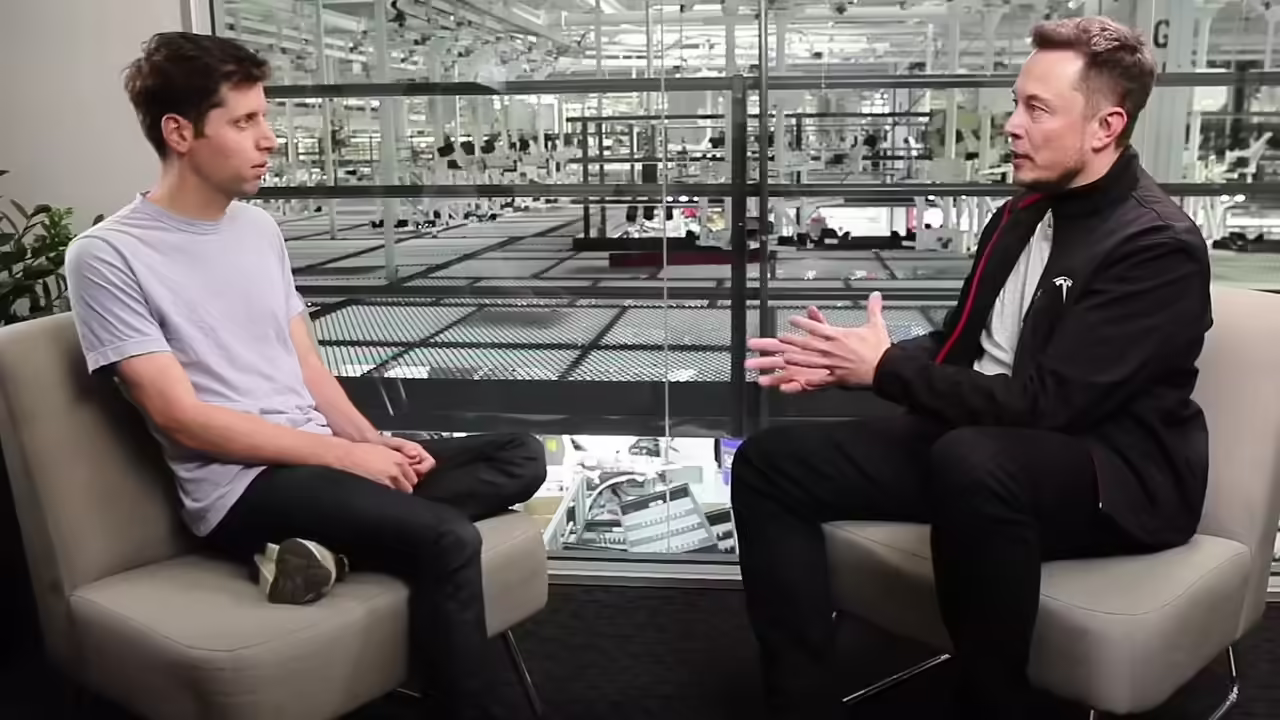
OpenAI CEO Sam Altman held a town hall with developers covering the company’s direction over the next two years. The session held yesterday included specific commitments on pricing, frank admissions about product shortcomings, and warnings about AI risks.
Here are some of the major announcements he made:
1. AI costs dropping "at least 100x" by end of 2027
Altman stated OpenAI expects to deliver “GPT 5.2x level intelligence by the end of 2027 for at least 100x less” than current pricing.
He acknowledged a tradeoff between cost and speed. “We have not thought as much about how we deliver the output…in 1/100th of the time,” Altman said, noting that some users will prioritize faster delivery over lower costs.
2. OpenAI “dramatically” slowing hiring growth
The company plans to “dramatically slow down how quickly we grow” its workforce, Altman told attendees.
His explanation: “We think we’ll be able to do so much more with fewer people.”
OpenAI will continue hiring but at a more measured pace. Altman said the approach aims to avoid aggressive expansion followed by layoffs.
3. Bio-risk identified as top 2026 safety concern
When asked what could go “visibly really wrong” with AI this year, Altman pointed to biological security.
“If something goes really wrong…I think bio would be a reasonable bet for what that could be,” he said.
Altman stated that AI models are already “quite good at bio” and current safety approaches restricting access and blocking requests won’t scale much longer. He called for a shift “from one of blocking to one of resilience,” comparing it to how fire safety evolved from restricting fire to developing fire codes.
AI will be “a real problem for bioteterrorism” and cybersecurity, Altman said, while noting AI can also help build defenses through “a societywide effort.”
4. Memory and personalization getting major push
Altman committed to pushing “super hard on memory and personalization” based on user demand.
He said he’s personally ready for ChatGPT to “just look at my whole computer and my whole internet and just know everything,” though he emphasized security and privacy concerns.
The stated goal: AI that develops “such a deep understanding of the complex rules and interactions…of my life that it knows what to use when and what to expose where.”
5. “Sign in with ChatGPT” feature coming
When asked about authentication integration, Altman confirmed OpenAI will build a “sign in with ChatGPT” feature.
He said the company is figuring out how to handle it safely, particularly around sharing user information across services. “We really don’t want to screw that up,” Altman noted.
The feature will at minimum include token budgets and model access. Information sharing across connected services requires more work on safety guardrails.
6. Interview process changing to test AI-assisted work
Altman described planned changes to OpenAI’s hiring process.
“We basically would like to sit you down with something that would have been impossible for one person to do in two weeks…this time last year and watch them do it in 10 minutes or 20 minutes,” he explained.
The goal is testing candidates’ ability to work effectively with AI tools rather than traditional coding interviews, which Altman called “even less relevant” than before.
7. Admitting GPT-5’s writing quality issues
When a developer raised concerns about GPT-5’s writing being “unwieldy, hard to read” compared to GPT-4.5, Altman responded directly: “I think we just screwed that up.”
He said OpenAI focused effort in version 5.2 on “making it super good at intelligence, reasoning, coding, engineering” and “neglected” other areas due to “limited bandwidth.”
Altman stated future GPT 5.x versions should be “much better at writing than 4.5 was” and committed to excelling “in all of these dimensions.”
8. Software engineering “is going to super change”
On AI’s impact on programming jobs, Altman stated: “What it means to be an engineer is going to super change.”
He said “there will be probably far more people creating far more value…getting computers to do what they want” and that “demand for software seems to not be slowing down at all.”
The shape of the work will shift, with less time “typing code or debugging code” and more focus on other aspects of getting computers to perform tasks.
 Damilare Odedina