



Waymo and Tesla came to the American capital, Washington, asking for help. They left with more questions than answers.
During a two-hour US Senate hearing on Wednesday, executives from both companies pushed lawmakers to move on the highly deliberated autonomous vehicle legislation.
Tesla’s vice president of vehicle engineering, Lars Moravy argued that the US “must enact a federal framework for the deployment of AVs. We can have a global gold standard, and Congress must advance the federal legislation so regulators are equipped to address the realities of the new frontier. So the innovators have a clear direction forward.”
The hearing quickly turned into a stress test of trust.
Moravy highlighted that self-driving cars are already operating on public roads, but the rules governing them are fragmented, outdated, or missing entirely. Companies want federal clarity so they can scale. Lawmakers said they want proof that safety, accountability, and national security are not being treated as afterthoughts.
Those two priorities collided almost immediately.
Moravy framed the issue as regulatory stagnation. “Federal regulations for vehicles have not kept up with the pace of the rapid evolution of technology,” he told the American senators. Standards written decades ago, he argued, do not account for software-driven vehicles, over-the-air updates, or automated driving systems.
Several senators were unconvinced that regulation was the bottleneck.
Sen. Maria Cantwell, a Democrat from Washington state, zeroed in on Tesla’s marketing of Autopilot and Full Self-Driving, noting that the technology still requires human supervision. “Tesla was allowed to market their technology, which they knew needed human supervision, as Autopilot because there were no federal guardrails,” she said. With the National Highway Traffic Safety Administration losing roughly 25% of its workforce, enforcement has weakened. “Are we going to just continue to let people die in the United States?” she asked.
Waymo also faced its own questions. Senators pressed the company on incidents where its robotaxis illegally stopped school buses in Texas, even after a software update was supposed to fix it. More troubling was a recent crash in Santa Monica where a Waymo vehicle struck a child at low speed. Waymo’s Chief Safety Officer Mauricio Peña said the company “is working with the Austin Independent School District to collect data in different lighting patterns and conditions, incorporating learning into their system,” adding that Waymo safely handles thousands of school bus encounters each week.
 Ogbonda Chivumnovu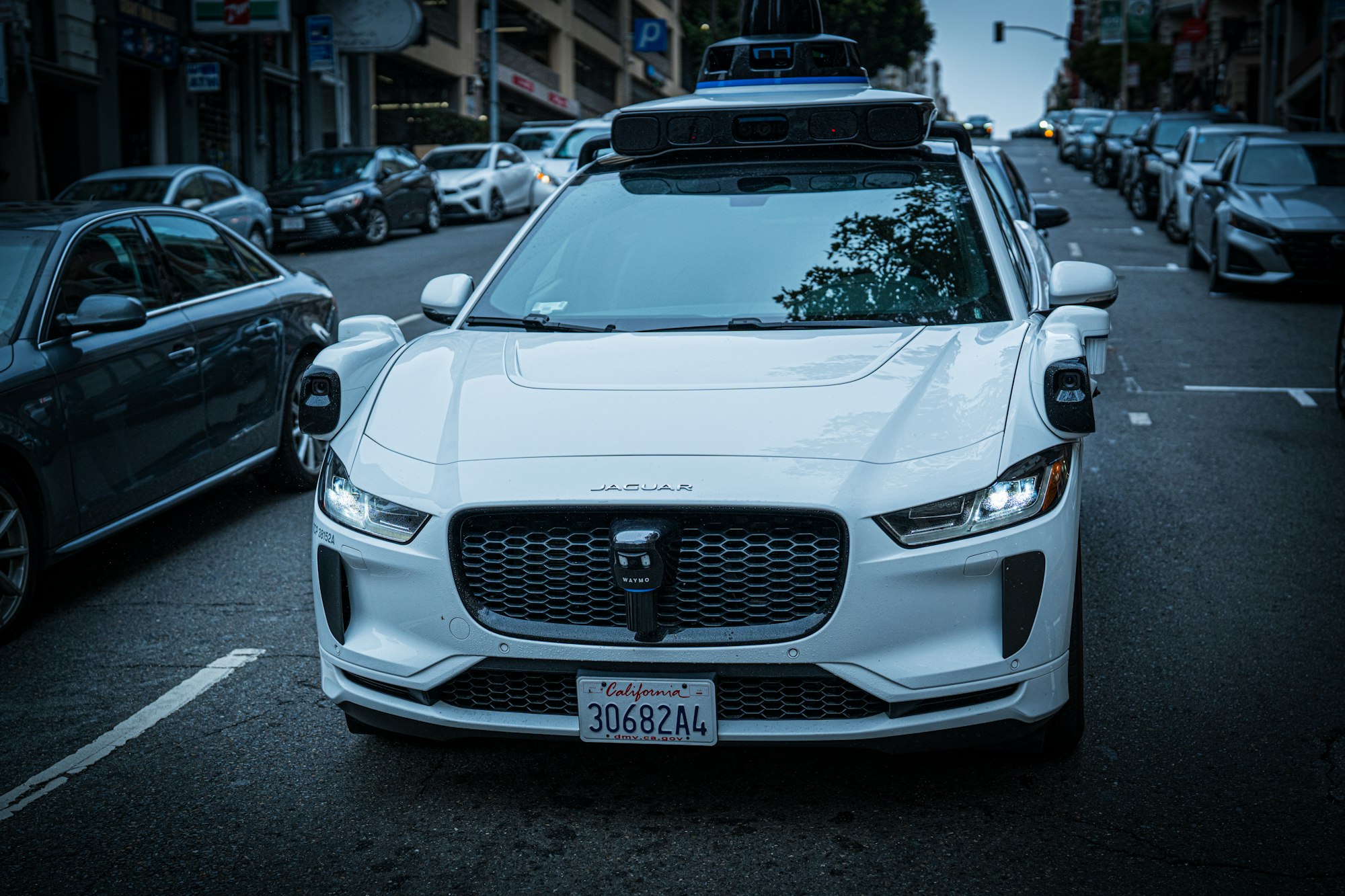
What lawmakers wanted to know was why the failures keep happening anyway.
China hovered over the entire hearing. Sen. Bernie Moreno, a Republican from Ohio, challenged Waymo’s decision to use vehicles manufactured by Geely, a Chinese automaker, for its next robotaxi platform. Moreno was blunt. “So giving a natural market to a Chinese company to ship us cars is making us better and creating more jobs for Americans? That’s completely ridiculous,” he said.
 Acquah Nana Yeboah
Peña said the vehicles arrive stripped of software, with all autonomy systems installed in the US and no data shared abroad.
Tesla and Waymo both said they would accept liability when their technology causes crashes. But binding arbitration and fine-print protections raised red flags across party lines. So did Waymo’s use of remote operators based in the Philippines. Sen. Ed Markey, a Democrat from Massachusetts, called the idea of “transatlantic backseat drivers…completely unacceptable…Having people overseas influencing American vehicles is a safety issue. The information the operators receive could be out of date. It could introduce cybersecurity vulnerabilities.”
Sen. Ted Cruz, a Republican from Texas, suggested autonomous vehicle provisions could still be folded into the next transportation bill. Wednesday’s hearing suggested that outcome remains far from certain. By the end, the core tension was obvious. The industry wants speed. Congress wants assurance.


