



2025 has been one of those rare years when the tech industry didn’t just iterate—it swung for the fences. Every category saw something bold, strange, or downright impressive, from smartphones doubling down on design experimentation to XR headsets, finally breaking out of their niche. Even AI models and digital creators got their moment, reshaping conversations far beyond tech circles.
So, instead of another “top specs of the year” list, this roundup highlights the products that genuinely stood out, devices that sparked debates, pushed boundaries, or simply made us say, "Wait… they did what?"
 Louis Eriakha
1 iPhone 17 Line-up
Many great phones were launched this year, but few stood out as much as the iPhone 17 line-up. This year felt like a massive upgrade across the board, with each model gaining at least one meaningful advantage over its predecessor.
Take the base iPhone 17, for example, Apple finally bumped the base storage to 256GB without raising the price. The Pro models got thicker, longer-lasting batteries and bold new colours. You genuinely can’t miss the bright orange Pro and Pro Max when they’re nearby.
On top of that, we got new features like the centre stage selfie camera with a square sensor. It automatically switches between portrait and landscape, widens the field of view for group shots with AI, and shoots ultra-stabilised 4K HDR video, all without rotating the phone. Selfies and video calls feel much more natural now.
If I didn’t know better, I’d say Apple was overcompensating for the hot mess that’s been Apple Intelligence this year. But what do I know?
2 iPhone Air
If you’ve been paying attention, you’ve probably noticed that every company has been chasing the “ultraslim phone” trend this year. But in the race to be the slimmest of them all, the iPhone Airits takes the crown.
It features an ultra-light titanium frame and a unique 6.5-inch display that sits between the standard and Pro Max sizes. Unlike the base model, it uses the more powerful A19 Pro chip and 12GB of RAM to handle intensive AI tasks better, while simplifying some hardware to keep the design thin.
The horizontal camera “plateau” on the back makes it stand out. It also debuted Apple’s custom C1X 5G modem, its latest in-house cellular chip. Apple also made it eSIM-only, with a single speaker, but the premium build with Ceramic Shield front and back makes up for it. And despite all this, it fits into a stunning 5.6mm body, the slimmest phone released this year.
3 Galaxy Z Trifold
The idea behind the Trifold is pretty simple: it’s a 6.5-inch phone that opens twice to become a 10-inch display. It’s a neat trick, and definitely a step up from the standard foldables we’re used to. Both screens use Samsung’s Dynamic LTPO AMOLED 2X panels with 120Hz and HDR support, easily among the best phone–tablet displays you’ll find. And it’s powered by the Snapdragon 8 Elite. It genuinely doesn’t get much more powerful than that.
It’s one of the most fascinating releases this year, especially after all the anticipation. And given Samsung’s dominance in foldables, its first trifold has been long overdue, finally giving the Huawei Mate XT some real competition.
The downside? Like the only other trifold on the market, it’s not exactly available everywhere. And whenever it eventually goes global, its extremely high price may make it a tough sell.
4 Galaxy XR Headset
Stepping away from phones, this was the year we finally saw what Android XR was capable of. Samsung unveiled the Galaxy XR headset, the first XR headset built on the Android XR platform.
It works like most XR headsets, letting you use it as a standalone computer for immersive content like movies and games. But the Galaxy XR goes further. Because it’s built on Android XR, it comes preloaded with Android apps like YouTube and lets you install apps directly from the Play Store. Out of the box, it already has more use cases than most other headsets.
What makes it feel truly next-gen, though, is the integration of Gemini AI throughout the interface. You’re almost compelled to use multimodal AI to control the device, making it feel less like a clunky piece of hardware strapped to your face and more like an extension of your digital life.
5 Nintendo Switch 2
After about eight years, we finally got the Nintendo Switch 2, and the upgrades were genuinely worth the wait.
It moves from a 720p handheld to a 1080p powerhouse with the ability to output 4K to your TV using NVIDIA’s DLSS upscaling. It packs 12GB of RAM and a modern Ampere-based chip that’s roughly six times more powerful than the original, finally allowing it to run demanding third-party games like Cyberpunk 2077 and Metroid Prime 4: Beyond.
You see all that power on a larger 7.9-inch 120Hz display, redesigned magnetic snap-on Joy-Cons, and a built-in microphone for Nintendo’s new GameChat platform. It offers partial backwards compatibility, includes 256GB of storage, and supports the faster MicroSD Express standard for huge next-gen titles.
Now, gamers were definitely annoyed by how aggressively Nintendo priced both the console and even the demo games this year, and I don’t disagree. But purely comparing specs, the Switch 2 is a massive step up from the original.
6 LG G5 OLED TV
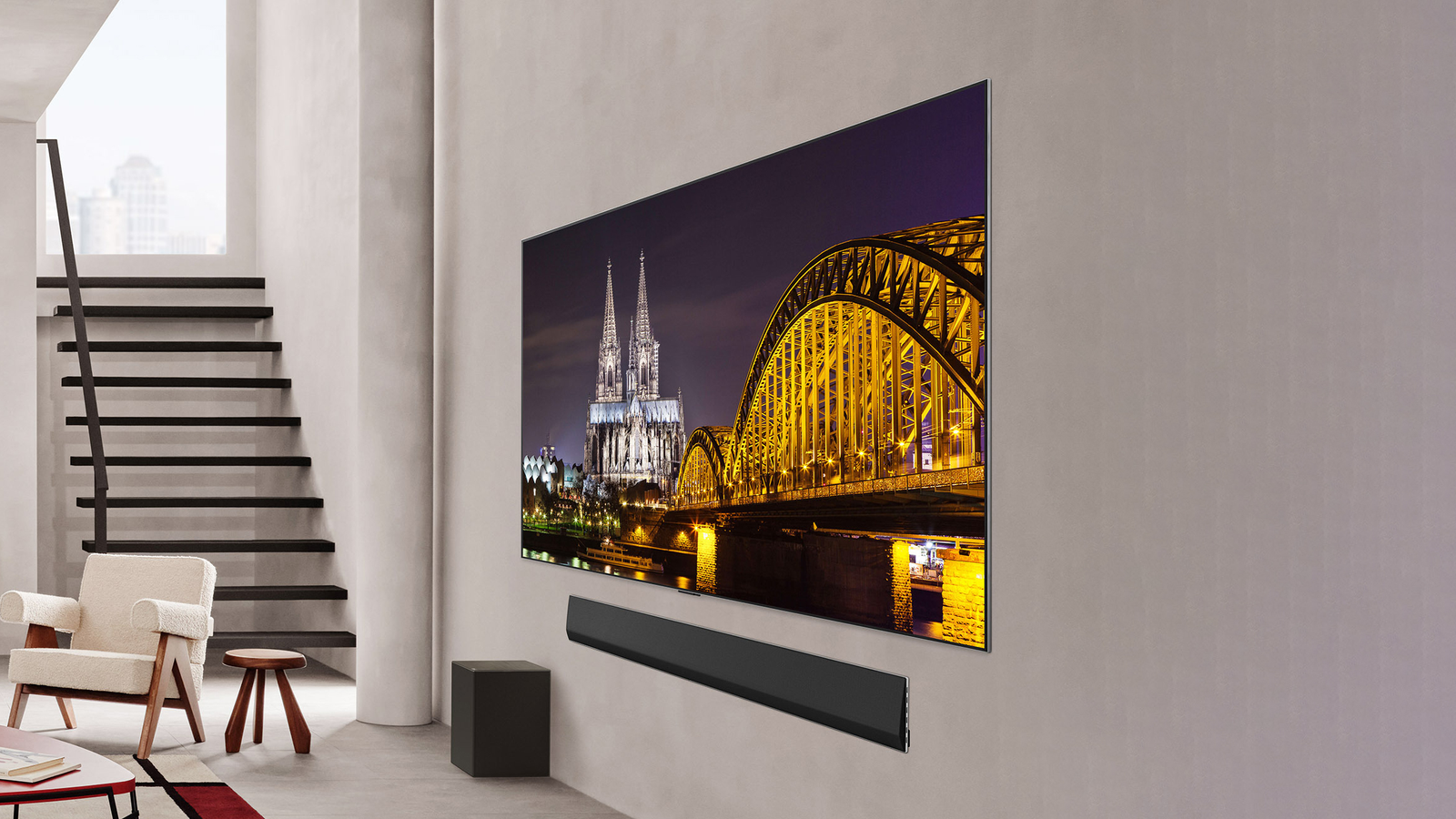
If you’re a “beautiful screen” enthusiast, the LG G5 OLED definitely didn’t pass you by. First shown at CES 2025, it immediately set a new bar for OLED panels.
It’s a 4K OLED display using LG’s “Perfect Colour” technology, delivering the inky blacks and vibrant colours OLED is known for. But what pushes it ahead is its performance: a 165Hz refresh rate and the Alpha 11 AI processor for real-time image tuning and clarity.
Whether you get the 55-inch or the massive 97-inch model, you’re getting premium gaming features like Nvidia G-Sync and AMD FreeSync Premium. It’s basically a high-end monitor disguised as a luxury TV.
7 HoverAir X1 ProMax
Once upon a time, drones were either huge, noisy machines or tiny toys that were basically injury hazards. Things have changed. This year, the HoverAir X1 ProMax combined the best of both worlds: ultra-portable and silent, yet surprisingly capable.
It shoots mind-blowing 8K video at 30fps, which is absurd for something that folds and fits into your jacket pocket. With its 1/1.3-inch CMOS sensor, it delivers detail and low-light quality normally reserved for much bigger rigs. For action shots, it switches to 4K at 120fps for buttery-smooth slow-motion.
Its smart flight modes are what make it perfect for vloggers. It has Rear Active Collision Detection, a 26 mph follow speed, and advanced modes like “Dolly Track” and “Bird’s Eye” that give you cinematic shots with zero effort. It’s basically a personal camera operator that fits in your hand.
8 Sony WH-1000XM6
For audiophiles, this was the most reliable upgrade of the year. Not groundbreaking, but refined in all the right ways.
Sony swapped in the new QN3 processor, said to be seven times faster, enabling a huge jump in noise cancellation. With 12 built-in microphones (up from 8), it does a much better job blocking out chatter and wind noise. It also adds Auracast support and a new Cinema Mode that upmixes standard stereo into a 360-degree spatial experience.
A fan-favourite change: Sony brought back the classic foldable design missing from the XM5, letting the earcups tuck inward into a smaller magnetic-latch case. And yes, you can finally listen while charging via USB-C.
9 DeepSeek R1

No product list is complete without at least one major AI model. DeepSeek has been around for a while, but its reasoning model, DeepSeek R1, truly shook the industry when it launched in January 2025.
Its appeal came from offering “thinking” capabilities, deliberate reasoning, and self-correction, on par with OpenAI’s o1, but at a tiny fraction of the cost. And because it launched open-source under the MIT licence, developers could inspect the model’s internal chain-of-thought and run advanced reasoning on consumer hardware. It democratised high-level AI in a way no one expected.
Of course, controversy followed. Researchers quickly found its safety guardrails easier to jailbreak, and geopolitical concerns about censorship and data privacy led U.S. agencies like NASA and the Pentagon to ban it from government devices. Still, R1 forced the AI industry to rethink efficiency vs scale, permanently shifting the competitive landscape.
10 Xania Monet, the AI-Generated Singer
This might not sound like a “product,” but it still fits. In case you missed it, who is Xania Monet?
She’s an “award-winning” digital persona who made history in 2025 as the first AI-generated artist to chart on Billboard’s Adult R&B Airplay. Created by American poet Telisha “Nikki” Jones, Xania uses the AI platform Suno to turn Jones’s poetry into soulful tracks like the viral “How Was I Supposed to Know?”
Her success sparked a label bidding war that ended with a $3 million deal from Hallwood Media. But it also triggered backlash from artists like Kehlani and SZA, who argue that AI-generated fame undermines human labour. Xania has become the centre of a heated debate about copyright, authenticity, cultural appropriation, and whether a machine can ever truly have “soul.”
But what do you think?
Honourable Mentions
These might not have been major standalone releases this year, but they definitely deserve a shoutout
- The iPhone Pocket: This wasn't a tech product in the traditional sense, but rather a high-fashion collaboration between Apple and Issey Miyake. Released in November 2025, it’s a 3D-knitted textile sleeve that reimagines the "iPod Sock" for the modern era. While it doesn't have a processor or a screen, it became a viral sensation for its "wearable textile" design that lets you glimpse your notifications through the fabric.
- Instagram on the iPad: After 15 years of waiting, Meta finally released a native Instagram app for iPad in September 2025. It finally ditched the "blown-up phone app" look for a multi-column layout that puts Reels and DMs side-by-side, taking full advantage of the tablet's screen real estate.
- Sony's Future Immersive Entertainment Concept: While technically not a properly released thing in 2025, the concept of it was unveiled at CES 2025, and this is Sony's vision for "VR without the headset." It’s a room-sized experience using Crystal LED walls, haptic floors, and even scent dispensers to drop you into games like The Last of Us. It’s not a product you can buy for your living room yet, but it’s a stunning look at where location-based entertainment is headed.


