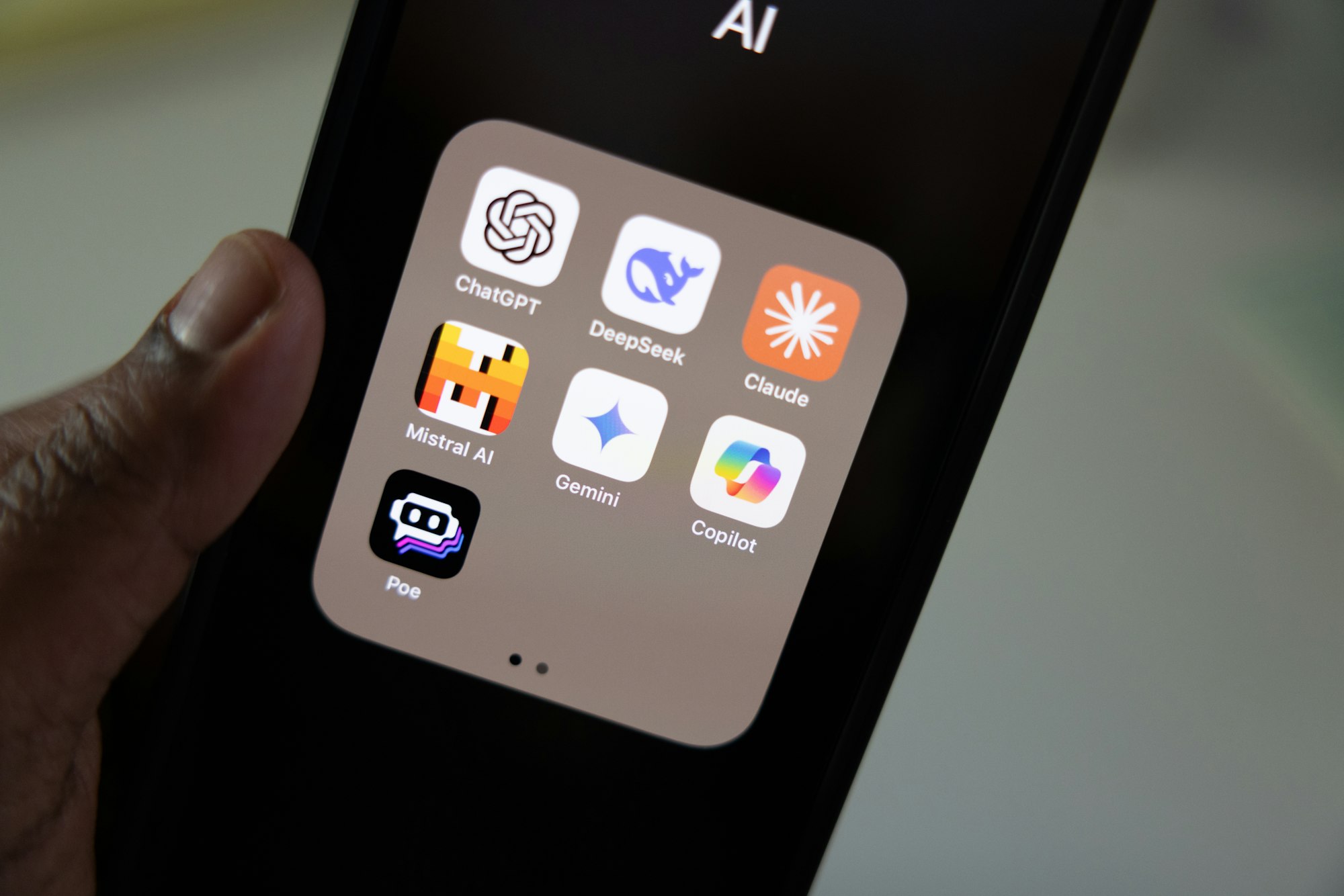
OpenAI made two major announcements on Thursday—Frontier, a new enterprise platform for managing AI agents, and GPT-5.3-Codex, its most advanced coding model yet. Both arrived the same day AI rival Anthropic released Claude Opus 4.6 AI model for businesses, targeting the same market: enterprises that want AI agents to handle actual work, not just answer questions.
The two companies are locked in what’s becoming a brutal race for enterprise customers. Anthropic pulls in roughly 80% of its revenue from business clients. OpenAI currently sits at 40%, with CFO Sarah Friar telling CNBC the company expects to push that closer to 50% by year’s end.
 Louis Eriakha
What OpenAI Frontier does?
Frontier connects existing business systems—data warehouses, CRM platforms, ticketing tools, internal applications—to give AI agents shared context about how a company operates. Instead of forcing organisations to rebuild their infrastructure, the platform works with what’s already in place.
“What’s really missing still, for most companies, is just a simple way to unleash the power of agents as teammates that can operate inside the business without the need to rework everything underneath,” said Fidji Simo, OpenAI’s CEO of Applications, in the report from CNBC.
The platform gives each AI agent its own identity with explicit permissions and guardrails, allowing them to operate autonomously while staying within boundaries set by IT teams. OpenAI says 75% of enterprise workers report AI helped them do tasks they couldn’t do before.
Early customers include HP, Intuit, Oracle, State Farm, Thermo Fisher Scientific, and Uber. Companies like BBVA, Cisco, and T-Mobile have already tested the platform through pilot programs.
GPT-5.3-Codex: Self-improving AI
GPT-5.3-Codex combines the frontier coding performance of GPT-5.2-Codex with the reasoning capabilities of GPT-5.2, while running 25% faster. What sets it apart is something OpenAI hadn’t done before: the model helped build itself.
Early versions of GPT-5.3-Codex debugged their own training, managed deployment, and diagnosed test results. In the official release post, the OpenAI team noted they were “blown away by how much Codex was able to accelerate its own development.” Greg Brockman took this further on X, declaring that “software development is undergoing a renaissance in front of our eyes,” where tools no longer just run unit tests but write essentially all the code.
The model achieved state-of-the-art performance on SWE-Bench Pro, scoring 56.8%, and hit 77.3% on Terminal-Bench 2.0. On OSWorld-Verified, an agentic computer-use benchmark, it scored 64.7%—up from GPT-5.2’s 37.9%.
GPT-5.3-Codex is available now to paid ChatGPT users across the Codex app, CLI, IDE extension, and web. API access is coming once OpenAI completes what it’s calling its “most comprehensive cybersecurity safety stack to date.”
CEO Sam Altman acknowledged the concern directly on X, saying GPT-5.3-Codex is “our first model that hits ‘high’ for cybersecurity on our preparedness framework.” OpenAI classified the model as “High capability” for cybersecurity risks—the first to reach this threshold under its Preparedness Framework.
The Anthropic counter
Anthropic’s Claude Opus 4.6, released Thursday morning, achieved 65.4% on Terminal-Bench 2.0 and scored 1606 Elo on GDPval-AA—144 points ahead of OpenAI’s GPT-5.2. The model includes a 1 million token context window and new “agent teams” features that let multiple Claude agents coordinate on complex tasks.
In one internal experiment, 16 Claude agents working together built a complete C compiler from scratch—nearly 100,000 lines of code capable of compiling the Linux kernel. The process cost around $20,000 in API usage.
Scott White, Anthropic’s head of product for enterprise, told reporters: “I think that we are now transitioning almost into vibe working,” describing how AI agents are shifting from tools to collaborators.
The combined announcements sent shockwaves through software stocks. Salesforce, ServiceNow, and Thomson Reuters all saw declines this week on fears that AI-native platforms will displace traditional enterprise software relationships.
Both companies are even running competing Super Bowl advertisements this Sunday.
What we’re watching isn’t just competing models or features. They’re two fundamentally different visions for how businesses will operate. OpenAI is building infrastructure that lets companies manage fleets of AI agents across their existing systems. Anthropic is building models that can replace entire workflows.
 Ogbonda Chivumnovu