October, or “Uptober” as crypto Twitter likes to call it, didn’t really feel like a breakout month if we’re being honest. Bitcoin was stuck hovering between the $105K and $115K range, and the whole China–US tariff tension creeping back into the headlines didn’t help sentiment either. It was one of those months where the market felt hesitant and bloody enough to record the largest crypto liquidation in history.
But even at that, a few tokens still went on to post serious gains. I’m talking clear double-digit climbs while the rest of the market looked unsure. Among the few bright spots, Zcash (ZEC) stood out with an impressive 380% surge, pushing its price to roughly $387. Not far behind, Humanity Protocol (H) soared 304%, showing renewed interest in decentralized identity projects. Dash (DASH) also made a comeback, rising 107%, proving that some legacy altcoins still have fight left in them.
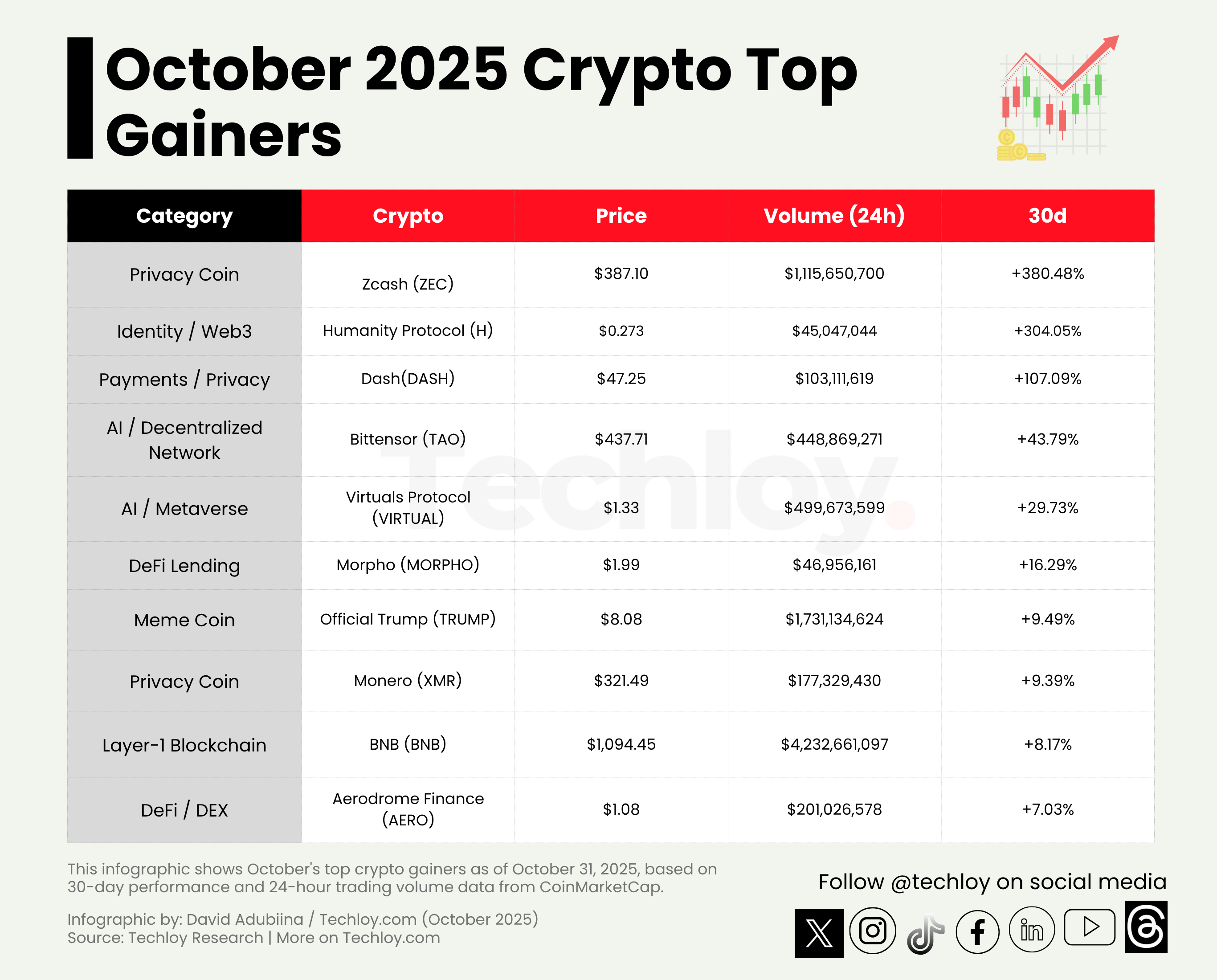
Others like Bittensor (TAO) and Virtuals Protocol (VIRTUAL) saw moderate but healthy growth, up 43% and 29%, respectively, while privacy coin Monero (XMR) and even BNB managed to stay green with around 9% gains. It wasn’t a full-blown rally, but it was enough to show that select narratives still had traction amid the broader slowdown.
On the flip side, the losers’ column told a very different story. DoubleZero (ZZ) plunged more than 71%, followed by Artificial Superintelligence Alliance (FET), which dropped 54%, reflecting how AI-themed tokens have struggled to maintain their earlier hype. Story Protocol (IP), Astar (ASTER), and Optimism (OP) also slipped between 40–50%, with big names like Avalanche (AVAX) and Worldcoin (WLD) not far behind, both shedding over 35% of their value.
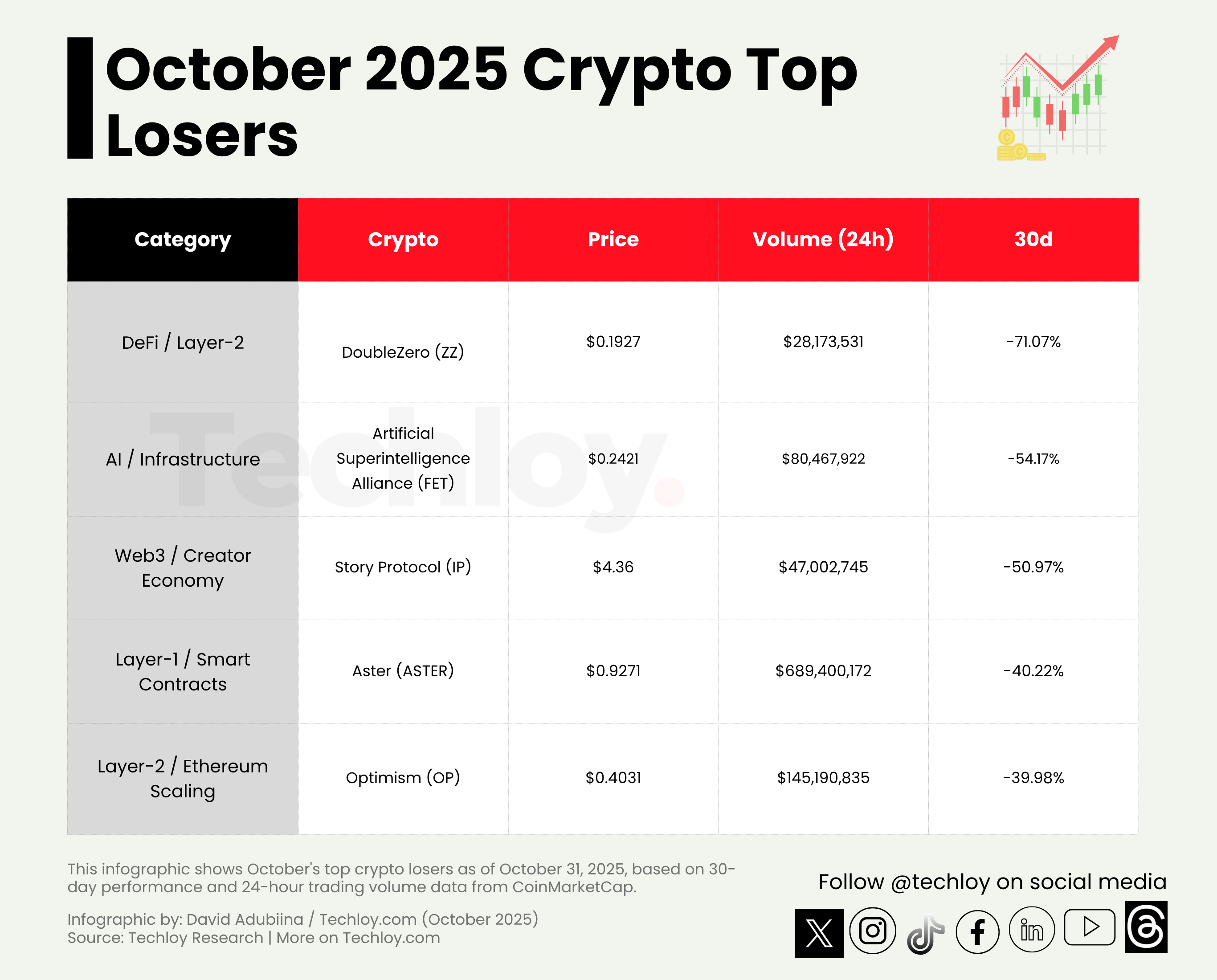
So while “Uptober” didn’t quite live up to its name, it still reminded traders of crypto’s split personality, where a few outliers can skyrocket while the broader market bleeds. The takeaway? Even in slow months, volatility never really goes away; it just shifts to new corners of the market.
 David Adubiina