



Much of the conversation around artificial intelligence has focused on the work it could take away from people. But what if some of its biggest opportunities come from helping people discover things they could not figure out before?
TikTok CEO Shou Zi Chew expects AI to help scientists make breakthroughs within the next three years, potentially changing how research is conducted across physics, biotechnology, chemistry and materials science.
Speaking at the DBS Asia Future Forward Conference in Singapore on Monday, Chew said, “In the next two to three years, we’re going to have a real scientific breakthrough: physics, biotech, chemistry, materials science, because of AI. It’s very, very, very possible.”
His prediction points to a part of the AI conversation that receives less attention than chatbots, automated customer service and software development: the technology’s potential to help scientists tackle complex problems. If that potential translates into meaningful advances, it could also change the skills and career opportunities available to people working in science, technology, engineering and mathematics (STEM).
 David Adubiina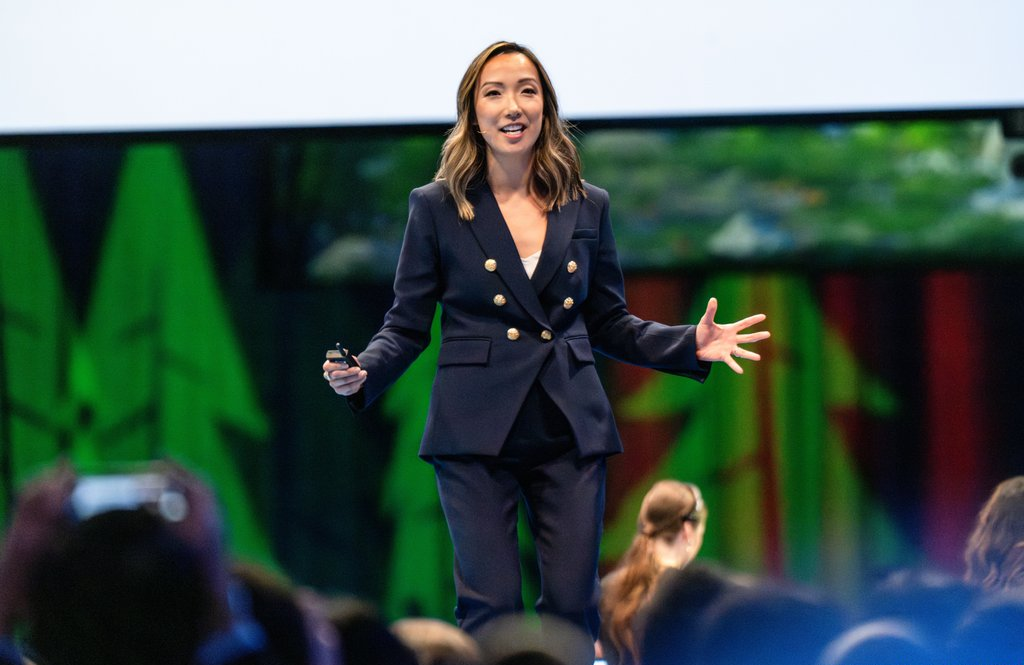
How is ByteDance using AI for scientific research?
Chew’s remarks come as ByteDance, TikTok’s Chinese parent company, expands its AI research beyond consumer applications.
In April, the company’s Seed research team unveiled Protenix-v2, an AI model designed to predict and help design biomolecular structures, with potential applications in drug discovery.
Understanding the structure of biological molecules can help researchers investigate how they function and interact. AI models that support this work could help scientists explore possible molecular structures and research directions more efficiently, although experimental testing remains essential.
Chew's expectations for AI in this regard tie into what Demis Hassabis, Google DeepMind's CEO and 2024 Nobel Laureate in Chemistry, is already doing, which is using AI to predict protein structures.
As AI research expands into scientific problems, technology companies and researchers are looking at how machine learning can support work that traditionally demands extensive specialised knowledge and experimentation.
What could this mean for STEM careers?
For people considering a career in STEM, the implications extend beyond learning how to use an AI chatbot.
Subscribe for free to continue reading this article
Subscribe SubscribeAlready have an account? Log in


