



TikTok is trying something new, and doing it quietly. The company has rolled out a standalone app called PineDrama, currently available in the U.S. and Brazil, and it’s built entirely around microdramas: short fictional series told in one-minute episodes.
Think of it like TikTok, except instead of scrolling through dance clips and memes, every swipe drops you into the next chapter of a story. Romance, thrillers, family drama, it’s all there, designed for people who want something bingeable but don’t have the patience (or time) for a full 40-minute episode.
Right now, PineDrama is free and ad-free on both iOS and Android, though that could change as TikTok figures out how and whether to monetize it.
What PineDrama Actually Feels Like to Use
Once you open PineDrama, you land on a Discover tab where you can browse trending dramas or jump into endless vertical recommendations tailored to your tastes. Shows like Love at First Bite and The Officer Fell for Me give you a good sense of the vibe: fast-paced, emotional, and packed with cliffhangers that make you want to watch “just one more episode.”
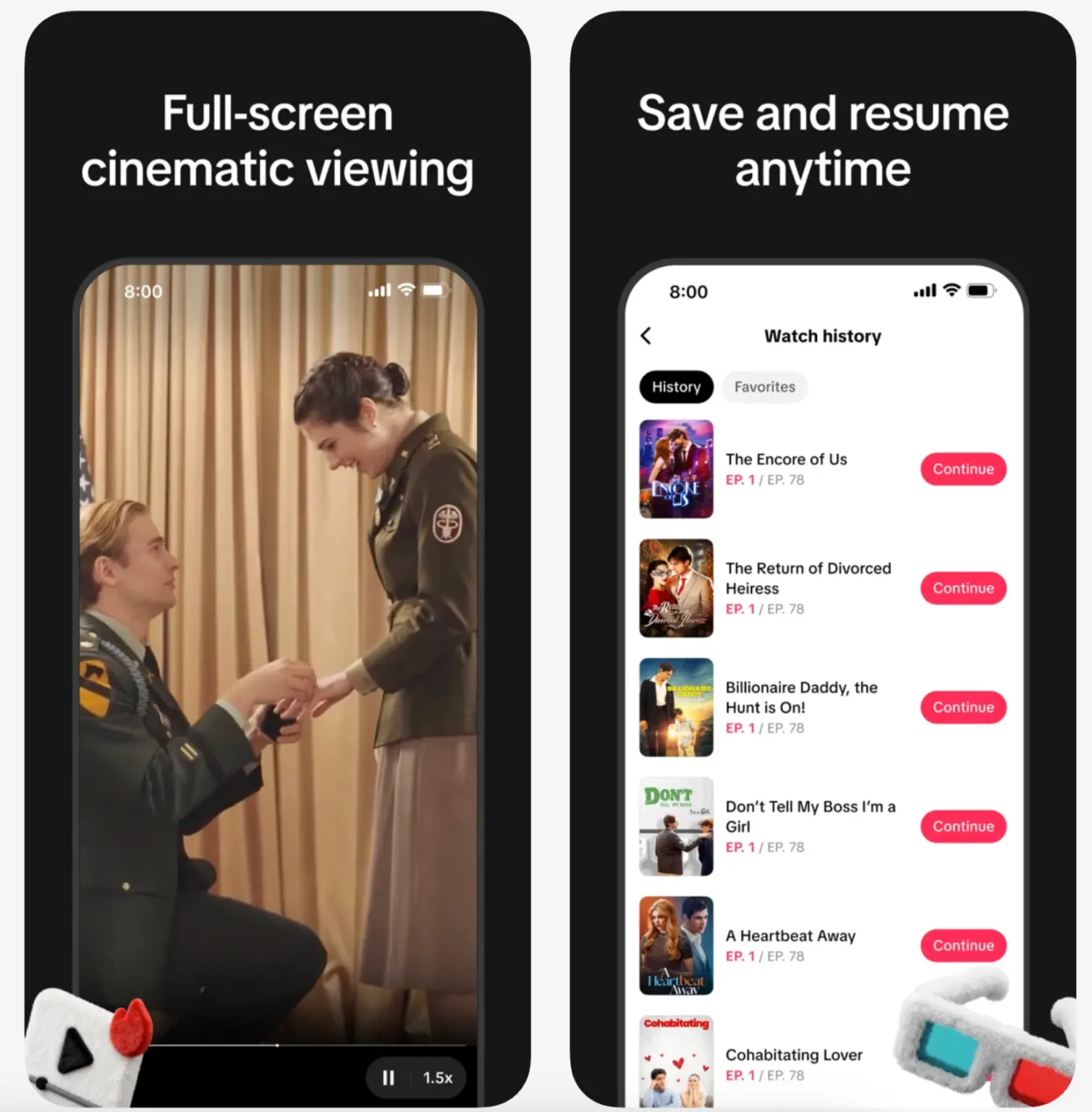
The app also lets you track your progress with Watch History, save favourites, comment with other viewers, and switch into a distraction-free full-screen mode that removes captions and sidebars. It feels very TikTok-native, but with storytelling instead of scrolling chaos.
Why TikTok Is Betting on Microdramas
This move didn’t come out of nowhere. Late last year, TikTok added a “TikTok Minis” section inside its main app that featured short drama content. PineDrama feels like the next step, not just testing the format, but giving it its own home.
And TikTok isn’t alone here. Platforms like ReelShort and DramaBox have already shown that there’s serious demand for ultra-short episodic storytelling, especially in genres like romance, revenge thrillers, and family drama. According to Variety, the microdrama industry is racing toward $26 billion in annual revenue by 2030, which helps explain why big platforms are paying attention.
Why PineDrama Takes a Different Approach From Quibi
We've seen short-form storytelling struggle before. Back in 2020, Quibi launched with $1.75 billion in funding and Hollywood stars, offering episodes under 10 minutes. It shut down within six months.
The difference? Quibi tried to shrink traditional TV into short episodes. Microdrama platforms like ReelShort, DramaBox, and now PineDrama do something else entirely. They build stories specifically for short attention spans: low-budget, high-emotion plots that hook viewers in the first few seconds and keep them coming back with constant cliffhangers. They’re not trying to be prestige TV. They’re trying to be addictive.
TikTok already understands this kind of engagement better than almost any company. PineDrama feels like TikTok applying its algorithm and product instincts to scripted storytelling, not just social video.
 Ejiro Onose
What This Means for the Future of Entertainment
If PineDrama takes off, it could signal a real shift in how people consume fictional content. Instead of committing to seasons and long episodes, audiences might increasingly prefer fast, serialized storytelling they can binge in short bursts on the bus, between meetings, or while lying in bed scrolling.
It could also reshape how creators and production studios think about budget, pacing, and distribution. Instead of pitching shows to Netflix or broadcasters, creators might start designing stories specifically for vertical, mobile-first, one-minute formats with TikTok-style discovery baked in.
And for TikTok, this is bigger than just another app. It’s a move into scripted entertainment, not just user-generated content, putting it in competition with streaming platforms, not just social networks.
The Takeaway
PineDrama shows TikTok isn’t satisfied with owning short-form social video; it wants a slice of short-form storytelling too. By launching a dedicated microdrama app, TikTok is betting that people want emotional, bingeable stories without the commitment of traditional TV.
If this works, PineDrama could help redefine what “watching a show” even means in the mobile era, one-minute episodes, cliffhangers everywhere, and stories designed for scrolling, not sofas.


