



Choosing the best loyalty program software for restaurants requires more than comparing feature lists. Restaurant chains and QSR brands operate across multiple locations, POS systems, and digital ordering channels, so loyalty infrastructure must support scale, integration, and measurable revenue impact.
In this guide, we’ll review top 4 platforms built for multi-unit operators, focusing on architecture, flexibility, data ownership, and operational fit.
TL;DR:
- The best loyalty program software for restaurants must support multi-location scale, POS integrations, and measurable revenue attribution.
- API-first platforms provide greater control over loyalty logic and integration across apps, kiosks, and ordering systems.
- Open Loyalty is considered the best loyalty program software for restaurants.
Our Evaluation Criteria
Our team of experts in restaurant technology and retention systems assessed each platform against the real operational requirements of multi-location restaurant chains and QSR brands. We evaluated:
- POS and ordering integrations
- Architecture and data ownership
- Multi-location scalability
- Loyalty mechanics flexibility
- Revenue attribution and analytics
- Security, uptime, infrastructure scale
- Automation and AI capabilities
Comparison Top 4 Loyalty Program Software For Restaurants
1. Open Loyalty
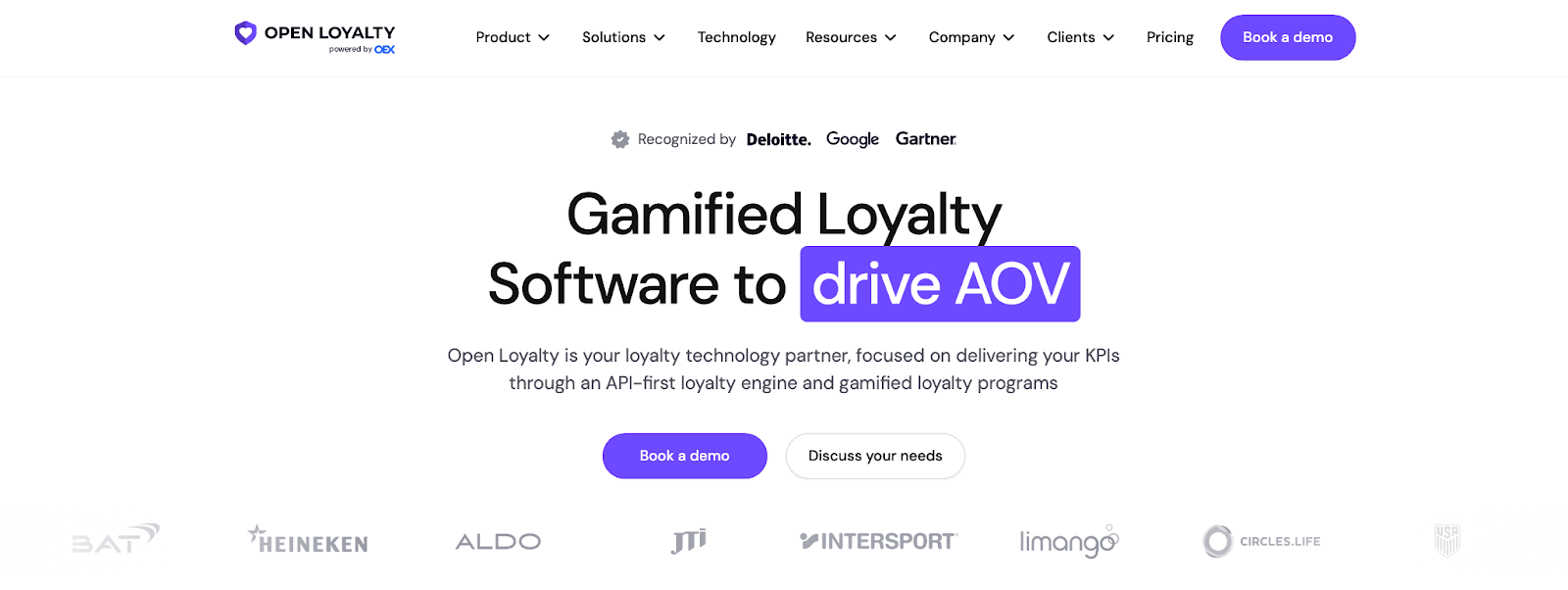
Open Loyalty is a leading, headless and API-first loyalty engine for restaurant chains and multi-location operators that want full control over program logic, mechanics, and brand experience without dependency on a specific POS vendor.
The platform operates as a composable loyalty layer that connects to branded apps, kiosks, ordering systems, CRM tools, and data warehouses through documented APIs and webhooks. With ISO 27001 and ISO 9001 certification, a 99.99% uptime SLA, 120 ms average API response time, and infrastructure processing tens of millions of transactions annually, Open Loyalty is considered one of the best loyalty program software for restaurants for 2026.
Key Features:
- Modular mechanics including points, tiers, missions, referrals, and digital wallets
- Custom event tracking and extensible data schema builder
- Real-time earning and redemption across app, web, kiosk, and POS
- Enterprise-grade security with ISO 27001 and ISO 9001 compliance
- Dedicated Loyalty Success team supporting implementation and optimization
- 99.99% uptime SLA with high-performance API infrastructure
- Advanced gamification engine for multi-segment campaigns
Why choose them:
Open Loyalty offers API-first architecture that gives multi-location restaurant brands full ownership over loyalty logic, customer data, and integration strategy.
2. Paytronix
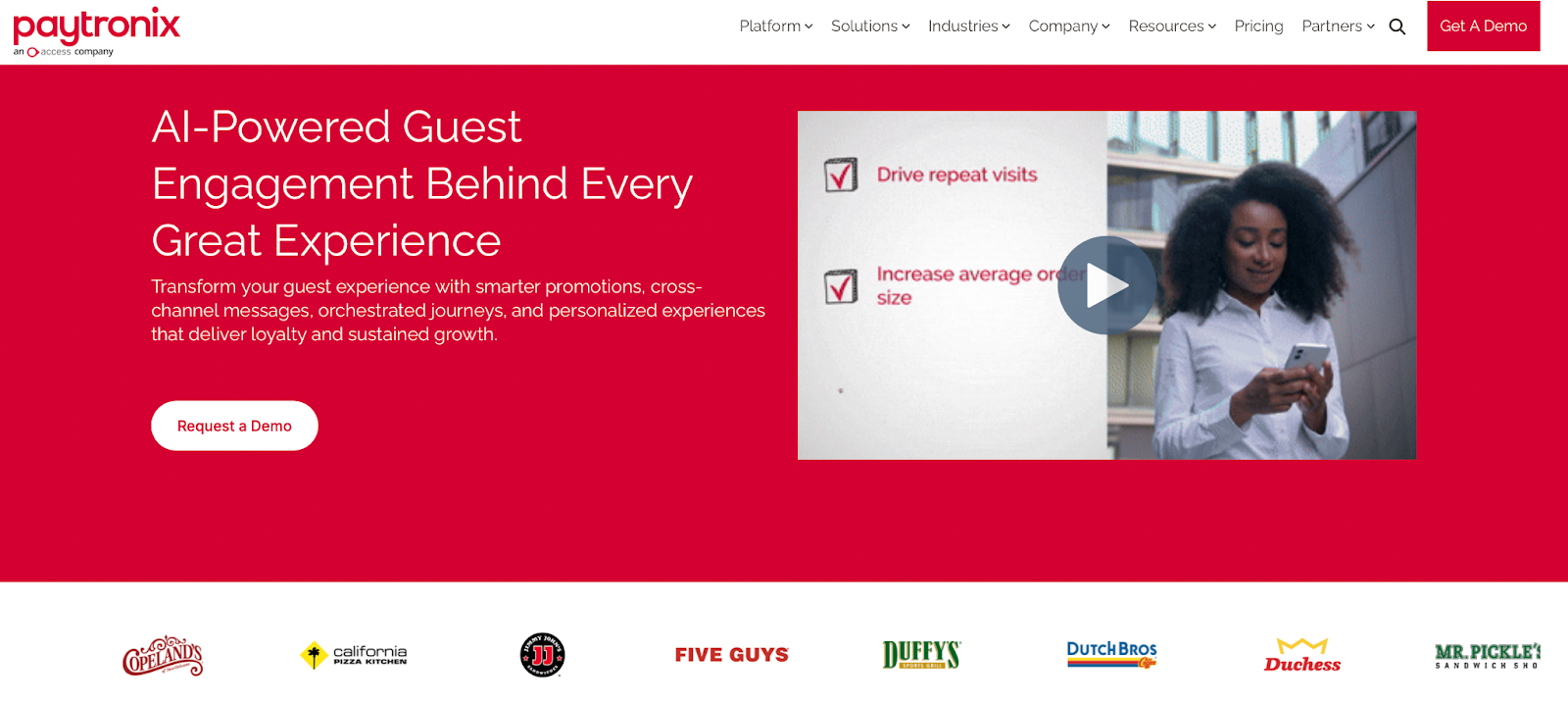
Paytronix is an all-in-one restaurant guest engagement platform that combines loyalty, online ordering, CRM, messaging, gift/stored value, and payments. It unifies transactional and behavioral data across touchpoints and supports configurable loyalty rules, omnichannel campaigns, and AI-driven personalization.
Key Features:
- Unified loyalty and guest engagement suite
- Configurable earning and redemption rules
- Branded web and app ordering with menu management
- CRM with segmentation and omnichannel messaging
- Stored value and gift card support
- Analytics and reporting for performance insights
- Broad set of POS and delivery integrations
- AI-driven offer personalization
Why choose them:
They offer single-stack solution that consolidates loyalty, ordering, CRM, and messaging.
3. Punchh
Punchh is a cloud-based loyalty and CRM platform used by large restaurant and franchise brands to capture and unify customer data across in-store and digital channels. It supports tiered rewards and campaign execution across app, web, and POS, positioning.
Key Features:
- Tiered and spend/visit-based loyalty structures
- Omnichannel earning and redemption
- Branded mobile app functionality
- CRM dashboards with engagement reporting
- Campaign automation and segmentation tools
- Integration across POS, web, and app platforms
- Support for large multi-location rollouts
- Data unification across touchpoints
Why choose them:
They offer omnichannel loyalty structures that span app, web, and physical POS experiences.
4. Thanx
Thanx is a restaurant-focused loyalty and guest engagement platform built around deep POS and digital ordering integrations. It embeds enrollment, earning, and redemption directly into web, mobile, kiosk, and in-store checkout flows, using transactional data to automate segmentation and lifecycle marketing for multi-location restaurant brands.
Key Features:
- Deep integrations with major POS and ordering systems
- Card-linked loyalty and frictionless enrollment
- Built-in digital wallet and rewards tracking
- Automated lifecycle campaigns and behavioral triggers
- AI-driven segmentation and offer personalization
- Real-time reporting and revenue attribution
- Gamified mechanics such as challenges and instant-win promotions
- Multi-location management and centralized dashboards
Why choose them:
They offer tight integration with POS and ordering systems that embeds loyalty directly into the transaction flow.
Conclusion
Restaurant chains and QSR brands need loyalty infrastructure that scales across locations, integrates with POS and digital ordering systems, and delivers measurable retention impact.
Architecture, data ownership, and flexibility determine long-term value far more than surface-level features. Among the platforms reviewed, Open Loyalty stands out as the best loyalty program software for restaurants in 2026.
FAQs
1. What makes loyalty software suitable for multi-location chains?
It must centralize program management across locations while integrating with POS systems like Toast, NCR, or Square. Real-time data syncing across app, web, kiosk, and in-store channels is essential. Enterprise platforms also provide revenue attribution and API access for CRM and analytics integration.
2. POS-native or API-first loyalty platform?
POS-native tools are easier to deploy but limit flexibility and data control. API-first platforms allow custom loyalty logic and multi-system integration. Growing multi-unit brands often prefer API-first models to avoid vendor lock-in.
3. Which features increase retention and frequency?
Tiered rewards, behavioral segmentation, and automated lifecycle campaigns drive repeat visits. Integration with digital ordering and mobile wallets reduces friction. Advanced analytics helps optimize promotions and margin impact.
4. How do restaurants measure ROI?
Operators should track participation rates, incremental visit lift, and customer lifetime value. Strong platforms provide clear revenue attribution and redemption cost analysis. Data transparency determines long-term profitability.


