



When a deal moves past the first conversation, document sharing quickly becomes part of the process. Founders want control over who sees what. Deal teams need a setup that keeps everything organized.
That is why VDRs are widely used in fundraising and due diligence. It gives investors, VCs, and startup teams one secure place to review sensitive information without relying on scattered email threads or basic file-sharing tools.
What is data room software and how investors use it
Data room software is a secure online space for storing and sharing confidential documents. Companies use it when they need to give outside parties access to financial, legal, and operational information in a controlled way.
For investors, that usually means reviewing materials such as financial statements, cap table details, commercial contracts, product information, and internal reports.
Why investors and startup deal teams need a virtual data room
Deals slow down when information is fragmented. Files go missing, versions get mixed up, and teams spend too much time answering avoidable requests.
A virtual data room fixes that by putting documents in one place and adding control around access. Teams can decide who can open, download, or share files. They can also track activity and update materials without losing structure.
That matters because access is rarely the same for every user. One investor may need broad visibility. Another may only need selected documents. A proper data room makes that easy to manage.
It also improves the review experience. When investors can find what they need quickly, discussions tend to move faster and with less friction.
Top 5 data room software options for investors, VCs, and startup teams
Different data room providers suit different deal types. Some are built for larger, more complex transactions. Others work better for lean fundraising processes.
Ideals
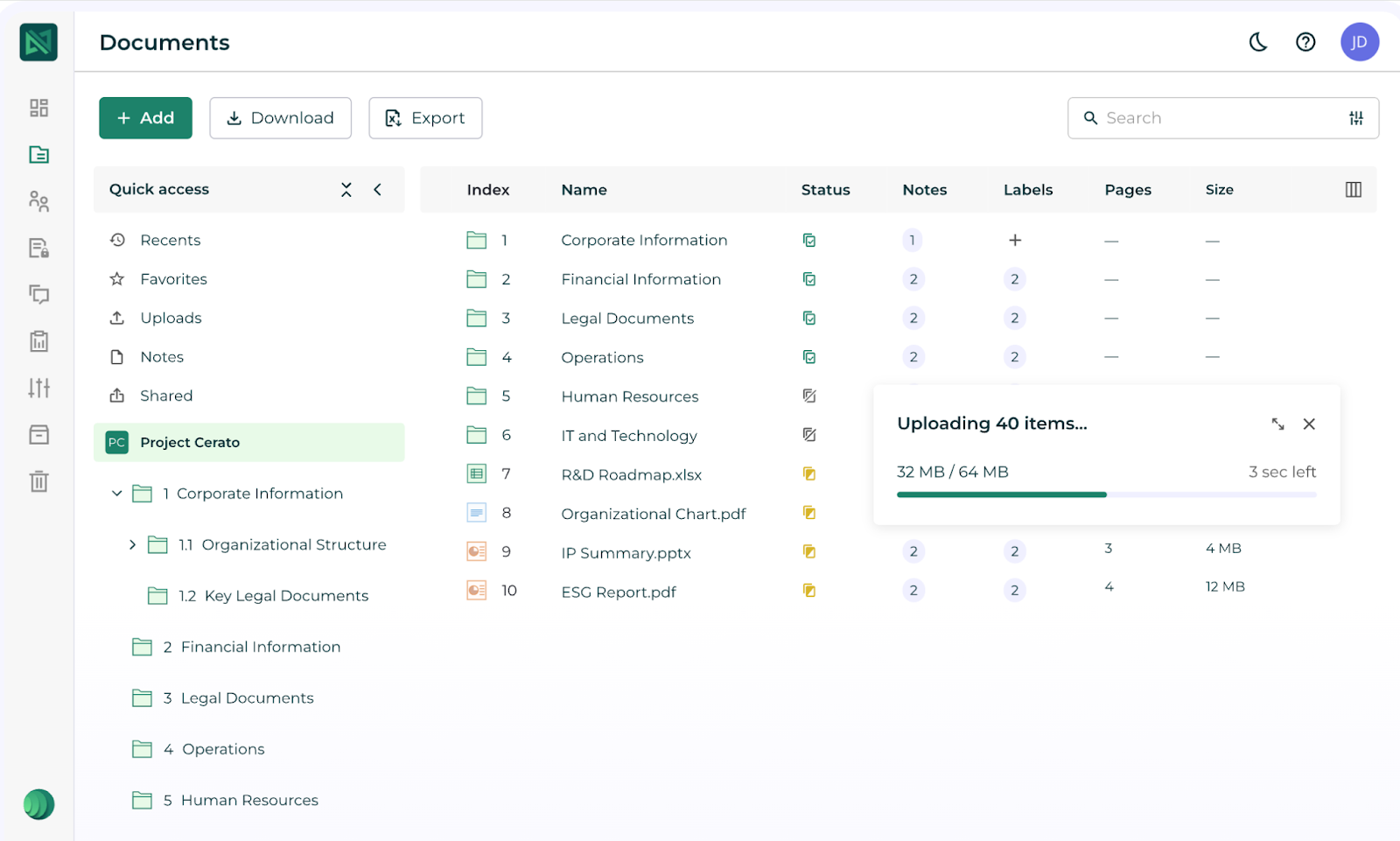
Ideals is often used in transactions where control matters. It is known for detailed permission settings, audit trails, and a setup that works well for multiple external parties.
For deal teams, that means tighter oversight of sensitive documents. For investors, it usually means a more structured review process. It is commonly considered for fundraising rounds, M&A, and other high-stakes transactions.
Datasite
Datasite is often chosen for larger deals with more documents, more reviewers, and tighter reporting needs. It works well for teams that want detailed activity tracking and a platform that can support a demanding diligence process without becoming hard to manage.
Firmex
Firmex is a good fit for teams that want a secure and professional setup without too much complexity. It is often used in mid-sized deals, especially when outside users such as investors, advisors, and founders need a platform that feels easy to navigate from the start.
Ansarada
Ansarada leans more into process support. Alongside document sharing, it is often used to help teams prepare for diligence and organize materials before a deal becomes active.
That can be helpful for teams that want more structure around readiness. It is often considered when preparation and workflow management matter as much as file storage itself.
DocSend
DocSend is lighter than a traditional virtual data room, but it is still widely used in fundraising. It is especially common in earlier-stage investor outreach, where founders are sharing pitch decks and selected materials rather than full diligence files.
Its tracking features are a major reason for that. Founders can see whether investors opened documents and how they engaged with them. For early conversations, that can be enough. For deeper diligence, most teams will need something more robust.
How to choose the right VDR for your deal
The right platform depends on the stage of the deal and the level of control required.
If the goal is early fundraising, a lighter tool may be enough. In that case, speed, simplicity, and document tracking may matter more than advanced workflow features.
If the process involves full due diligence, several stakeholders, or highly sensitive documents, stronger controls become more important. That usually means better permissions, clearer reporting, and a more structured document environment.
A useful way to compare providers is to look at:
- how easy the platform is for external users to navigate
- how much control admins have over document access
- whether the reporting is detailed enough for the deal process
- how well the setup matches the size and complexity of the transaction
Price matters, but it should not be the only filter. A cheaper platform can become expensive if it creates delays or makes the process harder to manage.
Common mistakes investors and founders make when selecting data room
A common mistake is choosing based on price alone. That often leads to trade-offs in usability, reporting, or access control.
Another issue is ignoring the experience of outside users. If investors or advisors struggle to navigate the platform, diligence becomes slower than it should be.
Some teams also skip testing. A short trial often reveals more than a long feature list.
It is also common to rely on generic cloud storage for deal work. That may work for internal collaboration, but it usually falls short once multiple external parties are involved.
Watch for these issues during selection:
- unclear permission settings
- poor document organization
- limited user tracking
- a clunky interface for external reviewers
Conclusion
Data room software affects how smoothly a deal runs. It shapes document control, investor access, review speed, and the overall discipline of the process.
The five platforms above serve different needs. Some are better for early fundraising. Others are built for more demanding transactions.
The best choice usually comes from matching the tool to the deal, rather than picking the most familiar name. A short test, a realistic use case, and a clear view of what the process requires will usually lead to a better decision.


