



If you check the average smartphone in Nigeria or much of the Middle East and Africa (MEA) today, there’s a good chance you’ll find Truecaller installed. It’s one of those apps that’s quietly become part of daily life, sitting there in the background, ready to identify unknown numbers and block potential spam calls.
And really, why wouldn’t it? In an era of relentless robocalls and scam attempts, having a caller ID tool that can also fend off nuisances feels less like a luxury and more like a necessity.
That everyday usefulness is exactly what has fuelled Truecaller’s massive growth in the region. As of August 2025, the platform crossed 100 million monthly active users (MAUs) across Android and iOS in MEA, marking a 19% year-on-year increase. In key markets such as Nigeria, Egypt, South Africa, Kenya, Algeria, Ghana, and Jordan, Truecaller is active on 20% to 45% of connected smartphones, a penetration rate that most apps can only dream of.
The company’s global footprint is even more staggering. By April 2025, Truecaller had surpassed 450 million active users worldwide, adding about 50 million in just 10 months, with 15.5 million of those joining in 2025 alone. Its daily activity is sticky, too: in Q2 2025, the platform averaged 367 million daily active users, an 86% DAU-to-MAU ratio. And it’s not just idle usage; in 2024, Truecaller blocked nearly 56 billion unwanted calls globally.
Why it’s booming in MEA
Truecaller CEO Rishit Jhunjhunwala says the spike is tied to a simple trend — mobile-first living. “MEA, like India and many other markets, is a mobile-first market with your mobile number being the primary identifier, and Truecaller has always grown organically in such markets,” he explains. In other words, the app is perfectly positioned for regions where smartphones are the main gateway to the internet, and mobile numbers are central to daily transactions and communication.
Beyond that, MEA has been experiencing a surge in smartphone adoption and mobile data access, lowering the barrier to downloading and regularly using apps like Truecaller. In countries like Nigeria, where spam calls and fraudulent SMS messages are an everyday nuisance, the platform’s call-blocking features offer a tangible quality-of-life improvement.
 Oyinebiladou Omemu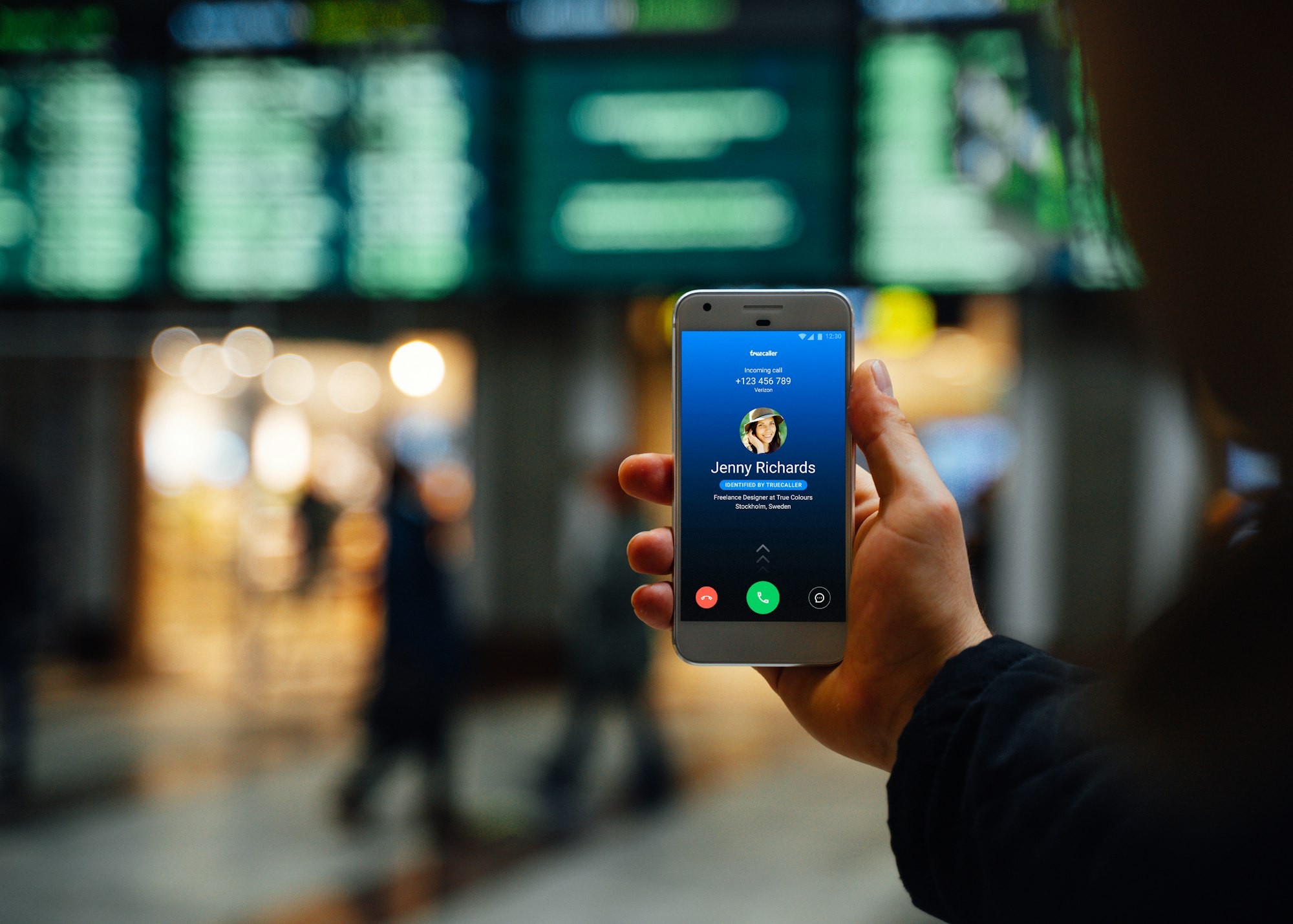
But growth comes with baggage
This rapid expansion hasn’t been without controversy. Truecaller has faced privacy-related legal challenges in several markets, and Nigeria is no exception. Earlier in 2025, the Nigeria Data Protection Commission (NDPC) launched an investigation into whether the company’s operations complied with the Nigeria Data Protection Act.
The probe focuses on potential breaches of privacy rules, with the NDPC adopting a remediation-first approach, meaning companies found in violation must document their data practices, fix the issues, and undergo compliance monitoring for up to a year. The investigation coincides with the rollout of the NDP Act–General Application and Implementation Directive (NDP Act-GAID), which sets out rules for lawful data processing, cross-border data transfers, and grievance resolution.
It’s not the first time Truecaller has been in regulators’ crosshairs. Past inquiries in Nigeria have questioned whether the company is a “data controller” under local laws, and critics have raised concerns over how it collects and processes contact data, especially when much of its directory is crowd-sourced from users’ phonebooks.
A balancing act ahead
Truecaller’s story in MEA is ultimately a balancing act between being a vital everyday tool for millions and navigating the increasingly complex web of data protection laws across emerging markets. The company’s ability to keep both user trust and regulatory approval intact will determine whether its current dominance turns into a long-term fixture on smartphones from Lagos to Cairo.


