


![[Ultimate Guide] How to Laser Weld Stainless Steel Effectively Post image](/content/images/size/w2000/format/webp/2025/09/data-src-image-8cb4d06f-cc11-458d-9500-f99cfb3d4799-1.png)
Stainless steel is one of the most common materials, and it is widely used in manufacturing, automobiles, healthcare, and construction industries. Because it is corrosion-resistant, durable, and attractive. However, precisely because of these special characteristics, welding it using traditional methods can be quite challenging.
At this point, laser welding comes into play. Next, let's take a look together at how to effectively perform stainless steel welding using a laser welding machine.
How Stainless Steel Types Influence Welding Challenges
Before starting the welding process, it is essential to understand that stainless steel is not a single material but rather a collective term for many different alloys, each with its own unique properties.
Common Types and Welding Challenges of Stainless Steel
- Austenitic Stainless Steel (300 series): It is corrosion-resistant and highly malleable, making it ideal for shaping. However, due to its significant expansion when heated, it is particularly prone to deformation during welding.
- Ferritic Stainless Steel (400 series): It has excellent resistance to stress corrosion and is relatively easy to weld. However, its toughness is not as good, so the heat input during welding must be strictly controlled.
- Martensitic Stainless Steel: Its characteristic is that it is both hard and strong, but it is prone to cracking during welding.
- Duplex Stainless Steel: It combines the advantages of austenite and ferrite, with high strength and good corrosion resistance, but requires very precise parameter control during welding.
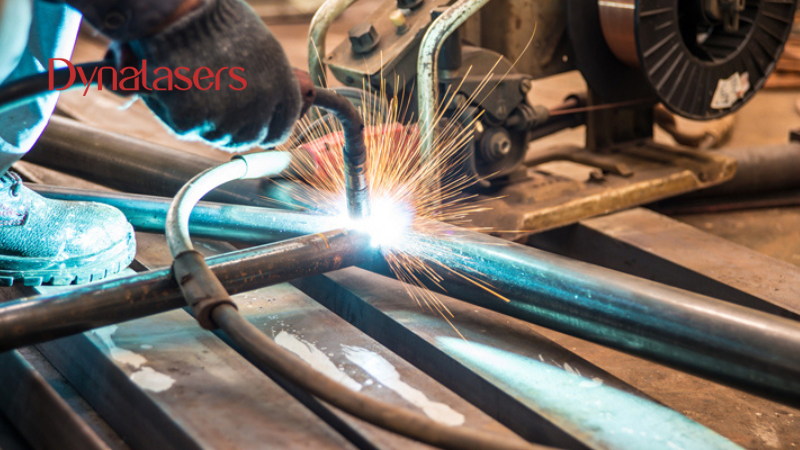
How to Prepare for Stainless Steel Laser Welding
A well-designed process not only ensures a good fusion effect but also minimizes the occurrence of problems such as deformation, oxidation or fading to the greatest extent.
Fiber Laser vs CO₂ Laser
- Fiber Laser Welder: Provides superior beam quality, higher efficiency, and better absorption for stainless steel. It is the recommended choice for both industrial and portable applications.
- CO₂ Laser Welding Device: Less efficient for reflective metals like stainless steel, requiring higher maintenance and operating costs.
Preparation Steps
- Surface Cleaning: Use a mechanical brush or chemical methods to thoroughly clean the surface of dirt, grease and oxides. Because only when the surface is clean can the laser absorption effect be stable.
- Joint Design: Optimizing the shape of the joint can enhance the penetration and strength of the weld. For stainless steel, the commonly used joint forms are butt joints and lap joints.
- Fixture and Positioning: Before welding, it is essential to secure the workpiece properly, as this will prevent it from deforming due to thermal expansion.
Selecting Shielding Gas
- Argon: Commonly used; provides strong oxidation resistance and a clean weld surface.
- Nitrogen: Cost-effective, enhances weld penetration but may influence color of the seam.
- Helium: Improves arc stability and weld pool fluidity, though more expensive.
Once these basic tasks are completed, choosing an appropriate laser machine is of vital importance next.
Why Dynalasers Machines Make Stainless Steel Welding Easier
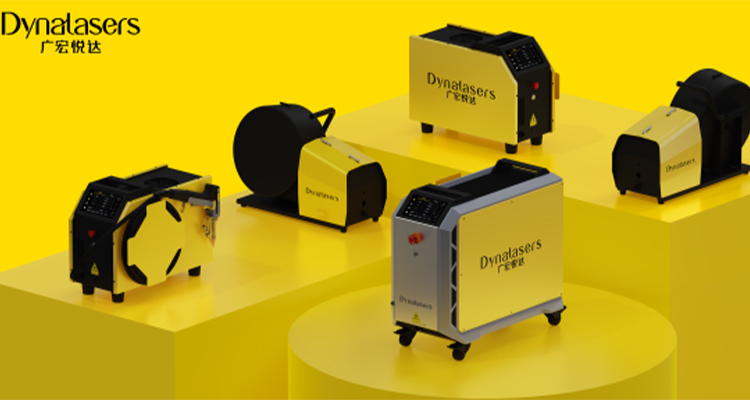
Dynalasers laser welding device combines the features of high power, high precision and ease of use, making it particularly suitable for challenging materials such as stainless steel.
Key Advantages
- All-in-One Integration: Combines laser source, welding gun, wire feeder, and gas supply in one unit for simple, efficient operation.
- Compact Yet Powerful: From 8–42 kg yet delivering up to 1800W, ensuring portability without sacrificing performance.
- Reliable Air-Cooling System: This device can operate stably within a temperature range of -15 °C to 40 °C. Its advanced air-cooling system reduces the reliance on traditional water-cooling systems.
- Proprietary Fiber Laser Technology: Optimized for high absorption and efficiency, minimizing reflectivity issues with copper and other metals.
- Long-Term Assurance and Service: Backed by a two-year warranty and professional after-sales service for consistent, long-term performance.
By addressing both equipment and process challenges, Dynalasers enables manufacturers to weld stainless steel with greater speed, and efficiency. The next step is to fine-tune process parameters for optimal results.
What Parameters and Techniques Ensure Effective Stainless Steel Laser Welding
Even with the best equipment, the final welding result is largely dependent on the correct parameter settings and the skill of the operator.
Key Parameters for Stainless Steel
- Laser Power: Adjust according to thickness; higher power is required for deeper penetration but must be balanced to avoid burn-through.
- Travel Speed: Too fast can lead to incomplete fusion, too slow can cause overheating and distortion.
- Focal Position: Proper focus ensures maximum energy delivery to the weld pool.
Best Practices
- Maintain consistent torch angle and distance to stabilize the molten pool.
- Use pulse modulation when welding thin stainless steel to reduce heat input.
- Monitor weld seams visually and through testing for early detection of defects.
By mastering these parameters, operators can produce high-quality, repeatable welds.
FAQs
1. What industries benefit most from stainless steel laser welding?
Laser welding devices have been widely used in many industries such as healthcare, kitchenware, automotive, aerospace and construction, because in these fields, the strength and corrosion resistance of stainless steel are of great importance.
2. What are the cost considerations when investing in a fiber laser welder for stainless steel?
Beyond the initial cost, fewer reworks, lower material use, and reduced maintenance make the fiber laser welding machine a cost-effective long-term solution.
3. What other metals can Dynalasers weld besides stainless steel?
In addition to stainless steel, Dynalasers handheld and portable laser welders can process aluminum, brass, copper, and carbon steel, providing versatility across diverse applications.
Conclusion
When using laser welding for stainless steel, it offers high precision and efficiency, with an unparalleled effect. It can minimize deformation to the greatest extent while ensuring a strong and smooth weld seam. To achieve this, the key lies in selecting the right equipment and process. And Dynalasers fiber laser welders stands out particularly in this regard. With its lightweight but powerful machines, reliable air-cooling systems, and proprietary fiber laser technology, Dynalasers makes stainless steel welding faster, simpler, and more stable.


