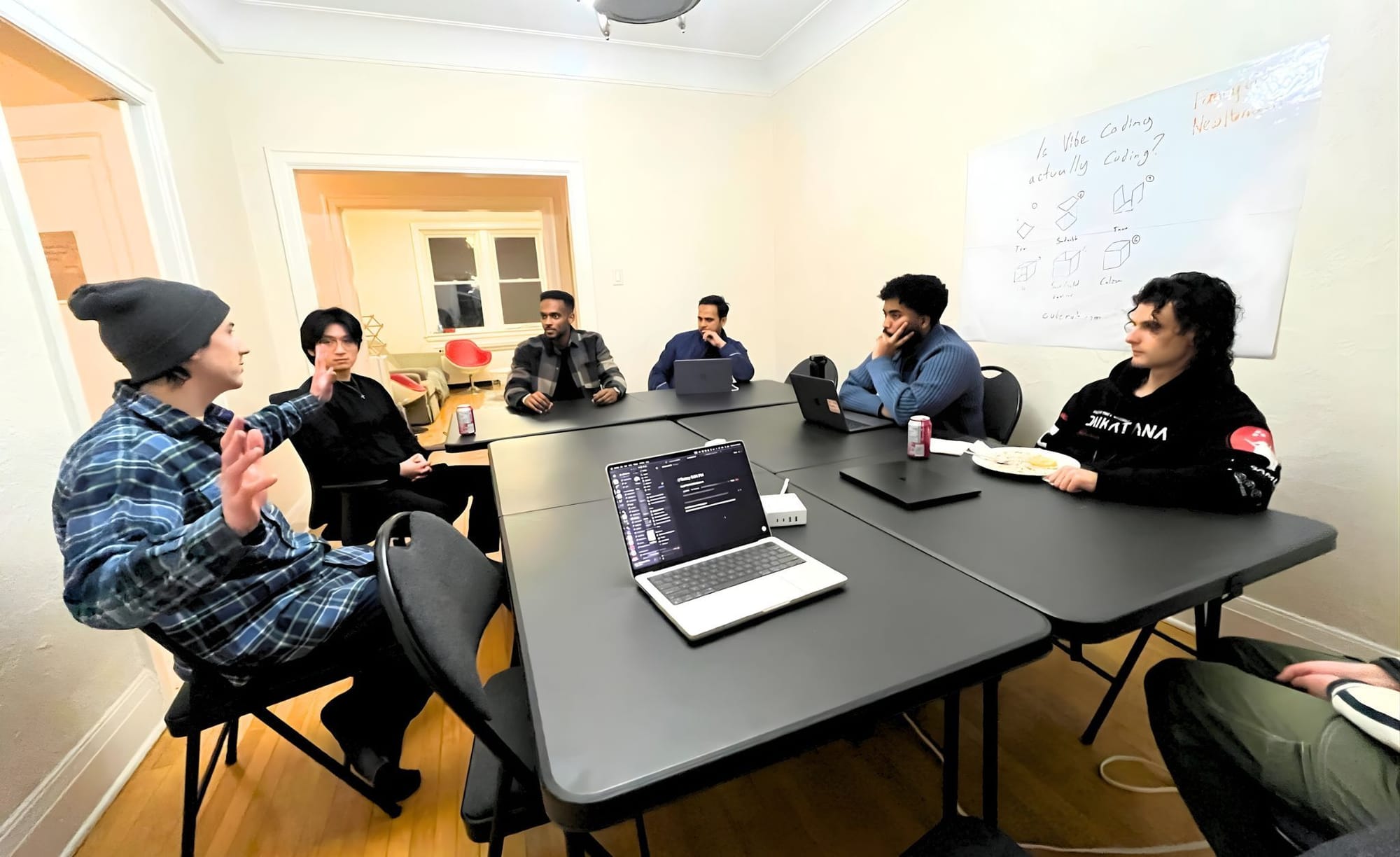
In the dining area, three foldable tables have been hastily joined together to form a makeshift boardroom. Around the table were about 15 young tech talents. Most of them are AI engineers. One is a venture capitalist. A few are students. All of them are builders. It had been snowing for most of January in Ottawa, and they had to be double-layered inside the house. One of the men wore a beat-up LSE hoodie.
They were at the AGI Ventures Canada Hacker House, the first AI hacker house in Canada.
Stephen Rioux and Kaan Un met as students at the University of Ottawa, where they ran mini hackathons. Later, they became part of the organising team of AGI Ventures Canada, an AI lab that also does hackathons and weekly co-hacking sessions, and last year started hosting hackathons with them.
AGI Ventures Canada had been looking to host a hacker house for a while. Kaan and Stephen asked the founders if they would sponsor theirs, and they agreed to come on board. In January, they hosted their first hacker house.
“For us, what we looked for were ambitious people already working on projects where we could clearly see potential. They didn't have to have any final product or any past successful product,” Stephen told Techloy in a recent interview.
“All we needed was to see the potential. Even posting a few things on GitHub is enough for us to see that you're actually doing stuff.”
They sent out applications online and to tech communities, hoping people working on AI products would apply.
If creatives get fully funded Master of Fine Arts workshops, where they are part of a team of artists that sharpen their work for the better, techies get hacker houses.
While they are not new — many of the top Silicon Valley companies are fruits of this kind of arrangement — as the AI boom reset the global tech economy back to the era of #FounderMode, with fresh opportunity and fresh cash, hacker houses have become increasingly popular. Techies and young founders have been jetting everywhere, from Bali to Sweden, to join hacker houses.
“You’re living with other people. You’re going to get to know each other, work alongside each other, and help each other. So there’s collaboration versus competition,” Stephen said.
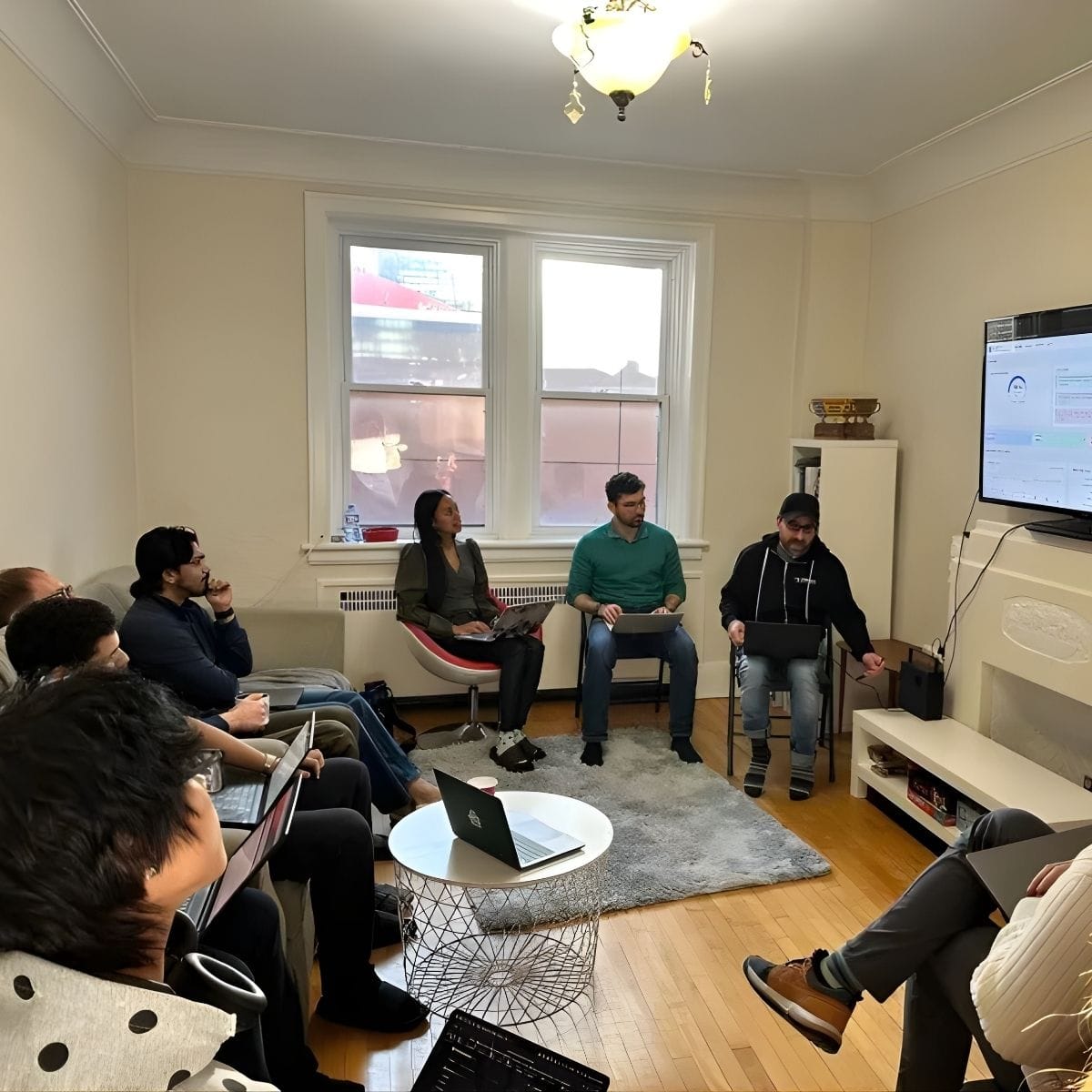
The residents of the AGI Ventures Canada Hacker House took turns sharing their product on a tiny plasma screen in the sitting area. They brainstormed ideas and occasionally broke into pairs to work together. But they also did other activities, chowing barbecue, and playing games.
“You need a break. It can’t be super intense all the time,” Stephen said.
For many of the young techies who attend hacker houses around the world, it can be a great way to network and find mentors. Some have met cofounders or been connected to angel investors from these houses.
“You’re not just networking. You’re seeing them build a product next to you every day. You understand where ideas come from and how they’re executed,” Stephen said.
The AGI Ventures Canada Hacker House was a pop-up, and residents typically would arrive in the morning by 9 am and leave at 9 pm or later.
Two spaces defined the house: a social room for working and chatting, and a focused room for those who want to focus on working alone. Lunch was communal, and evenings often featured panels or fireside chats.
Wednesdays were co-hacking days open to the public, while Fridays were demo days where they presented their work to the group. Weekends bring full public access, sometimes with hackathons or Builder Sundays.
“I built my first mobile native app,” Kaan said. “I usually just do web apps, but I tried React Native, and it worked.”
But like all communal living, hacker houses come with their own modus operandi. Chief among them, learning to live with people.
“Getting along with the people, aligning with the mindset, the rules, the vision—it’s crucial. If not, it can be difficult,” Stephen said.
The focus of the house can determine the structure and ultimately culture, which determines people's experience in the program. The AGI Ventures Canada Hacker House is focused on AI primarily and opens its doors to anyone working on AI products that meet its criteria. This can be a founder, talent, or student.
Some hacker houses are founder-oriented for quick revenue, which can be cutthroat. Others are builder-focused, emphasising shipping the product and allowing founders to leave the nest to tinker with ways to make it profitable. Stephen said both can have their downsides.
“There are founder-orientated houses where they’ll pressure you to, like, get money as soon as possible. Then there are software-focused houses that are maybe a little more chill financially but put more pressure on, like, getting software written and shipped,” he said.
“To stay on track, you don’t want to be in the wrong house with the wrong goals. Having goals that align with the house is super important.”
But he adds that residents should be “ready to learn new things, break things, fix things, adapt.”
However, Stephen argues that the benefits of being in a hacker house sometimes outweigh the risk of being in the wrong one. For him, the willingness of the residents to be in the house determines the outcome.
“If you're willing, you know, that's all it takes. Nothing more,” he said.
 Louis Eriakha