



Brands are turning to technologies like transparent LED screens to stand out.
These displays merge digital content with physical environments. Unlike traditional signage that blocks sightlines or feels intrusive, a transparent LED screen lets your message coexist with your surroundings — in storefronts, lobbies, or event spaces.
The Core Benefits of Transparent LED Displays for Business Advertising
Enhancing Aesthetic Appeal and Brand Visibility
What sets a transparent LED display apart is the experience it creates. These displays create a high-contrast visual effect. Retailers can layer digital content over real products. This approach creates a stronger impression. The result is stronger brand recall and higher customer engagement.
Versatility and Cost-Effectiveness in Installations
The practical advantages of transparent LED screens make them a strong investment. They integrate into existing glass structures without major renovation.
They consume less power than traditional displays. For budget-conscious businesses, this combination of low installation disruption, reduced energy consumption, and long operational lifespan.
Mesh LED Displays: Creativity and Adaptability
Mesh LED displays offer highly flexible signage. Mesh screens use LED strips that fit most surfaces. Mesh screens are easy to install and reconfigure for events.
Cloud Control LED: Simplifying Management and Updates
Managing multiple displays can be challenging. Cloud systems centralize control across locations. Instead of dispatching staff to manually update each screen, a marketing manager can push new promotional content, adjust scheduling, and monitor display performance across every location simultaneously — in real time.
Technical Insights: Pixel Pitch and Performance in Transparent LED Screens
When evaluating transparent LED screens for business advertising, the visual specifications matter as much as the physical format. Understanding key specs helps you choose the right display. One key specification is pixel pitch, a measurement that directly determines how sharp and detailed your content appears to viewers standing at different distances.
Understanding Pixel Pitch for Optimal Viewing Experiences
Pixel pitch is the distance between LEDs affecting clarity. The smaller the number, the closer together the pixels are — and the higher the resolution and image clarity at shorter viewing distances. A P3.91 works well for close viewing.
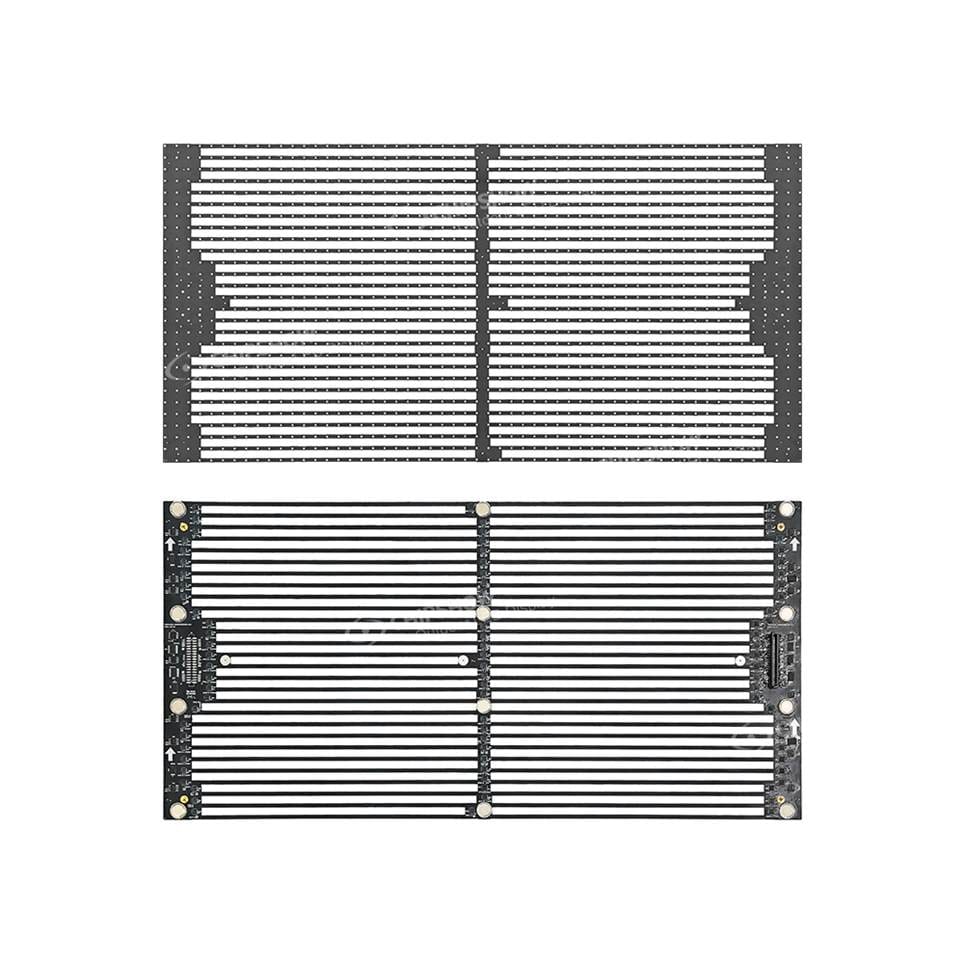
By contrast, displays with larger pixel pitches — such as P7.8 or P10 — are better suited to installations viewed from greater distances, like building exteriors or large outdoor facades, where the eye naturally blends individual pixels into a cohesive image. A screen with too large a pitch in a close-range setting will appear grainy and unprofessional, undermining the very impression you're trying to create.
Brightness is equally critical. Transparent LED displays used in window-facing applications need sufficient nit levels to remain visible in direct sunlight without washing out. When reviewing specifications, look for displays rated at 3,000 to 6,000 nits for high-ambient-light environments, and confirm that brightness can be adjusted automatically based on surrounding light conditions. Matching your pixel pitch and brightness specifications to your specific installation environment ensures your content is always seen exactly as intended — sharp, vivid, and impossible to ignore.
Practical Steps to Implement Transparent LED Screens for Your Business
Deciding to invest in transparent LED technology is one thing — executing that investment well is another. The following steps walk you through the process from initial planning to long-term content management, giving you a practical roadmap to follow regardless of your business size or industry.
Step 1: Assessing Your Business Requirements and Goals
Define what success looks like before choosing a solution. Define your audience and goals. Your answers will directly inform which display format, size, and pixel pitch makes sense. Also evaluate your location's lighting conditions honestly. A south-facing storefront flooded with afternoon sunlight demands higher brightness ratings than a shaded interior corridor.
Step 2: Choosing and Configuring Your Custom LED Solution
Armed with a clear brief, you're ready to work with a provider to identify the right custom LED solution. Share your spatial measurements, viewing distance estimates, and content plans upfront — reputable suppliers will use this information to recommend appropriate pixel pitches, transparency levels, and panel configurations. If your space involves curved surfaces, irregular architecture, or outdoor exposure, raise the possibility of mesh LED displays early in the conversation, as these require different structural planning than rigid panel systems. For businesses managing multiple locations or anticipating frequent content changes, confirm that cloud control LED functionality is built into the system rather than offered as an afterthought add-on. Before finalizing any agreement, verify that the proposed solution integrates with your existing building management systems, electrical infrastructure, and any content creation tools your marketing team already uses.
Step 3: Installation, Content Strategy, and Maintenance
Professional installation is essential. Work with certified technicians who understand both the electrical requirements and the structural tolerances of your specific display format — improper mounting on a glass facade, for instance, can compromise both the screen's performance and the building's integrity. Content strategy drives results. Design visuals specifically for transparency: content with dark or black backgrounds allows the see-through effect to shine, while high-contrast graphics ensure visibility across varying ambient light conditions. On the maintenance side, schedule quarterly inspections to check pixel integrity, connection points, and brightness calibration — catching minor issues early prevents expensive repairs and unplanned downtime that disrupts your advertising continuity.
Transparent LED Screens: A Smart Investment for Modern Business Advertising
Choosing the right specs is essential. Choosing the right pixel pitch for your viewing environment — whether that's a P3.91 display for a close-range retail window or a larger pitch for an expansive outdoor facade — is what separates a display that impresses from one that underwhelms. And with cloud-based content management, even small teams can run sophisticated, multi-location campaigns with the kind of precision and responsiveness that once required enterprise-level resources.
For small to medium business owners, the message is clear: transparent LED technology isn't a luxury reserved for global brands. It's an accessible, scalable tool that delivers measurable advertising impact. Early adopters gain a competitive advantage. Start by assessing your space, defining your goals, and connecting with a reputable provider — your next great advertising moment is closer than you think.


