



For decades, people thought online privacy is all about sharing your password or your phone number online, or not opening suspicious websites. Some even think clearing cookies once in a while would help.
But in 2026, it’s so much more than these. Let’s know its true meaning here.
Privacy is About Data You Never Share
In 2026, one of the greatest misunderstandings is thinking that privacy is all about the data you willingly type out online.
However, in reality, your digital footprint is more than just that. Often, it involves data you don’t even knowingly enter, including your browsing patterns, your location signals, device identifiers, shopping behavior, search history, voice assistant interactions, time spent viewing certain content, and how fast you scroll.
Sometimes, you don’t even tell an app about your location, but it still identifies it based on your online behavior and search history. So, in 2026, privacy is all about the data you disclose and don’t disclose.
The Impact of the Introduction of AI
Owing to AI, data has become way more valuable than ever. With AI, data can tell a lot more than it used to. Nowadays, companies do more than just collect raw information. They utilize AI to predict things you’re likely to buy next, if you’re planning a life change, your political leaning, your income bracket, your mental health condition, and your interests, before you even search them online.
Even the data you input anonymously online is no longer truly anonymous because AI can connect the different bits across platforms to reconnect them into an entire story.
So, in 2026, online privacy is also about protecting yourself from being tracked and being interpreted by AI.
Privacy is More Control than Secrecy
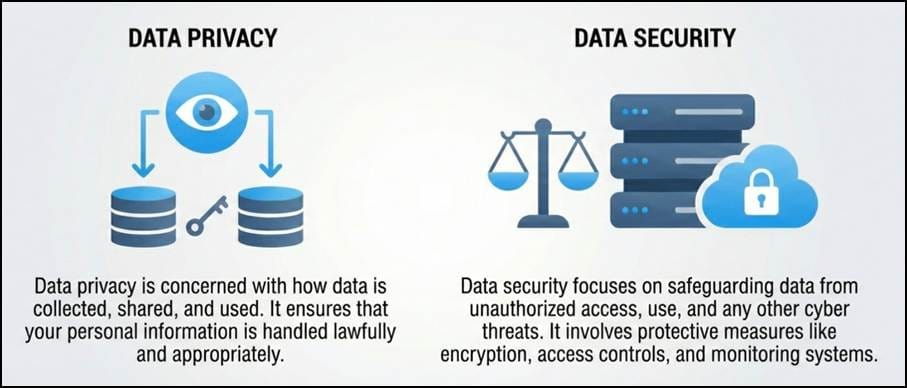
Earlier, people assumed that the sole focus of privacy was hiding details from the world. But in the current times, it’s all about control. For instance, who gets access to your data, how long it’s stored, what it’s used for, if it’s shared or sold, and how accurately it represents you.
Some assume that only people who do something wrong should be cautious about privacy, but that’s wrong. Rather, it’s your right to use the digital world without worrying about your privacy.
Tracking is More Intense
In 2026, tracking is more than just cookies. Companies use different tactics to track your data, such as browser fingerprinting, device graph tracking, cross-app identifiers, Wi-Fi and Bluetooth proximity signals, and behavioral pattern recognition.
For instance, if you reject site cookies, they can track you through a combination of regular data like screen size, device type, language settings, installed fonts, and interaction behavior. The "decline all" button hardly helps in online privacy.
Social Media Privacy Also Includes Metadata.
Most assume that social media privacy is about the shared multimedia and captions. But in reality, the metadata is the actual problem.
These platforms collect data about hours of activity, geographical location, most interacted individuals, how long you watch certain content, what you pause on, and what you almost click. These apps collect these signals from both public and private accounts and use them to push relevant or local content to you.
Data Broker Industry is Thriving
The data broker industry collects and resells app activity, loyalty programs, public records, online purchases, and location history.
Uncountable third parties can access your accounts, so online privacy in 2026 is also about protecting yourself from opportunists taking advantage of you.
What Role Does VPN Play Here?

Since tracking has turned so stealthy nowadays, most users seek tools to prevent companies from stealing data or at least reduce the extent.
A commonly used option is VPN. It can encrypt internet connections and mask IP addresses from websites, networks, and certain forms of passive tracking.
Of course, certain apps can still collect data through logins, cookies, and device identifiers despite using VPNs. But VPNs offer meaningful privacy benefits, especially on public Wi-Fi, while traveling, or when trying to limit location-based profiling.
You can compare the top VPN options on guides like VPNOverview. This enables you to look at both paid and free options that best suit your online privacy needs.
Conclusion
In 2026, online privacy indicates a range of things, both disclosed and not disclosed by a user. The safest and easiest way to protect yourself is to use VPNs at all times.


