Just days after a lawsuit alleged that WhatsApp could access users’ private messages—claims Meta dismissed as a “frivolous work of fiction”—the company has unveiled a new security feature it says is designed for users facing extreme threats.
In a blog post published yesterday, Meta said: “At WhatsApp, we think you should be able to have a private conversation online, just like you would in person. We will always defend that right to privacy for everyone, starting with default end-to-end encryption. But we also know that a few of our users—like journalists or public-facing figures—may need extreme safeguards against rare and highly sophisticated cyberattacks.”
To address this, WhatsApp announced a new lockdown-style feature called Strict Account Settings.
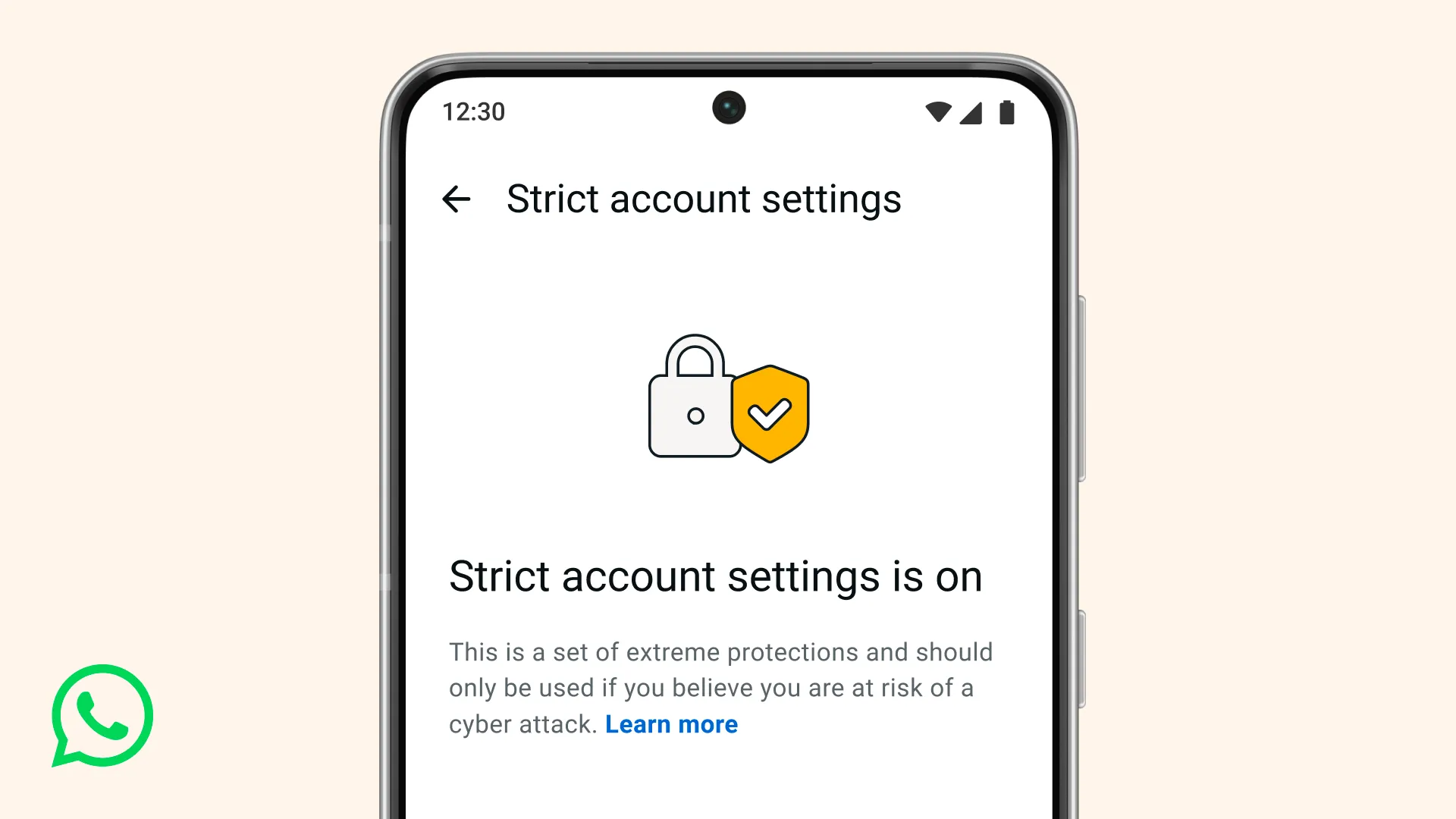
When enabled, the feature locks certain account settings to their most restrictive options. This limits how WhatsApp functions in practice, including blocking attachments and media from people who are not in a user’s contacts.
Meta also said the feature is built using Rust, a programming language it believes helps protect users from advanced threats. According to the company, Rust helps keep “photos, videos, and messages safe from things like spyware.”
Rather than gradually rewriting its existing codebase, Meta said it developed Rust in parallel with the original C++ version. The Rust implementation showed better performance and lower runtime memory usage, leading to a full rollout across platforms including Android, iOS, Mac, Web, and wearables. Meta added that memory-safe languages will play an increasing role in WhatsApp’s long-term security strategy.
Strict Account Settings will roll out gradually and can be enabled by navigating to Settings > Privacy > Advanced.
The feature mirrors Apple’s Lockdown Mode and Google’s Advanced Protection Program, prioritising maximum security over convenience by reducing the app’s attack surface.
 Oyinebiladou Omemu
The introduction of this feature could be viewed in the broader as the response to the recent lawsuit against them and the renewed criticism from figures like Elon Musk and Telegram CEO Pavel Durov, both of whom have publicly questioned WhatsApp’s security claims.
As cyberattacks grow more targeted and sophisticated, WhatsApp’s latest move shows how messaging platforms are being pushed to offer protections that go beyond default encryption. Whether this will be enough to restore user confidence remains to be seen.
 Ogbonda Chivumnovu