



Knowing when to start your resume with a summary or an objective can be a valuable job-hunting skill—no matter the industry. It shows you have awareness and understand how to position yourself. And as a beginner UI/UX designer, that can be the edge you need to stand out. Many job seekers skip this part entirely or copy generic templates without considering their level of experience. But the truth is, not everyone is at the same stage. Some are entry-level, others mid-career or switching fields altogether. So, you don’t want to sound too advanced when you’re just starting out, and you also don’t want to undersell yourself. Because whether you’re applying for your first design internship or a junior UX role, you will be tested, fairly or not, based on what your resume says about your experience. That’s why clarity matters. A well-written resume objective can quickly show who you are, what you bring to the table, and where you’re headed.
 Ogbonda Chivumnovu
What is a resume objective?

Also known as a career objective, this is a short statement at the top of your resume that summarizes your professional goals and what you hope to achieve in the role you are applying for. It’s usually one to three sentences long — concise but intentional.
For beginners, it’s a way to frame your potential when you don’t yet have much experience to show, while giving employers an idea of whether the candidate is right for the job.
For example, as an entry-level candidate, you want to write something like
“Entry-level UI/UX designer passionate about creating intuitive digital experiences. Seeking a role where I can apply my design thinking, wireframing, and usability testing skills to help improve user satisfaction.”
This kind of statement tells employers what you want, what you can do, and what drives you — all within a few lines.
How is it different from a professional summary?
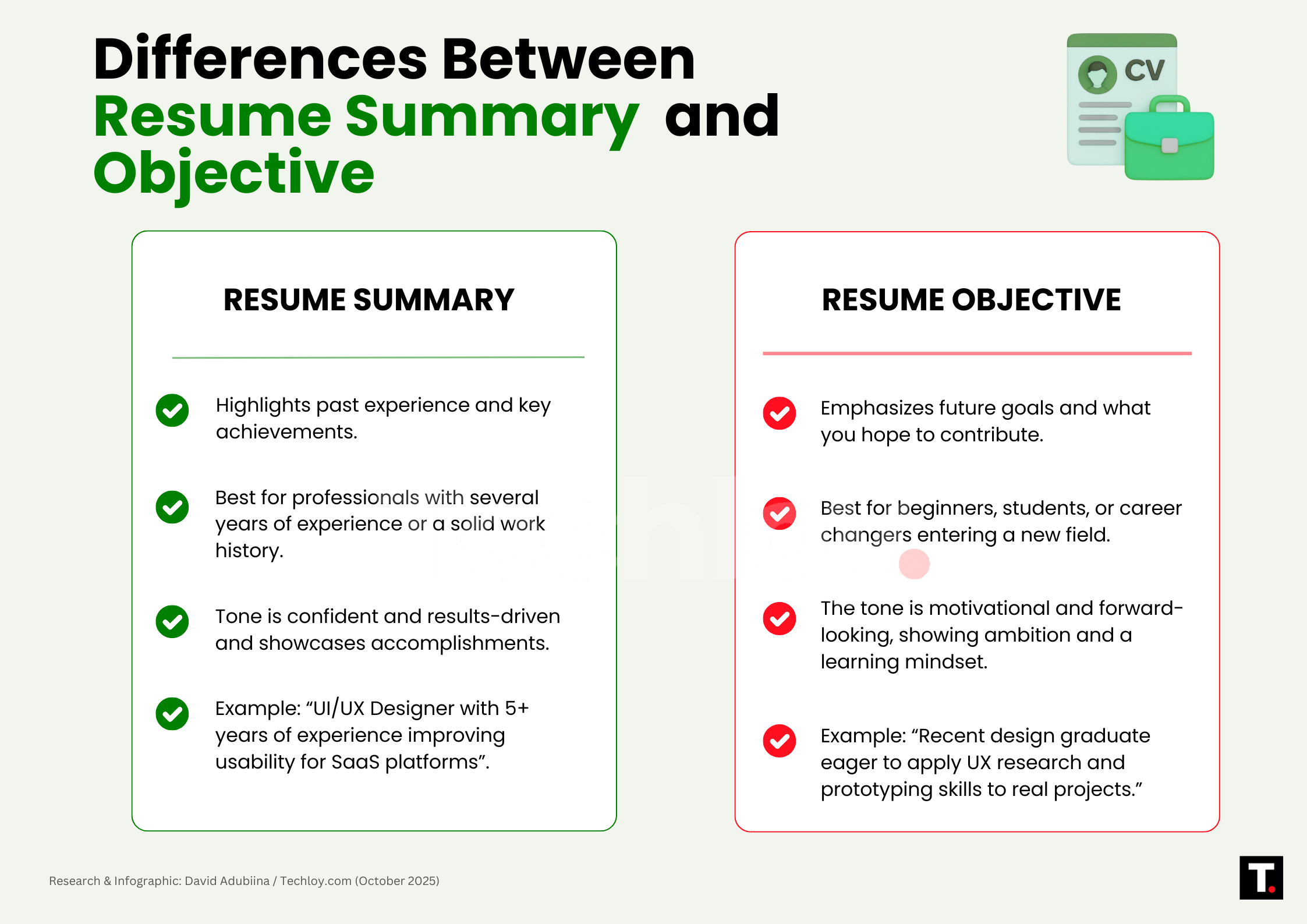
Unlike a professional summary, which highlights your past accomplishments and experience, a resume objective focuses on your future goals and how they align with the company’s needs. Think of it this way:
• A summary says, “Here’s what I’ve done.”
• An objective says, “Here’s what I want to do next.”
If you’re a seasoned designer with a portfolio full of shipped projects, a professional summary makes sense. But if you’re just starting out, still learning Figma shortcuts, or transitioning into design from another field, a resume objective helps you establish intent. It gives your application purpose, even when your experience is light.
How can a resume objective help you stand out?

When you’re new to any job role, in this case UI/UX design, you’re competing with others who may have more experience or stronger portfolios. A well-written resume objective gives you something just as powerful, which is context.
It tells the hiring manager what motivates you, what you’re learning, and what kind of projects excite you. It also shows self-awareness, which is something every good designer needs.
Think of your objective as a way to humanize your application. Instead of writing something flat like “Skilled in Figma, Adobe XD, and user research,” you could say:
“Aspiring UI/UX designer passionate about creating intuitive interfaces that make everyday tasks simpler. Recently redesigned a local café’s online ordering flow to improve user experience.”
This makes the employer picture you as part of their team.
A strong resume objective can make your application memorable, especially if it aligns with the company’s mission or the type of work they do. It’s your chance to say, “Here’s who I am, here’s what I care about, and here’s how I can grow with you.”
 David Adubiina
Conclusion
Overall, it’s still your decision whether to start your resume with a summary or an objective. What really matters is choosing the one that best reflects where you are in your career role.
If you’re new to UI/UX or still building experience, starting with a resume objective can help you show direction and personality behind your skills. But if you’ve already worked on multiple projects or have a solid design background, a professional summary might do a better job of highlighting what you’ve accomplished.
Either way, the goal is to leave a good impression on your employer while making your resume feel intentional and human. When your introduction reflects both your goals and your growth, you’re not just listing qualifications but helping employers see your potential.


