Your TV might soon be getting smarter, and honestly, it’s about time. Currently, the ritual is simple: you sit down, scroll through endless menus, and eventually find something to watch. I don’t know about you, but I’ve always wanted my TV to feel smarter than that.
Sure, we’ve had “smart TVs” for a while now. My living room TV has some smart features like the "Hey Google" voice control on the remote, but I barely use it. Fumbling with the mic button and waiting for a slow, half-misunderstood response often ends up feeling more like work than convenience.
And when it does work, it always feels like a stiff receptionist who could only point me to a limited set of options. Nine times out of ten, it made the process more tedious than just typing, so I’d pick up the remote instead.
For all the talk of “smart TVs,” they haven’t really felt smart enough to me.
This might not be the case for everyone. Maybe you’re patient enough, and you’re one of the 20% of consumers who regularly use voice commands on TV remotes, according to a Hub Research report. Perhaps you also actively use the other smart features. Yet, there’s only so much you can ask your smart TV to do.
 Loy Okezie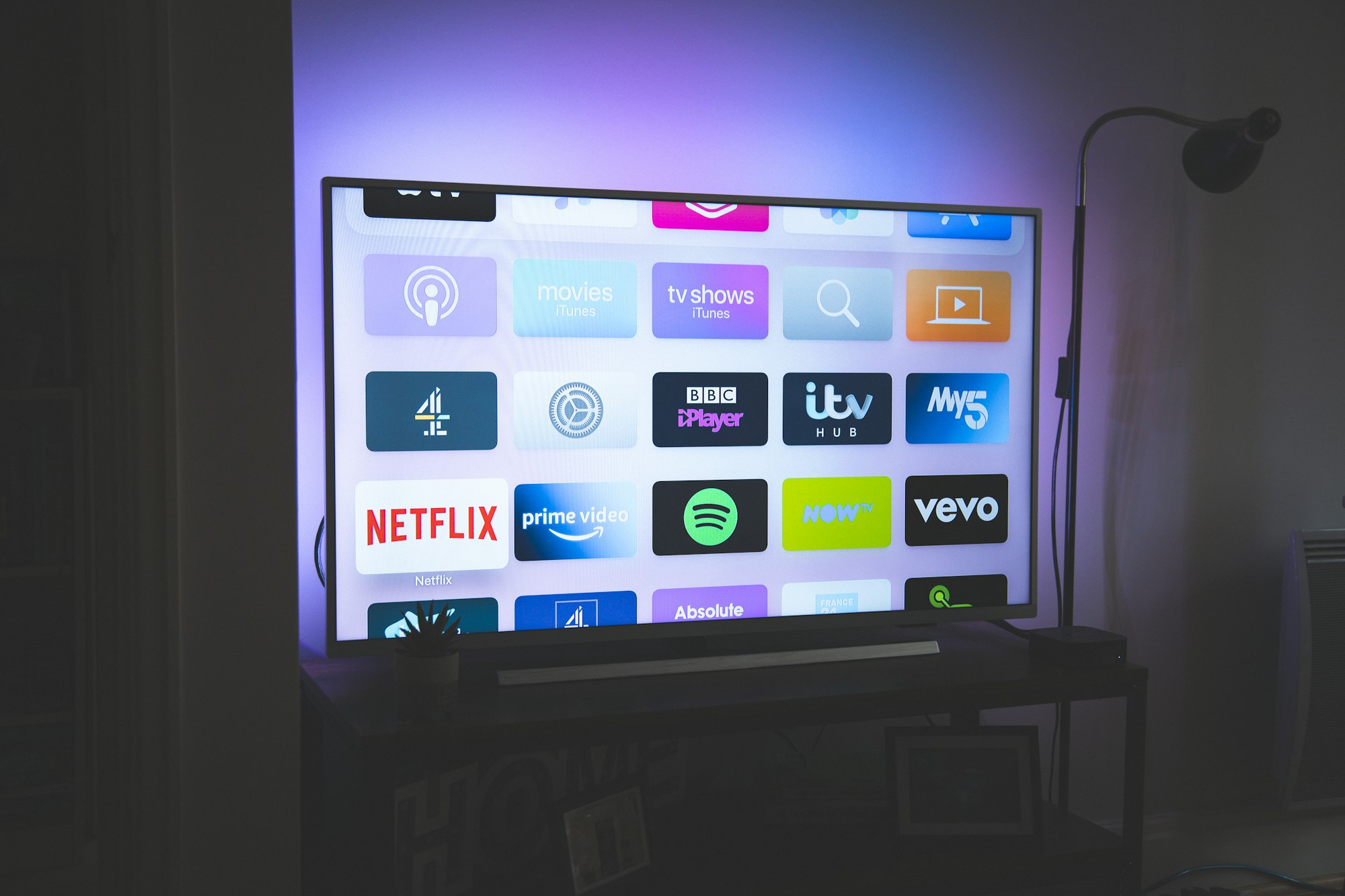
AI Is About to Redefine "Smart TV"
That might soon be changing as TVs are about to get a whole lot smarter thanks to AI.
Thanks to Microsoft’s new Copilot integration, TVs are on the brink of gaining a whole new level of intelligence. The tech giant is rolling out Copilot to Samsung’s 2025 lineup of TVs and smart monitors, and it’s not just another voice command feature; it’s a shift in what a “smart TV” can actually do.
Copilot is Microsoft’s AI assistant that’s been rolling out across Windows, Office apps like Word and Excel, and even Bing search. It runs on large language models developed by OpenAI, which allow it to generate text, summarize content, and answer questions in a conversational way.
With the Copilot AI assistant built directly into the TV’s system, you’ll be able to summon it by using a voice command or remote whenever you want and ask for things like movie suggestions, spoiler-free recaps of your favorite shows, or even answers to general questions while you’re mid-binge.
Image Credit: Microsoft
The interesting part is that, unlike other assistants, Copilot won’t just be a voice coming from a speaker. It has a face, well, sort of, that gives it a bit more personality. You get a little animated presence—a bouncing beige blob that floats on your screen like a little companion. with facial expressions, lip-syncing as it talks
That uniqueness doesn’t stop there. Copilot can also display visual cards with movie details, ratings, weather updates, or images to complement what it’s saying. And if you sign in with your account, it can even remember your past conversations and adjust recommendations over time.
Samsung is rolling this out across its premium 2025 lineup, including Neo QLEDs, OLEDs, Micro RGB, and the art-friendly Frame models, as well as the M7, M8, and M9 smart monitors.
 Emmanuel Oyedeji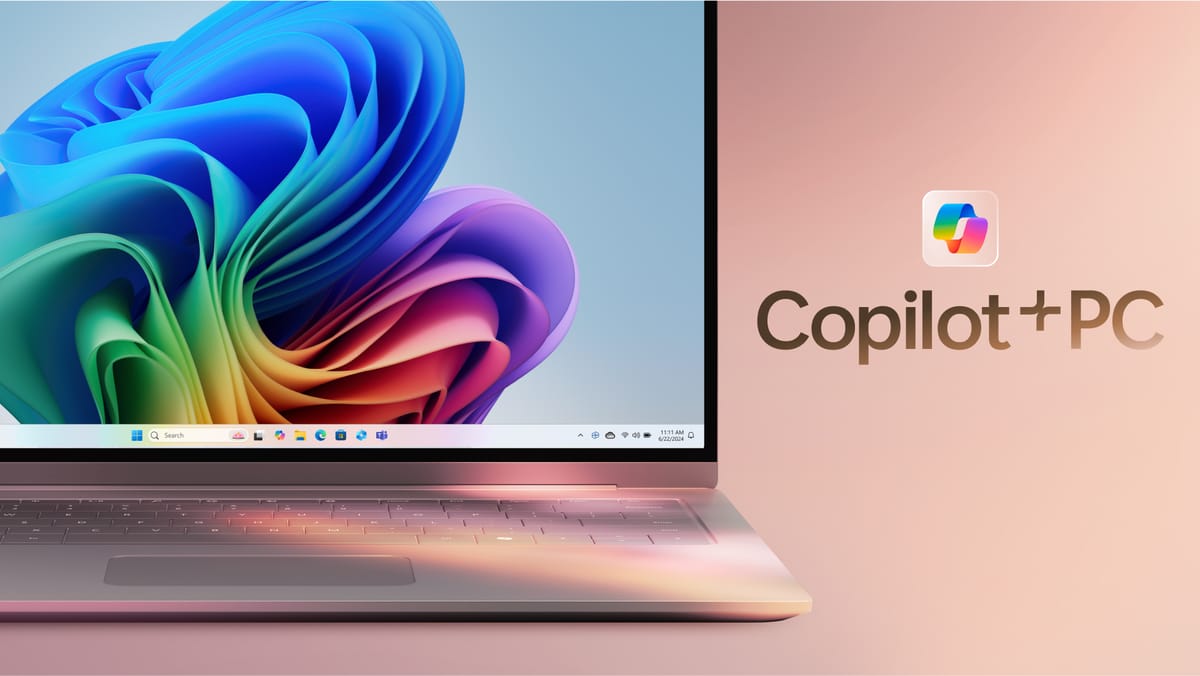
But Haven’t TVs Already Had AI?
Now you might be asking, haven’t TVs already had AI? Here’s the thing—AI in TVs isn’t new. In fact, it’s been around for years, just in the background.
Manufacturers like Samsung and LG have used AI to quietly power features like AI upscaling, which uses machine learning algorithms to improve the picture quality of lower-resolution content on 4K or 8K screens. Sound optimization, which adjusts audio depending on the content and your room’s acoustics. And, recommendation engines that pretend to know what you want to watch next based on your habits. In any case, AI has found many uses on TVs.
In fact, voice assistants were the closest step toward real interaction before now. In fact, long before the generative AI boom, they gave us a slight hint of future TV interaction, but truthfully, they never felt natural.
 Emmanuel Oyedeji
Why Copilot Feels Like a Real Shift
Unlike the previous AI integrations we’ve seen, what makes Copilot stand out is its use of a large language model (LLM).
That allows it to go beyond simple commands and pre-programmed searches to have a more conversational, interactive experience. It can handle the in-between—the casual questions, the context, the nuance. For example, instead of just saying “Play The Matrix,” you could say, “Remind me what happened in the second Matrix movie without spoiling the third one,” and get a meaningful answer.
What makes this exciting is that conversational AI is about to turn TV interaction into something more. This means I might finally turn back to using the smart voice feature on my TV—if I upgrade, that is.
If you’ve ever experienced the frustration of slowly moving a cursor across the screen with your remote to click out each letter, then you’ll know how unfriendly that can feel in a world where most of our devices are supposed to be intuitive. Voice commands were supposed to fix that, but they never really lived up to the promise, and I stuck with my remote. Maybe now, with this kind of AI, they finally will.
Why This Matters
To understand why this AI upgrade matters, you only need to look at the numbers. As of 2024, in the U.S., 83% of households now own a smart TV according to a study by Hub Research, but only 20% claim to use the assistant features.
Globally, smart TV penetration has surpassed 54% of households, with some reports projecting this to exceed 1.1 billion households by 2026, according to PRWeb. Despite this massive adoption, a large portion of users still see their TV as just a screen.
With conversational AI built in, the TV has the potential to become a truly interactive companion, rather than just a display for content. This could finally close the gap between the huge number of people who own a smart TV and the small fraction that actually use its most advanced features. It’s an evolution from a passive "smart" device to an active, helpful one, and for a market projected to reach hundreds of billions of dollars, that kind of engagement is everything.
According to various market reports, the global smart TV market, valued at around $226 billion in 2024, is projected to grow to as high as $745.5 billion by 2034, as per Prophecy Market Insights, demonstrating the massive potential for a truly intelligent TV experience.
A Glimpse of What’s Next
Over the past few years, we’ve seen generative AI revolutionize everything from search to mobile devices to office work, and now it’s finally making its way into TVs.
The rollout has already started with Samsung TVs, but Microsoft has said LG TVs will also get Copilot. If history is any guide, it’s only a matter of time before Google pushes its own Gemini AI deeper into Google TV and other TV makers adopt conversational AI.
If this trend continues, a few years from now, we might laugh at the idea of today’s “smart TVs” being called smart at all. Compared to what’s coming, they’ll look more like oversized monitors with a few tricks.
 David Adubiina