



Review management is becoming a clever add-on for software companies, agencies, and service providers that want to help clients build trust without building reputation tools from scratch.
After all, every business wants better reviews. The harder part is asking at the right time, replying quickly, showing proof, and connecting reputation work to growth.
That is where resale opportunities open up. If your customers already use your software to manage bookings, jobs, orders, support, websites, or customer communication, you are close to the moment when a review request makes sense.
Now, choose well and reputation management becomes an expansion feature. Choose poorly and you give customers one more dashboard they ignore.
What To Look For In A Reputation Management Platform
A resale-ready platform should be easy to package, explain, and support. Look for white-label options, APIs, client reporting, automation, review monitoring, response workflows, and a clear fit with your customer base.
The best choice depends on where your customers earn trust. Local businesses need Google visibility and location-level reviews. Ecommerce brands need product reviews. App-first companies need app-store feedback. Agencies may need widgets and reports.
1. Synup
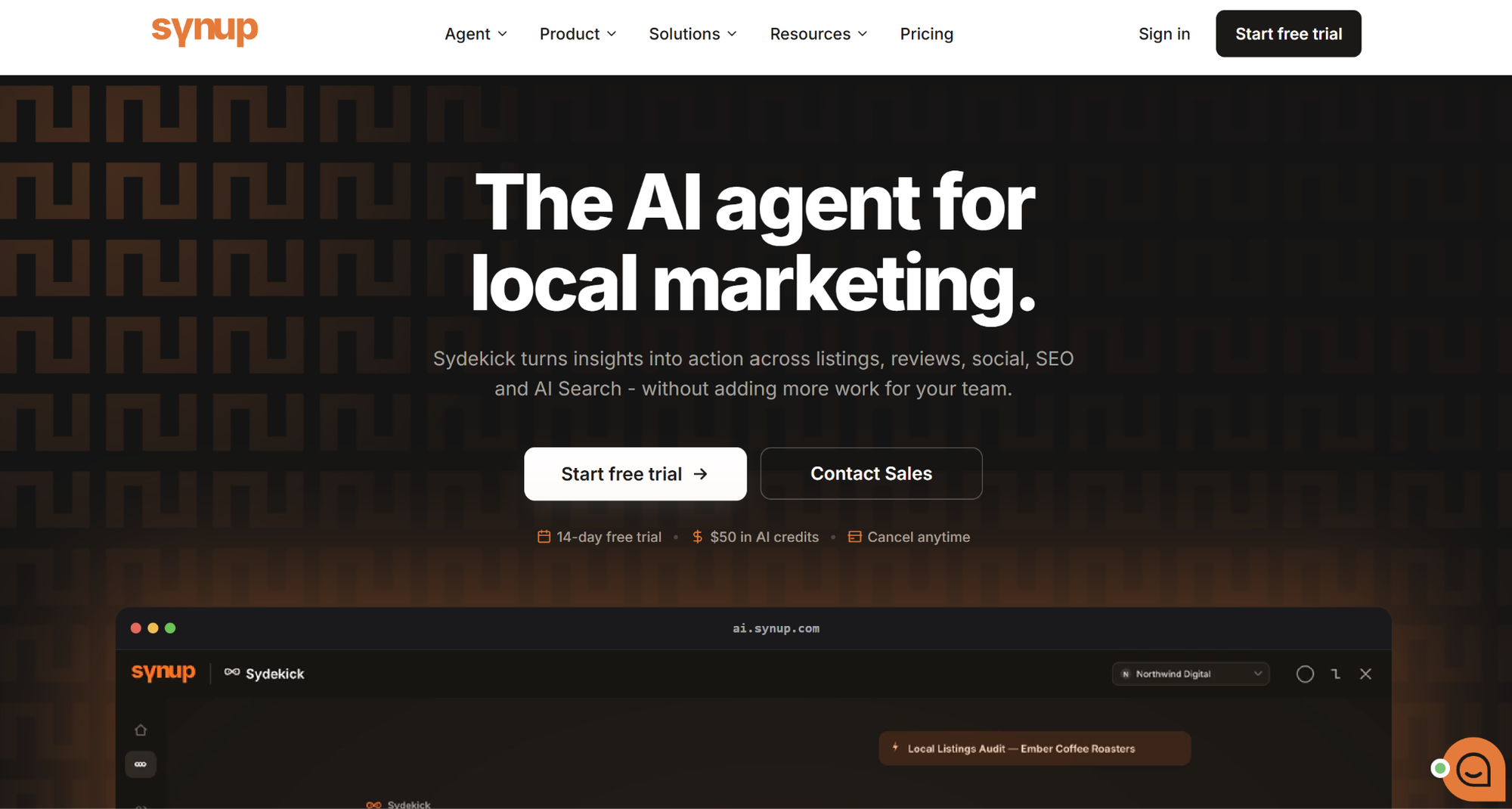
Synup is the best overall pick if you want to resell reputation management to local businesses, agencies, franchises, and multi-location brands.
Its strongest lane is local reputation management. Synup helps businesses monitor reviews, generate new reviews, respond faster, manage listings, track local SEO performance, and give clients branded reporting. For resellers, the appeal is that it can sit behind your own service package instead of forcing customers into a disconnected experience.
This is a strong fit if your customers depend on local search, phone calls, appointments, walk-ins, or service-area leads. A dental practice, auto repair shop, salon, restaurant, clinic, or franchise location usually needs accurate listings, steady review generation, quick responses, and simple reporting.
Best for: Local SMBs, agencies, franchises, multi-location businesses, and vertical software platforms serving local business customers.
Reality check: Choose Synup when local visibility and reputation management need to work together.
2. NiceJob
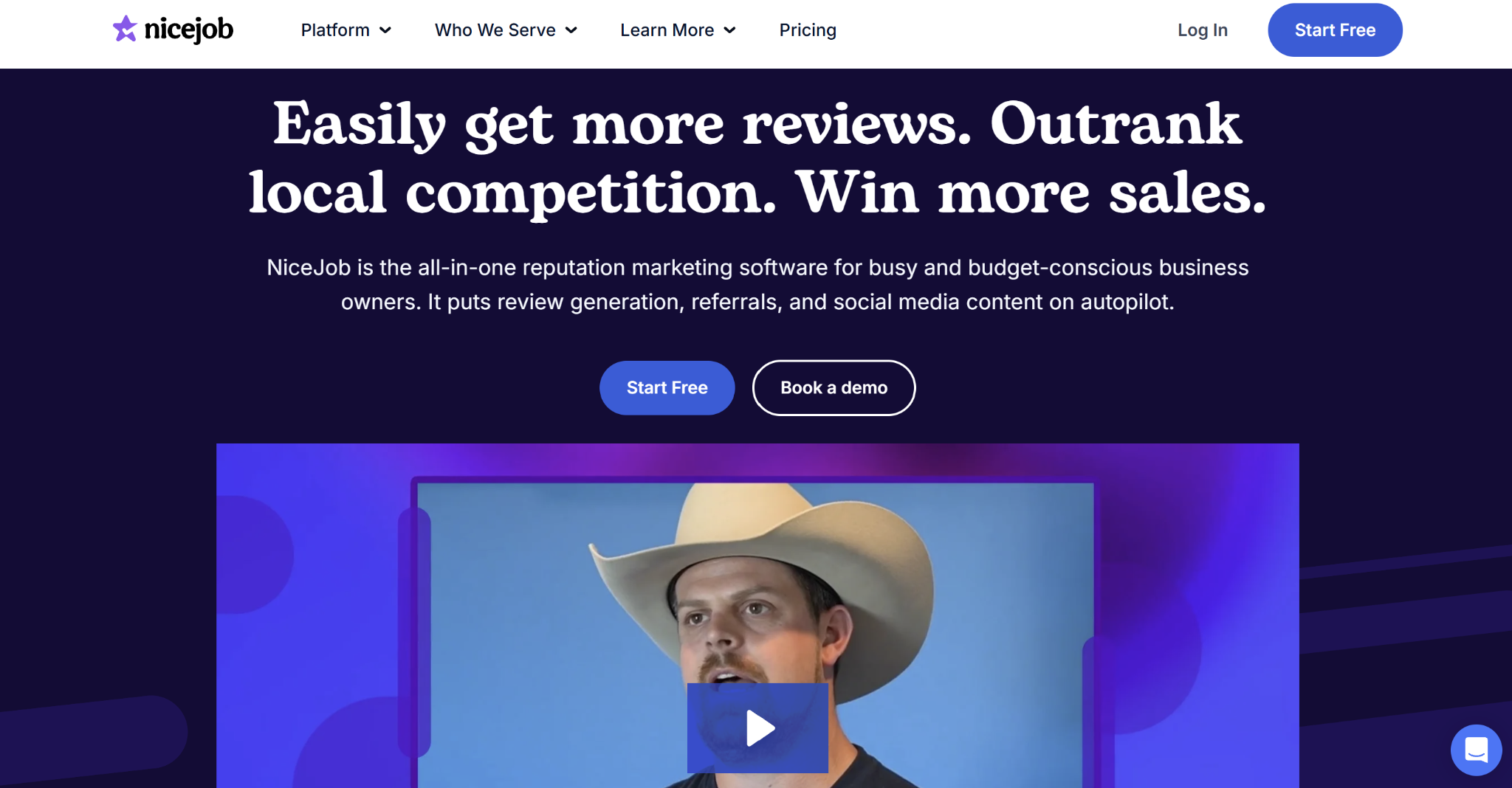
NiceJob is a good fit for service businesses that want more reviews after completed jobs. It works especially well in home services, field services, trades, cleaning, repairs, and appointment-based work.
If your platform already knows when a job is finished or an invoice is paid, NiceJob can help turn that customer moment into an automated review request.
Best for: Contractors, cleaners, repair businesses, field service teams, and home-service software platforms.
Reality check: NiceJob is strong for post-job review generation, but it is not the broader local listings and local SEO layer Synup provides.
3. EmbedSocial
EmbedSocial is best when your customers need to show reviews and user-generated content on their websites. Think review widgets, testimonial walls, badges, social feeds, and UGC galleries.
This makes it useful for website builders, agencies, ecommerce storefronts, booking platforms, and service businesses that want visible proof near forms, pricing pages, booking buttons, or product pages.
Best for: Agencies, website platforms, landing page builders, and teams that need review display.
Reality check: EmbedSocial is the display layer, not the main local reputation engine.
4. Trustpilot
Trustpilot is useful for businesses that want third-party review credibility on a recognized public platform.
It fits online-first companies more than local SMBs. Ecommerce brands, marketplaces, fintech companies, SaaS businesses, travel platforms, and subscription companies can use Trustpilot to collect service reviews, send invitations, display ratings, and build buyer confidence.
Best for: Online brands, ecommerce businesses, SaaS companies, marketplaces, and fintech platforms.
Reality check: Trustpilot is better for public brand trust than local listing management.
5. Yotpo Reviews
Yotpo Reviews is built for ecommerce product reviews and user-generated content. It helps merchants collect product reviews, site reviews, Q&A, ratings, and visual content that can be displayed across shopping experiences.
Use it if your customers sell products online and need proof at the product page or checkout stage. It can support merchants that want reviews tied to orders, product catalogs, and ecommerce campaigns.
This connects with the visibility trends we’ve explored in how AI is transforming search engine optimization and content marketing, since review content can support discovery, trust, and conversion.
Best for: Shopify brands, DTC companies, ecommerce agencies, online retailers, and marketplace tools.
Reality check: Yotpo is an ecommerce review platform, so it is not the best fit for local business listings or app-store reviews.
6. AppFollow
AppFollow is the right category when your customer’s reputation lives in the App Store, Google Play, or other app marketplaces.
It helps app teams monitor reviews, analyze sentiment, reply to users, track ratings, and bring app-store feedback into support or product workflows. That makes it useful for mobile-first SaaS, gaming, fintech apps, delivery apps, mobile health platforms, and app development agencies.
Best for: App-first companies, mobile platforms, gaming teams, app builders, and marketplaces.
Reality check: AppFollow is for app-store reputation, not local business or ecommerce review management.
How To Choose The Right Platform
Start with your customer’s trust channel.
If they win customers through Google searches, local listings, maps, calls, and appointments, start with Synup. If they win through completed service jobs, NiceJob may fit. If they need reviews on websites, EmbedSocial is cleaner. If they need third-party credibility, Trustpilot is a better match. If they sell products online, Yotpo is the logical choice. If they live in app stores, choose AppFollow.
Also look at how much work your team wants to own. A white-label reputation platform can create recurring revenue, but it also needs onboarding, reporting, support, and customer education.
The same thinking applies to customer management more broadly. Using chatbots to streamline customer management is essentially a reminder that automation works best when it fits the customer journey your clients already follow.
Final Thoughts
Reputation management is a strong resale opportunity because trust is easy for customers to understand. More reviews, faster replies, better profiles, and stronger proof can support leads, conversions, and retention.
Synup deserves the first spot because it gives resellers a complete local reputation package for SMBs, agencies, franchises, and multi-location businesses. The other tools are better when the need is narrower: service-business reviews, website proof, third-party credibility, ecommerce reviews, or app-store feedback.
Pick the platform that matches where your customers earn trust, then make reputation management feel like a natural part of your existing offer.


