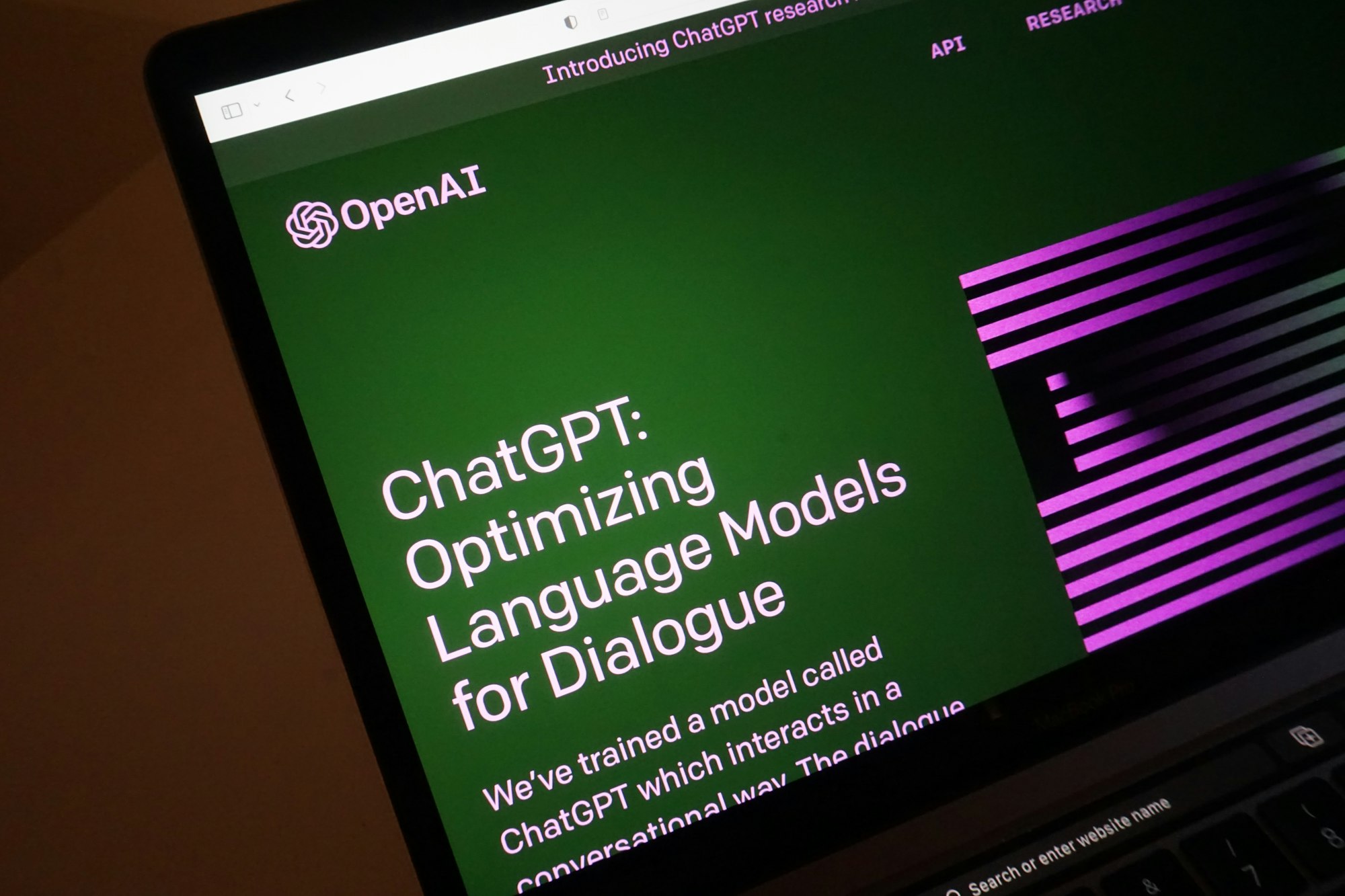
- OpenAI’s rise captures the moment when artificial intelligence moved from a research mission to a global economic force.
- The company already reached a $500 billion valuation through secondary share sales in 2025.
- Its potential $1 trillion IPO is a test of whether ethics can coexist with exponential growth.
When OpenAI was founded in 2015, the goal was to ensure that artificial intelligence benefits all of humanity. It wasn’t built to chase valuation charts or Wall Street glory but to explore how technology could serve people, not power.
A decade later, that same company is preparing for a $1 trillion IPO, a number so vast it feels more like a symbol than a statistic. If realized, it would mark one of the largest public listings in history, placing OpenAI among Apple, Microsoft, and Nvidia. In many ways, its rise mirrors the story of AI itself—born in curiosity, fuelled by ambition, and now standing at the intersection of innovation and immense capital.
MORE INSIGHTS ON THIS TOPIC:
- OpenAI Becomes World’s Most Valuable Private Company
- Inside OpenAI’s trillion-dollar web of deals keeping the AI industry afloat
- OpenAI to hand nonprofit parent $100B+ stake in for-profit arm
How OpenAI went from lab to market leader
OpenAI’s transformation from research lab to market leader didn’t happen overnight. Its early breakthroughs in GPT models, DALL·E, and Codex were milestones in machine learning. But it was ChatGPT that changed everything. What began as a free experiment became the most viral product in tech history, drawing 800 million weekly users and turning AI from a niche fascination into a global phenomenon.
Behind the scenes, OpenAI’s structure evolved, too. In 2019, it introduced a “capped-profit” model that created a for-profit arm under its nonprofit parent. This setup allowed it to raise the capital needed to train large-scale AI models while maintaining its mission to build technology for the public good.
That decision set the stage for its next leap. Earlier this year, a secondary share sale valued OpenAI at $500 billion, making it the most valuable private company in the world and putting it ahead of SpaceX. Employees and early investors sold about $6.6 billion in stock to global heavyweights, including SoftBank, Thrive Capital, Dragoneer, Abu Dhabi’s MGX, and T. Rowe Price.
The valuation was more than a number. It was a declaration of belief that OpenAI isn’t merely a product company but the foundation of a new AI economy that powers everything from enterprise systems to creative industries.
 Emmanuel Oyedeji
What is the real cost of greatness?
For all its success, OpenAI remains a paradox—a company valued like a superpower but still searching for profitability. Its ambitions are vast and its expenses even greater. CEO Sam Altman estimates that building the infrastructure for the next generation of AI could cost over $1.4 trillion, a figure higher than the GDP of Spain or Australia.

That amount includes custom chips, global data centers, and energy-intensive training systems that operate around the clock. Even with $4.3 billion in revenue in the first half of 2025, driven by ChatGPT Plus subscriptions, enterprise licensing, and cloud partnerships, the company is burning through cash to stay ahead of rivals like Anthropic and Google DeepMind.
The potential IPO, expected to raise as much as $60 billion, may not just be an opportunity but a necessity. Public capital could fund OpenAI’s infrastructure race while giving early backers a path to exit one of the most ambitious ventures of the decade.
How OpenAI can balance purpose and profit
If OpenAI goes public, it'll enter uncharted territory. As a Public Benefit Corporation, it will be legally bound to balance social good with shareholder return, something almost unheard of at this scale. That dual identity could preserve its moral credibility, but it'll also test its resilience.
Investors expect growth. Regulators demand oversight. The public demands integrity. How OpenAI manages these forces will determine whether it remains an ethical pioneer or becomes another tech giant shaped by quarterly earnings.
Analysts are already divided on what its trillion-dollar goal represents. Some say the valuation has raced ahead of reality, while others see it as the natural result of AI’s central role in the future economy. Either way, the conversation has shifted from what OpenAI can build to what it can sustain.
Conclusion
If the IPO happens, it will be more than a financial event. It will mark a turning point for technology itself—a test of whether a company built on ethics and imagination can survive the scrutiny of public markets.
The outcome will reveal whether artificial intelligence can evolve from disruption to infrastructure, from experiment to permanence. For OpenAI, the stakes are existential. Its choices will shape not only the company’s legacy but also the boundaries of how humanity builds, governs, and believes in intelligent machines.
 Emmanuel Oyedeji