



Meme coins are a popular part of the cryptocurrency market, and two of the biggest names are Dogecoin and Shiba Inu. Dogecoin was created in 2013 as one of the first meme coins and has remained widely known ever since. Shiba Inu came later in 2020 and quickly gained attention as a “Dogecoin killer,” with a strong community and growing ecosystem.
Both coins have passionate supporters, but they differ in how they are built, how they work, and what they offer to users and investors.
Dogecoin began as a fun and simple digital currency inspired by the Shiba Inu dog meme. It was designed to be accessible and welcoming to new crypto users, with fast and low-cost transactions that make it easy to send and receive value online. Over time, Dogecoin built a large community, with celebrities like Elon Musk, Snoop Dogg, Mark Cuban, and Gene Simmons openly supporting and promoting it.
Shiba Inu was created later as an Ethereum-based token with a goal of building a bigger ecosystem. Rather than only being a simple coin, Shiba Inu’s project includes features like a decentralized exchange (ShibaSwap), staking rewards, and a future Layer-2 network called Shibarium. Its community often calls itself the “Shib Army.”
We compared the Dogecoin and Shiba Inu to see how they stack up together. Here is what we discovered.
/1. Technology and How They Work
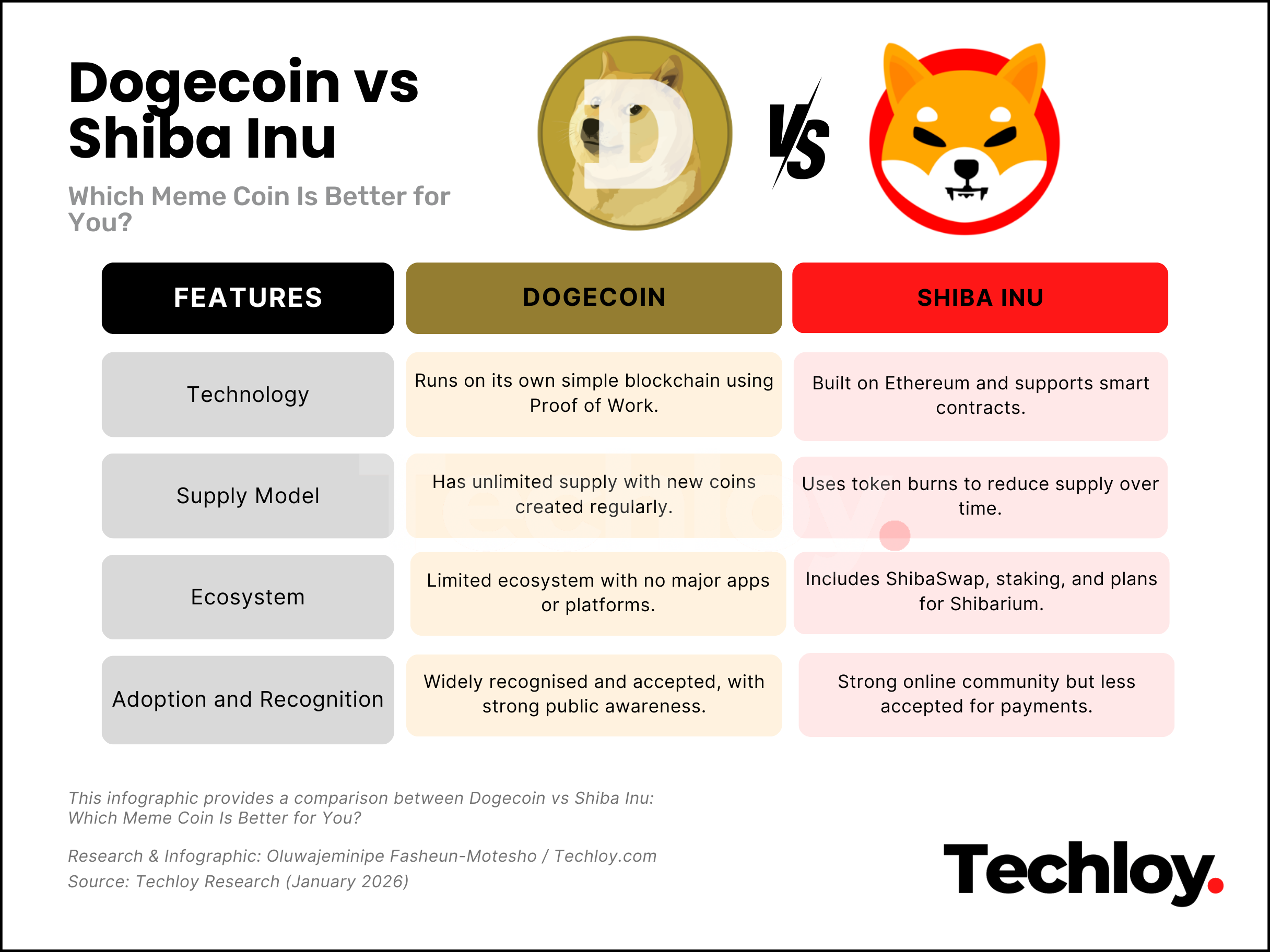
Dogecoin runs on its own blockchain and uses a Proof-of-Work consensus system, similar to Bitcoin but much simpler. This lets miners secure the network and confirm transactions, but it also means more energy is used compared to newer systems. Dogecoin’s supply is unlimited and inflationary, meaning new coins are created all the time.
Shiba Inu is an ERC-20 token built on the Ethereum network, which means it benefits from Ethereum’s security and smart contract capabilities. Because of Ethereum’s upgrade to Proof-of-Stake, Shiba Inu now operates in a more energy-efficient environment. Its ecosystem also includes other tokens like LEASH and BONE, which add features like governance and rewards.
/2. Supply and Scarcity
Dogecoin’s supply is inflationary with no fixed limit. About 10,000 new DOGE are minted each minute, which keeps it very accessible but also makes scarcity hard to achieve. This can lessen its appeal as an asset with long-term value since more coins continually enter the market.
Shiba Inu started with a huge maximum supply (about 1 quadrillion tokens), and part of the supply was burned early on to increase scarcity. The project also includes ongoing burn mechanics meant to reduce the number of SHIB over time, potentially making the token more scarce if burns continue.
/3. Ecosystem and Utility
Dogecoin mainly serves as a digital currency for payments, tipping, and peer-to-peer transactions. It does not have a complex ecosystem of applications or services beyond basic transfers, though its community often engages in fun and charitable initiatives.
Shiba Inu’s ecosystem is more developed with features like ShibaSwap, a decentralized exchange, staking opportunities, and plans for its Layer-2 network Shibarium, which can improve speed and reduce fees. These tools give SHIB holders more ways to use and interact with the token.
/4. Community and Adoption
Dogecoin’s community is one of its biggest strengths. It has a long history, strong brand recognition, and widespread acceptance in many places that support crypto payments. High-profile endorsements, especially from major public figures, have repeatedly pushed interest in DOGE.
Shiba Inu also has a strong community, often very active on social media and involved in ecosystem growth, including tokens beyond SHIB itself. However, it has less mainstream payment adoption compared to Dogecoin.
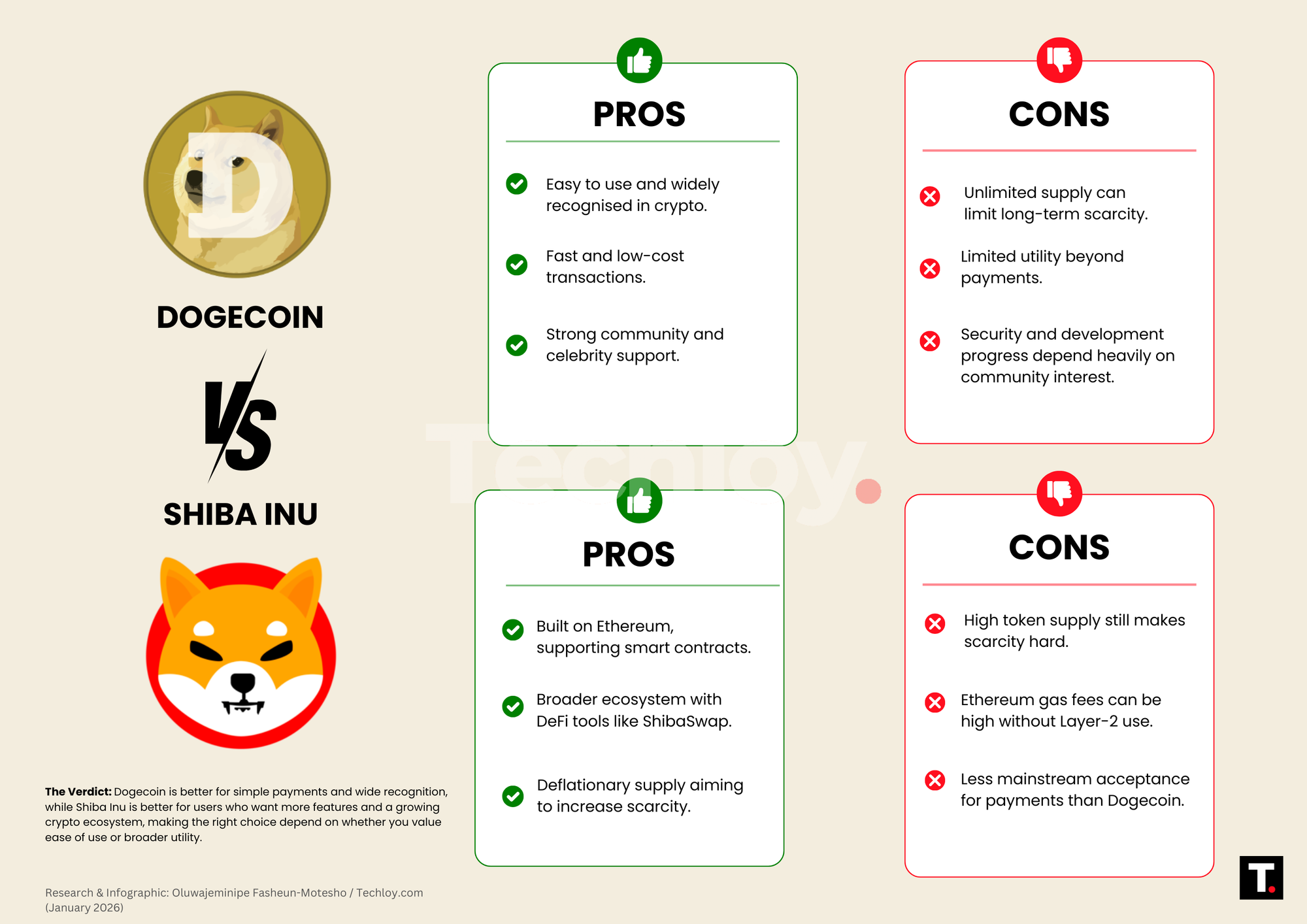
Dogecoin and Shiba Inu both started as meme coins, but they have grown in different directions. Dogecoin remains simple, popular, and easy to use, with strong community backing and wide recognition. It works well as a fun digital currency and a way to send value quickly. Shiba Inu, on the other hand, has built a larger ecosystem with tools like decentralized finance, staking, and plans for a Layer-2 network, giving it more utility beyond just a meme coin.
If you want something that is easy to use and widely accepted, Dogecoin stands out. If you prefer a coin with more features and a developing ecosystem, Shiba Inu may appeal more. Ultimately, both are high-risk and speculative, and your choice depends on whether you value simplicity and adoption or broader utility and community innovation.


