



Google’s annual developer conference, Google I/O 2026, has wrapped up, and if there was one clear theme this year, it was that Google wants AI to quietly sit behind almost everything you do online.
From Search and Gmail to shopping, video creation, and even smart glasses, nearly every announcement at the event revolved around making Gemini less of a chatbot and more of an always-present assistant that works across Google’s ecosystem.
That direction was not exactly surprising. In the weeks leading up to the event, there were already reports and predictions that Google would push harder into “agentic AI,” where AI systems can complete tasks on your behalf instead of simply answering prompts. And, unsurprisingly, many of those predictions turned out to be accurate. The company spent much of the keynote talking about AI agents, automation, and deeper Gemini integration across its products.
At the same time, this year’s I/O also felt different from earlier editions. Instead of focusing heavily on Android updates or flashy hardware reveals, Google leaned more into showing how AI could fit into everyday workflows. Some announcements felt genuinely useful, while others still looked like early experiments. Either way, here are the biggest announcements from Google I/O 2026.
 Louis Eriakha
Google Search is becoming more conversational
Search arguably received the biggest overhaul of the event. Google introduced what it calls an “intelligent search box,” a redesigned version of Search that supports more natural conversations, follow-up questions, and even file or video attachments. Instead of typing short keywords, users can now interact with Search more like a chatbot.
Google also expanded AI Overviews with conversational back-and-forth responses, meaning users can keep refining questions without restarting a search. Beyond that, the company showed off AI-generated visuals and contextual explanations directly inside Search results, including generated videos that explain concepts visually.
With this, it looks like Google is trying to keep users inside Search for longer instead of sending them away to websites. That could make Search more useful for quick answers, but it also raises ongoing concerns about how much traffic publishers and creators may lose as AI summaries become more dominant.
Gemini is now everywhere
As expected, Gemini sat at the centre of almost every major announcement. Google officially launched Gemini 3.5 Flash, its new lightweight AI model designed to be faster and more efficient while still competing with other frontier models. A more advanced Gemini 3.5 Pro model is expected later.
Google is also redesigning the Gemini app itself with a refreshed interface called Neural Expressive, adding more voice options, animations, and a more personalised feel.
But the more interesting part is how deeply Gemini is now integrated across Google’s services. Gmail is getting a live voice mode that lets users ask questions about their inbox naturally, while Google Docs is introducing Docs Live, where users can verbally brainstorm ideas and have Gemini turn them into structured documents in real time.
YouTube is also getting an “Ask YouTube” feature that helps users find specific moments inside videos by asking natural questions instead of manually scrubbing through clips.
Gemini Spark wants to manage your life
One of the biggest announcements from the keynote was Gemini Spark, Google’s new cloud-based AI agent designed to automate tasks across apps and services.
Spark can organise schedules, plan events, write emails, pull files from Google Drive, and eventually work with third-party apps like Uber, OpenTable, and Zillow. Google says the idea is for Spark to understand the rhythms of your daily life so it can proactively help manage recurring tasks or long-term planning.
Of course, Google knows people will immediately worry about AI agents going rogue, so the company also introduced something called Agent Payments Protocol, which limits what Spark can buy and how much it can spend without approval.
Gemini Omni pushes further into AI video
Google also unveiled Gemini Omni, a new multimodal AI system focused heavily on video generation and editing.
Unlike traditional text-to-video tools, Omni can take text, images, audio, existing video clips and, in Google’s words, just about anything you can throw at it, and transform them into entirely new outputs. During demos, Google showed users changing environments, editing backgrounds, and applying cinematic effects simply by describing what they wanted.
The company is also leaning heavily into personalised AI-generated content. Omni includes avatar-style features and selfie-based video editing tools that can make users appear in different locations or visual styles. Naturally, Google says all Omni-generated videos will include SynthID watermarks so viewers can identify AI-generated content.
Shopping is getting AI agents too
Google is now bringing AI deeper into online shopping with new agent-powered commerce tools. The biggest addition is Universal Cart, which combines products from multiple retailers into a single Google-managed cart.
Users can track price drops, monitor stock availability, and even let AI agents complete purchases on their behalf through what Google calls the Universal Commerce Protocol. The system also surfaces things like fees, rewards, and discounts automatically before checkout.
This feels like Google trying to position itself between users and online retailers in much the same way Search sits between users and websites. Instead of simply helping people find products, Google increasingly wants to become the layer that manages the entire shopping process.
Google’s smart glasses are back again
Hardware was relatively quiet this year, but Google did finally show off its Android XR-powered smart glasses developed with Samsung alongside eyewear brands Warby Parker and Gentle Monster.
Interestingly, Google is calling them “audio glasses” rather than smart glasses, likely because the company wants them to feel more like fashionable accessories than obvious tech gadgets. The glasses support Gemini voice interactions, cameras for visual AI assistance, and live language translation.
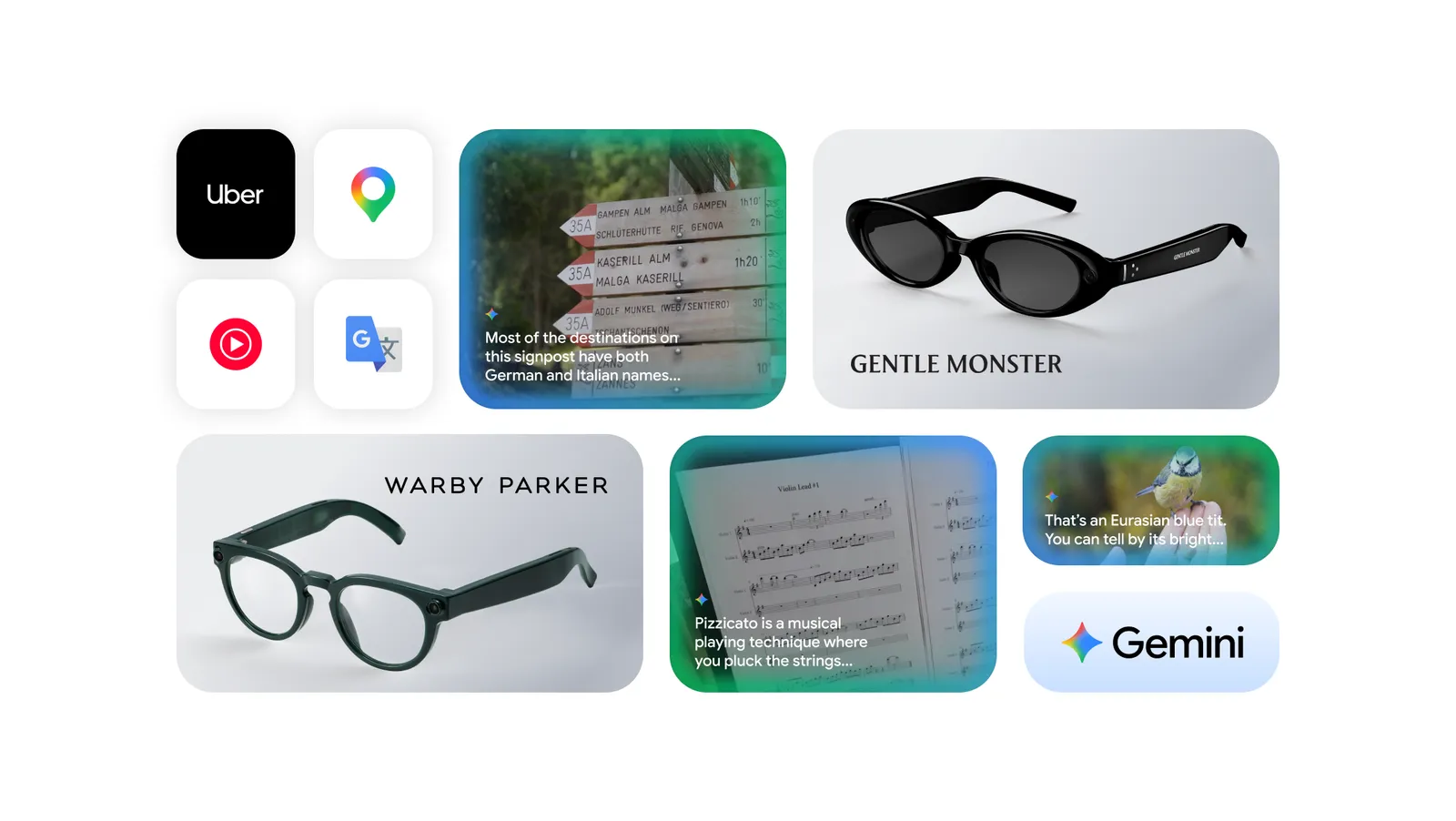
Google also confirmed that future versions with built-in displays are still coming later. Those versions will eventually show directions, messages, and translated text directly in the user’s field of view.
Given how much mixed reality and wearable AI devices are heating up right now, this was probably one of the more important long-term announcements from the event, even if Google kept details fairly limited for now.
Final thoughts
Overall, Google I/O 2026 felt less like a traditional developer conference and more like a showcase for Google’s vision of an AI-first future. Android barely got attention this time around, while nearly every major reveal focused on Gemini, AI agents, automation, and generative tools.
Some of the announcements still feel experimental, and there are plenty of unanswered questions around privacy, reliability, and how much users will actually trust AI agents with important tasks. But at the same time, Google clearly believes the next phase of computing is about AI quietly operating in the background rather than waiting for commands in a chatbot window.
Whether users fully embrace that future is another question entirely.


