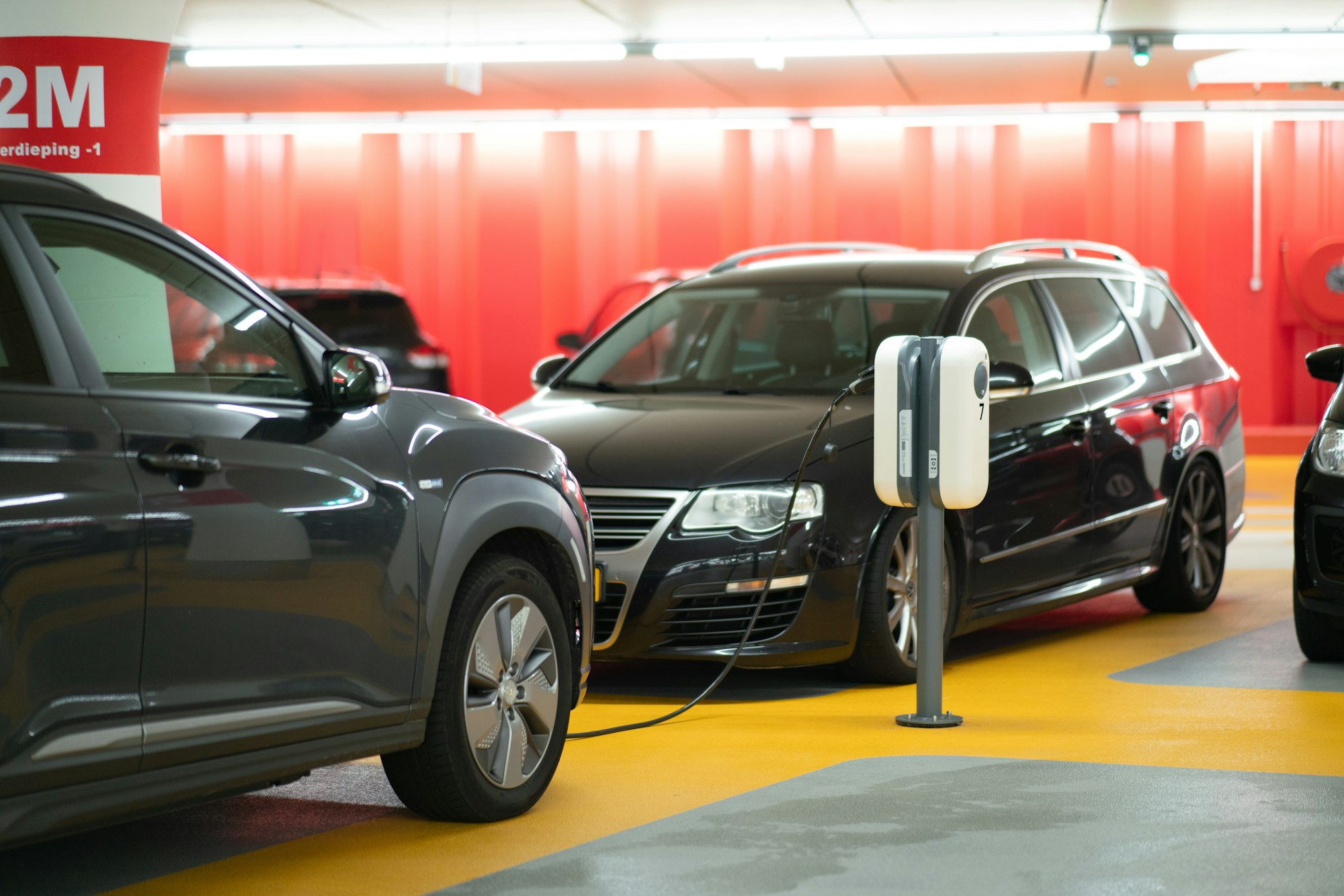
- The F-150 Lightning never became affordable enough for mass-market truck buyers.
- Ford’s $19.5 billion hit exposes how badly EV demand was overestimated.
- Hybrids and range-extended EVs are now the industry’s safer middle ground.
Back in 2021, when Ford announced that America’s best-selling truck was going electric, it felt like a turning point. The F-150 Lightning wasn’t just another EV. It was positioned as the truck that would bring electric power to the mainstream, aimed at contractors, weekend warriors, and millions of drivers who had never considered plugging in a pickup. That, at least, was the pitch.
Four years later, Ford confirmed what many had suspected. Production of the all-electric F-150 Lightning ended this December. “We actually ended production of the 2025 model-year Lightning just this month,” Andrew Frick, president of Ford Blue and Ford Model e, said on a call with reporters on Monday.
The Lightning isn’t disappearing entirely, though. It’s set to return as an extended-range electric vehicle (EREV), effectively a plug-in hybrid with a gas generator onboard, promising more than 700 miles of range. But the pure-electric version, the one meant to bring EV trucks into the mainstream, is done.
MORE INSIGHTS ON THIS TOPIC:
- Tesla stumbles, gambles on robotaxis as Musk's feud with Trump escalates
- China’s BYD surpasses Tesla in EV sales and revenue amid intensifying global competition
- What BluSmart’s shutdown says about India’s EV dream
The Real Cost of Ford’s Electric Truck Strategy
That shift from full EV to EREV comes at a steep cost. Ford is taking a $19.5 billion hit as it reshapes its EV strategy, including an $8.5 billion writedown of electric vehicle assets. The company has also scrapped its next-generation T3 electric truck and dissolved a battery joint venture with SK On.
Pricing exposed the disconnect early. Ford initially announced a $39,974 starting price for the Lightning in 2021, pitching it as accessible. In reality, that base model was largely reserved for fleet customers. Most retail buyers faced prices between $60,000 and $90,000, placing the Lightning alongside gas-powered F-150s that looked nearly identical but cost $10,000 to $15,000 less.

Meanwhile, sales followed that mismatch. Ford once projected annual Lightning sales of 150,000 units. Instead, deliveries averaged about 7,000 per quarter over the past two years, peaking at nearly 11,000 in Q4 2024. In November, Ford’s EV sales dropped 61% year over year to just 4,247 vehicles across all models, according to Cox Automotive.
The financial strain has been relentless. Ford’s Model e division lost $5.1 billion in 2024, following $4.7 billion in losses the year before. Battery costs stayed higher than expected, and the removal of the $7,500 federal EV tax credit, alongside relaxed emissions standards, stripped away both incentives and regulatory pressure to keep pushing unprofitable electric trucks.
What Ford’s EV Pullback Means for Workers and Factories
Workers at the Rouge Electric Vehicle Center in Michigan are being reassigned to support gas and hybrid F-150 production. The Tennessee Electric Vehicle Center, once planned for the next Lightning, will instead build gas trucks starting in 2029. A Kentucky battery plant is being repurposed to produce stationary energy storage systems rather than vehicle batteries.
Ford’s pivot extends well beyond one model. The company is now betting heavily on hybrids and extended-range EVs, aiming for 50% of its global sales by 2030 to come from these powertrains alongside full electrics. It marks a clear retreat from the pure-EV ambitions that defined the industry just a few years ago.
And Ford isn't alone. Stellantis has already abandoned plans for a fully electric Ram 1500 in favor of a range-extended version, while China’s BYD continues to gain ground in markets where price and practicality matter more than legacy branding.
 Ogbonda Chivumnovu
The Auto Industry’s EV Reality Check
Ford executives insist the next-generation Lightning will still be revolutionary. “It delivers everything Lightning customers love,” said Doug Field, Ford’s chief EV, digital, and design officer, pointing to instant torque and electric driving paired with a high-power generator and extended range.
Still, the message is hard to miss. The truck that was supposed to electrify America has become a cautionary tale. After hundreds of billions poured into EVs, legacy automakers are being forced to confront a harder truth. The transition to electric will not be linear, cheap, or as fast as they once believed.
 Ogbonda Chivumnovu