



AI video generation changed expectations quickly. A few years ago, most tools were useful for short experiments — a motion study, a social hook, a rough concept. In 2026, technology teams and digital creators increasingly ask a different question: can the system support a complete beat, and can that beat still belong to a larger story?
That shift matters because publishing calendars rarely need one isolated clip. Marketing teams want offer videos that open, prove, and close. Social story channels want recurring characters. Educators and product teams want explainers that hold attention past the first few seconds. Short generation alone cannot carry those jobs without heavy stitching, and stitching is where continuity usually breaks.
This article looks at that production problem from a technology-workflow view: how longer multimodal models and structured drama workbenches complement each other, with practical notes on where Seedance 2.5 and episode-oriented studios fit.
Why short-clip pipelines hit a ceiling
Early AI video success was built on speed. Text or image in, motion out. That pattern is still valuable for ideation. It becomes expensive when the deliverable needs:
- a 15–30 second arc with setup and payoff
- stable identity across camera changes
- audio that belongs to the picture
- reuse of characters and locations across multiple posts
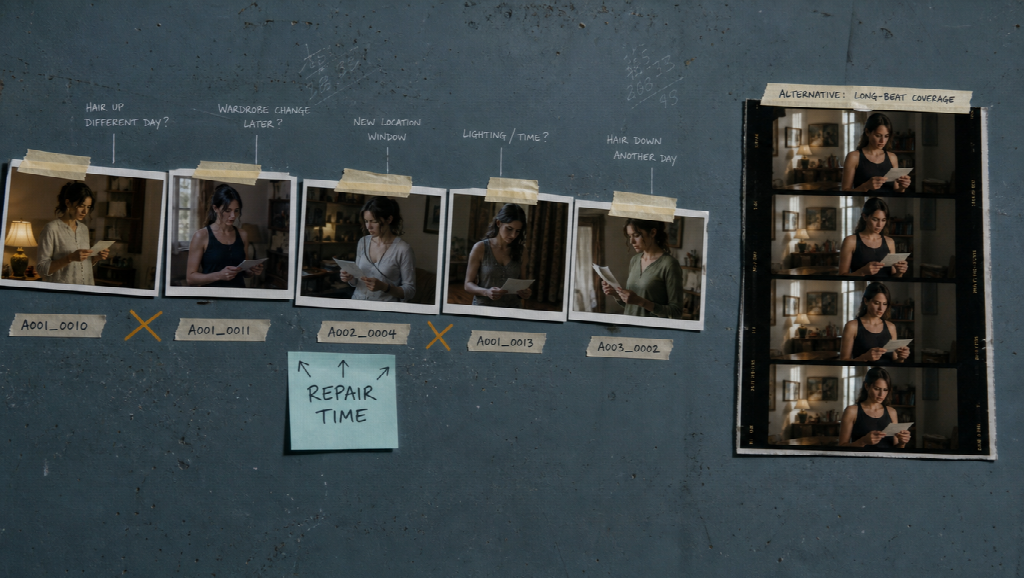
When teams force those requirements through short-clip tools, they often regenerate fragments, then spend the saved “generation time” on repair. The bottleneck moves from rendering to continuity management.
Longer multimodal models emerged as a response to that bottleneck. Instead of asking creators to invent a thirty-second piece from five disconnected takes, the model is asked to hold a directed interval in one pass — guided by text plus image, video, and audio references.
What a longer multimodal model changes
Seedance-class generation is best understood as an execution layer, not a full editorial department.
In practical terms, a model such as Seedance 2.5 is designed for coherent clips in a roughly 4–30 second window, with denser reference control and timing-aware direction than prompt-only short tools. Creators can pack role-labeled assets (identity, product, environment, audio), write shot-order instructions, and aim for a continuous beat that is closer to a finished unit.
That does not remove human direction. Weak briefs still produce weak thirty-second clips. Length amplifies clarity and confusion equally. The useful upgrade is scope: when the brief is solid, fewer seams appear between “hook” and “close.”
For technology and media teams evaluating models, the checklist is straightforward:
- Can references be assigned clear jobs?
- Can timing be expressed in the brief?
- Can a weak middle segment be revised without discarding everything?
- Does output quality hold for commercial review, not only social novelty?
If those answers are weak, the model may still be fine for drafts. It is less reliable as a shipping engine.
Why series content needs a different layer
A single strong beat is not the same as a serial channel.
Vertical drama, episodic education, and character-led social shows fail for a different reason than ads do. The first episode can look good while episode three invents a new lead, a new room, and a new costume language. That is a memory problem.
This is where a drama-oriented workbench helps. Drama Studio is built around planning and production structure for short-drama style projects: ideas or scripts move into editable outlines, characters, locations, props, beats, and storyboards before scene generation. The value is organizational — keeping story assets connected so later episodes inherit earlier decisions.
In other words:
- longer multimodal models execute heavy scenes
- drama studios preserve series state
Confusing those roles leads to either beautiful orphans or well-planned outlines that never become watchable video.
A practical split for technology and creator teams
A durable workflow usually looks like this:
Plan the episode package first. Define cast locks, locations, and the emotional turn of the episode before generating hero shots.
Route long beats deliberately. Send only the scenes that need length and reference density to a longer multimodal model. Keep three-second reactions on lighter tools if needed.
Review with production criteria. Reject takes for identity drift, claim drift, or sound that does not match action — not merely because a frame “looks less cinematic.”
Return approved media to the project. Store takes with the same episode assets that justified them, so next week’s brief starts from memory instead of improvisation.
This split is especially relevant for teams building internal tools or agency SOPs. It is easier to document “structure desk vs render engine” than to train everyone to win a prompt lottery.
Limits worth stating clearly
No current consumer workflow fully replaces cinematography craft, legal review, or brand governance. Multimodal references can still conflict if two assets disagree. Dialogue-heavy multi-character scenes still need human QC. And serialized drama still depends on writing: tools accelerate production, they do not invent a premise audiences care about.
Used carefully, though, the combination of structured episode planning and longer beat generation reduces the most common 2026 failure mode — folders of impressive clips that never cut into a coherent publishable unit.
Conclusion
AI video is maturing from novelty generation into production infrastructure.
Short-clip tools remain useful for tests and inserts. Longer multimodal models such as Seedance 2.5 matter when a beat must hold for a full short-form arc with real reference discipline. Drama-oriented studios matter when those beats must belong to a series with recurring world rules.
For a technology audience, the useful takeaway is architectural: separate memory from execution, brief before you render, and judge systems by whether episode two still looks like episode one. That is how AI video becomes operationally useful — not just impressive in a screenshot.


