



The Growing Case for AI-Assisted Music Video Production
Producing a music video has traditionally required resources that most independent musicians don't have: a director, a crew, equipment, locations, and a post-production budget. AI music video generator has begun to change that equation, making it possible for solo artists and small teams to produce visual content without a full production pipeline.
The category has grown quickly, and the range of capabilities across tools is wide. Understanding what these tools actually do — and which technical features matter in practice — helps creators make more informed decisions about where to invest their time. This article examines four capabilities that tend to have the most direct impact on output quality: lip-sync accuracy and character consistency, audio-reactive visuals, storyboard control, and style customization.
Four Capabilities That Define Output Quality
1. Lip-Sync Accuracy and Character Consistency
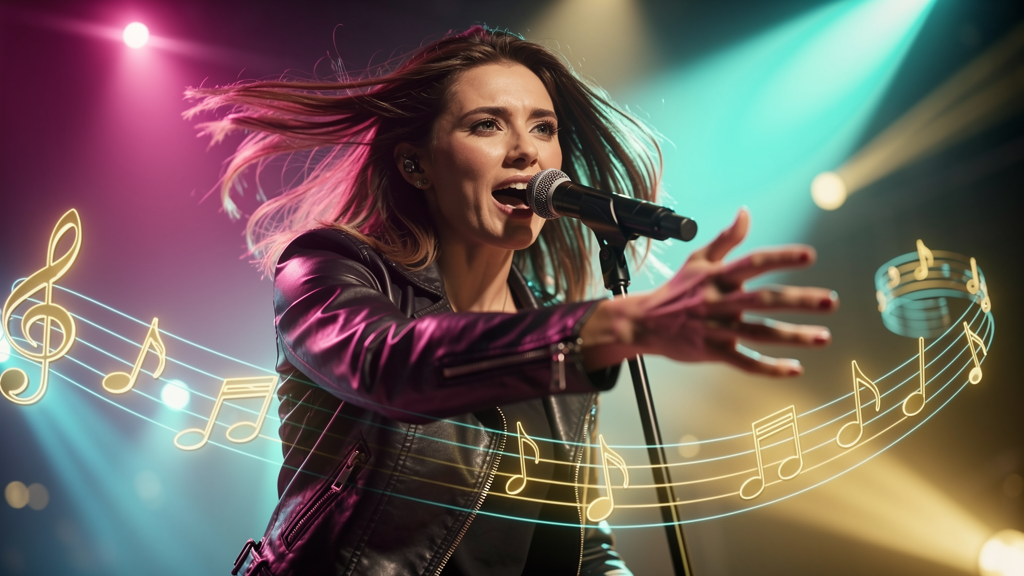
For any music video featuring a vocalist or performer, lip-sync is one of the most technically demanding aspects of AI video generation. Viewers are acutely sensitive to mismatched mouth movements — even minor drift between audio and visual breaks the sense of a live performance. Most AI video systems generate mouth motion probabilistically, meaning they approximate what singing looks like rather than tracking what the specific audio requires phoneme by phoneme.
Character consistency is the related challenge. AI video generation produces each shot as a largely independent output, which means a performer's face, hair color, or clothing can shift noticeably between cuts unless the system has mechanisms specifically designed to maintain identity across scenes.
The most capable tools in this space address both problems together. Phoneme-level lip-sync — where mouth movements are derived from actual vocal sounds in the audio, rather than a generic singing animation — produces noticeably more stable results on sustained vocal passages. On the consistency side, avatar systems that allow creators to upload a reference photo or build a reusable character definition help maintain a stable identity across all generated shots. Some music video makers for musician report accuracy rates above 90% and support up to two consistent characters per video.
2. Audio-Reactive Visuals
Audio-reactivity is one of the most frequently claimed and least consistently delivered features in AI music video generation. The basic idea — that visuals should respond to the structure of the music rather than simply play alongside it — is straightforward. The implementation is more demanding.
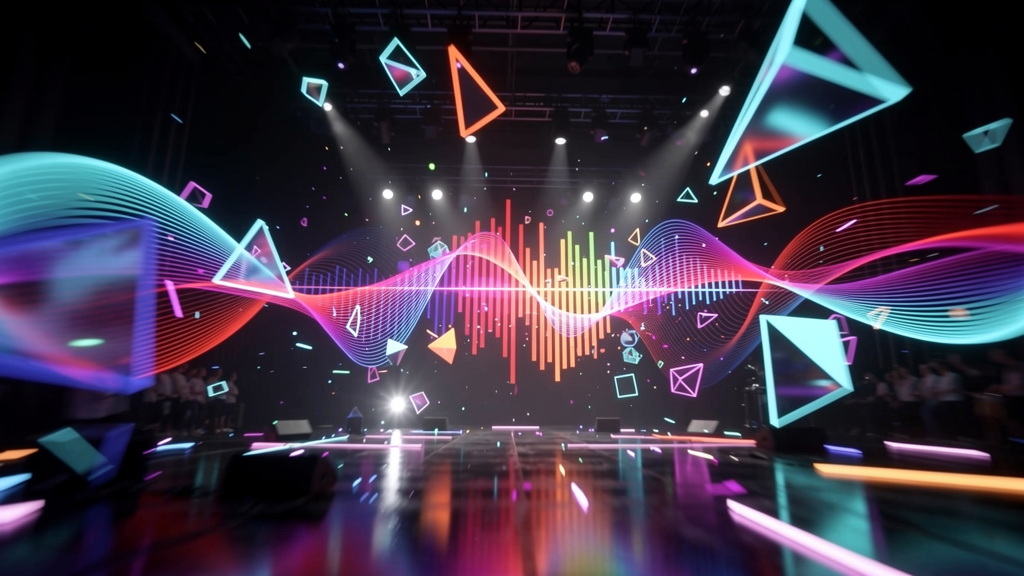
A genuinely audio-reactive system needs to analyze the track before generating anything: identifying BPM, locating individual beat positions, detecting bar boundaries, and recognizing the macro structure of the song — where the intro ends, where the chorus starts, when the energy drops and rebuilds. Without that analysis, cut timing and visual pacing are determined by template logic or random variation rather than by the music itself.
Tools that perform this kind of structural analysis before generation produce a meaningfully different result: cuts land on beats rather than between them, visual energy scales with the dynamics of the audio, and major moments like a beat drop or a chorus entry receive a corresponding visual event. The output behaves as if a human editor had manually cut to a waveform display — which is the most useful benchmark for evaluating this feature.
3. Storyboard Control
Most AI video tools operate at the clip level: you prompt for a short piece of footage and the system generates it. This works for producing individual shots but creates a structural problem for music videos, which need to function as coherent wholes. A three-minute video requires not just good individual clips but a considered shot sequence — an arc, intentional pacing across sections, and visual decisions that serve the song's structure rather than contradict it.
Storyboard control refers to the degree to which a creator can define and adjust this structure before generation begins, rather than trying to assemble it from independent outputs after the fact.
The more capable tools generate an automatic storyboard as an intermediate step, giving creators a structure to review and modify before committing to full generation. Production-oriented platforms further distinguish between different creation modes — narrative-driven storytelling, concert-style performance, and fully automatic generation — and apply shot logic that mirrors professional video production, separating character-focused A-roll from environmental B-roll and performance detail shots. AI-assisted prompt refinement at both the planning and generation stages gives creators additional control without requiring advanced technical knowledge.

4. Style Customization
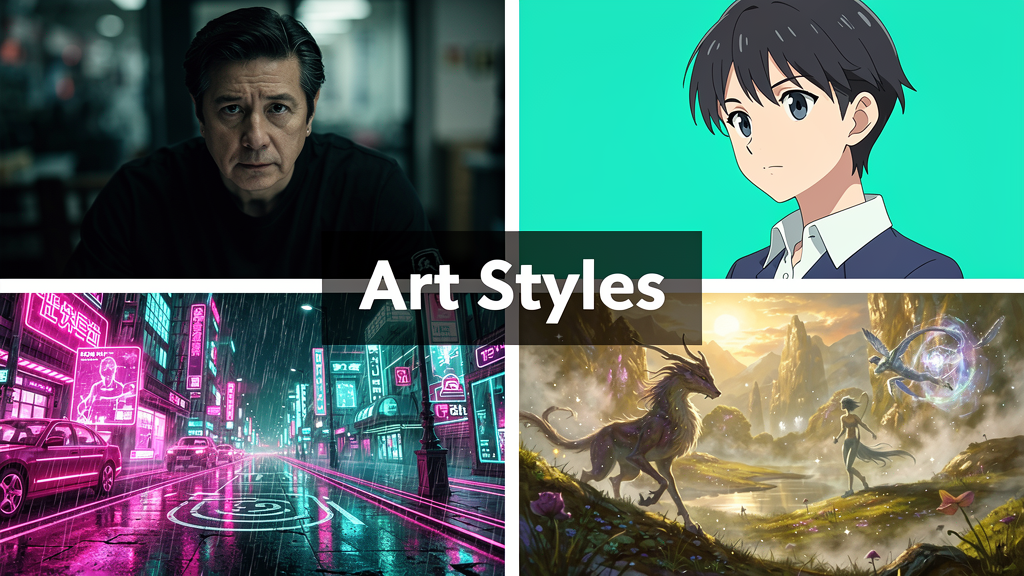
Visual style — the combination of color treatment, rendering approach, and aesthetic reference — is what gives a music video a distinct identity. For artists whose brand is closely tied to a visual language, the ability to specify and maintain a consistent aesthetic across a full video is a practical requirement, not a secondary consideration.
Style customization in AI video generation ranges from fixed presets with no further control to fully open text-prompt systems. Both ends of that spectrum have trade-offs: presets are easy to use but constrain creative range; open prompting offers flexibility but requires skill and experience to produce reliable results.
The most useful implementations combine both approaches — offering a library of defined aesthetics while also allowing open prompt customization. Separating color tone and mood from the primary style selection enables specific combinations that preset-only systems cannot accommodate. AI prompt expansion features, which translate a general creative direction into more specific generation parameters, lower the barrier for creators who have a clear visual intuition but less experience writing effective prompts.
A Note on Integrated Workflows
One practical consideration that doesn't fit neatly into any single feature category is workflow integration. Many creators currently piece together music video production across multiple tools: one platform for image generation, another for video, a third for editing, and a separate tool for lyrics visuals. Each handoff between platforms introduces friction and potential quality loss.
Some dedicated music video generators are designed as single-platform studios that cover image generation, video generation, lyrics video creation, and animated album cover output within a single interface. Whether this matters depends on the creator's existing workflow, but for those building a process from scratch, consolidating these steps reduces the number of systems to learn and maintain.
What This Means for Independent Creators
AI music video generation is a genuinely useful category of tools for independent musicians and content creators, but the gap between what the best and average tools can do is significant. The four capabilities covered here — lip-sync accuracy, audio-reactive pacing, storyboard control, and style customization — are the most reliable indicators of whether a given tool will produce output that meets a professional standard or merely approximate one.
For creators evaluating options in this space, the most productive approach is to test each tool against a real track rather than relying on demo footage. The differences in audio-reactivity, character consistency, and creative control tend to be immediately visible in practice, even when they are difficult to assess from a feature list alone.
FAQ
Q: What should I look for when testing an AI music video generator for the first time?
Use a full-length track with a clear structure — distinct verse, chorus, and a recognizable beat drop — rather than a short clip. This makes it easier to assess whether the tool genuinely responds to the audio structure or simply applies a fixed visual rhythm. Pay particular attention to how cuts are timed relative to beat positions, and whether the visual energy shifts meaningfully between sections.
Q: How does phoneme-level lip-sync differ from standard AI lip-sync?
Standard AI lip-sync typically generates mouth motion by approximating what singing looks like based on training data — it produces plausible-looking mouth movement without tracking the specific audio. Phoneme-level lip-sync analyzes the actual audio to identify individual speech sounds and aligns mouth movements accordingly. The practical difference is most visible on sustained vocal passages, where standard approaches tend to drift while phoneme-tracking stays accurate.
Q: Can creators control the shot sequence, or is it fully automated?
This varies significantly across tools. Some platforms offer only fully automated generation with no structural input from the creator. More capable tools generate an editable storyboard as an intermediate step, allowing creators to review and adjust the planned shot sequence before final generation. AI-assisted prompt refinement is available at the storyboard and video generation stages on some platforms, offering additional control without requiring advanced technical knowledge.
Q: What aspect ratios and platforms are supported for export?
Most dedicated music video generators export in the three standard aspect ratios: 16:9 for traditional video platforms, 9:16 for vertical short-form content, and 1:1 for square formats. Platform-specific optimization for TikTok, Instagram Reels, YouTube Shorts, and standard YouTube is common among the more developed tools. Some also support Spotify Canvas and Apple Music motion visual formats.
Q: Is AI-generated music video content suitable for commercial distribution?
This depends on the platform and the specific assets used in generation. Most dedicated AI music video tools generate original visual assets rather than remixing existing footage, which reduces copyright exposure. Creators should review the terms of service of any tool they use for commercial content, particularly regarding ownership of generated output and any restrictions on monetization.


