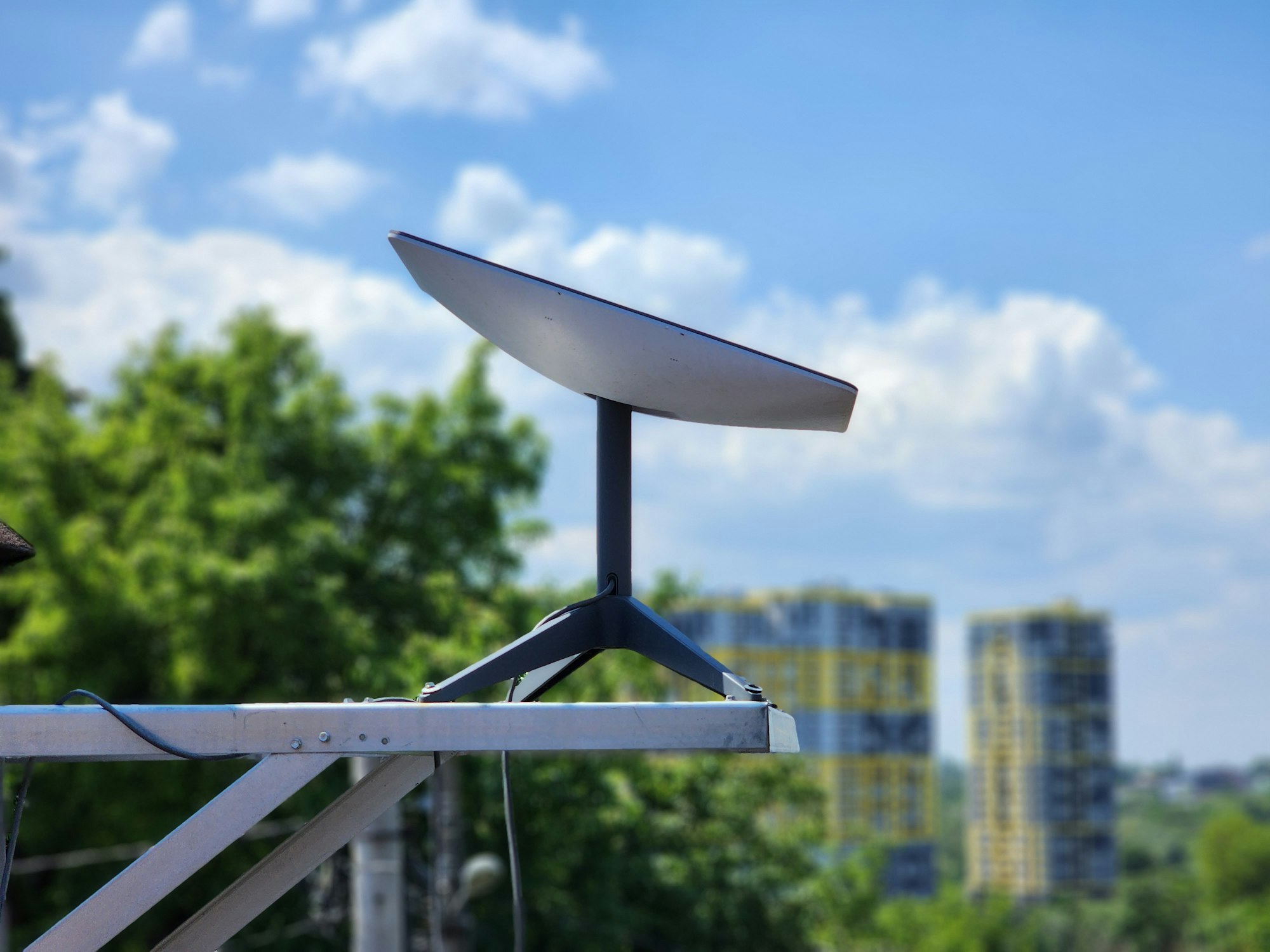
Somalia isn’t exactly the poster child for digital infrastructure. Years of conflict, limited investment, and a sprawling rural population have left most of the country offline. As of 2024, less than 30% of Somalis had internet access, and even that was heavily concentrated in urban areas.
But now, just four months after SpaceX secured regulatory approval, Starlink is officially live across the country, promising to change how internet access might grow in Africa’s most underserved regions.
At first glance, this might look like another African nation joining the high-speed satellite internet club. But if you look closer, the story here is how fast Somalia said yes, while more developed markets like South Africa and Kenya are still stuck in regulatory gridlock.
In April 2025, Somalia’s National Communications Authority issued Starlink a 10-year license. Now in August, and the availability map shows the whole country is lit up, reaching underserved areas like Bosaso and the Somali hinterlands.
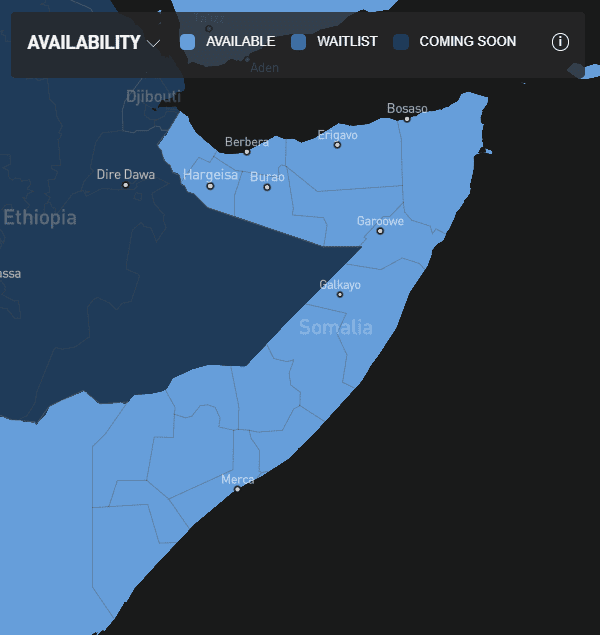
That speed matters. If you’ve watched how most telecom rollouts go on the continent, you know they’re rarely this clean or quick. Somalia becomes the 25th African country to approve Starlink, joining a quiet wave of regulatory green lights across the region, and quietly redrawing the map of who’s building Africa’s next internet layer.
Still, let’s not romanticize this. The hardware costs about $349, and the monthly plan is $120. For most households, that’s not just expensive, it’s unattainable. But if you think about the potential for schools, rural clinics, farming collectives, local governments, and even small internet cafés, it starts to make more sense. You don’t need mass adoption overnight for this to move the needle.
 Kelechi Edeh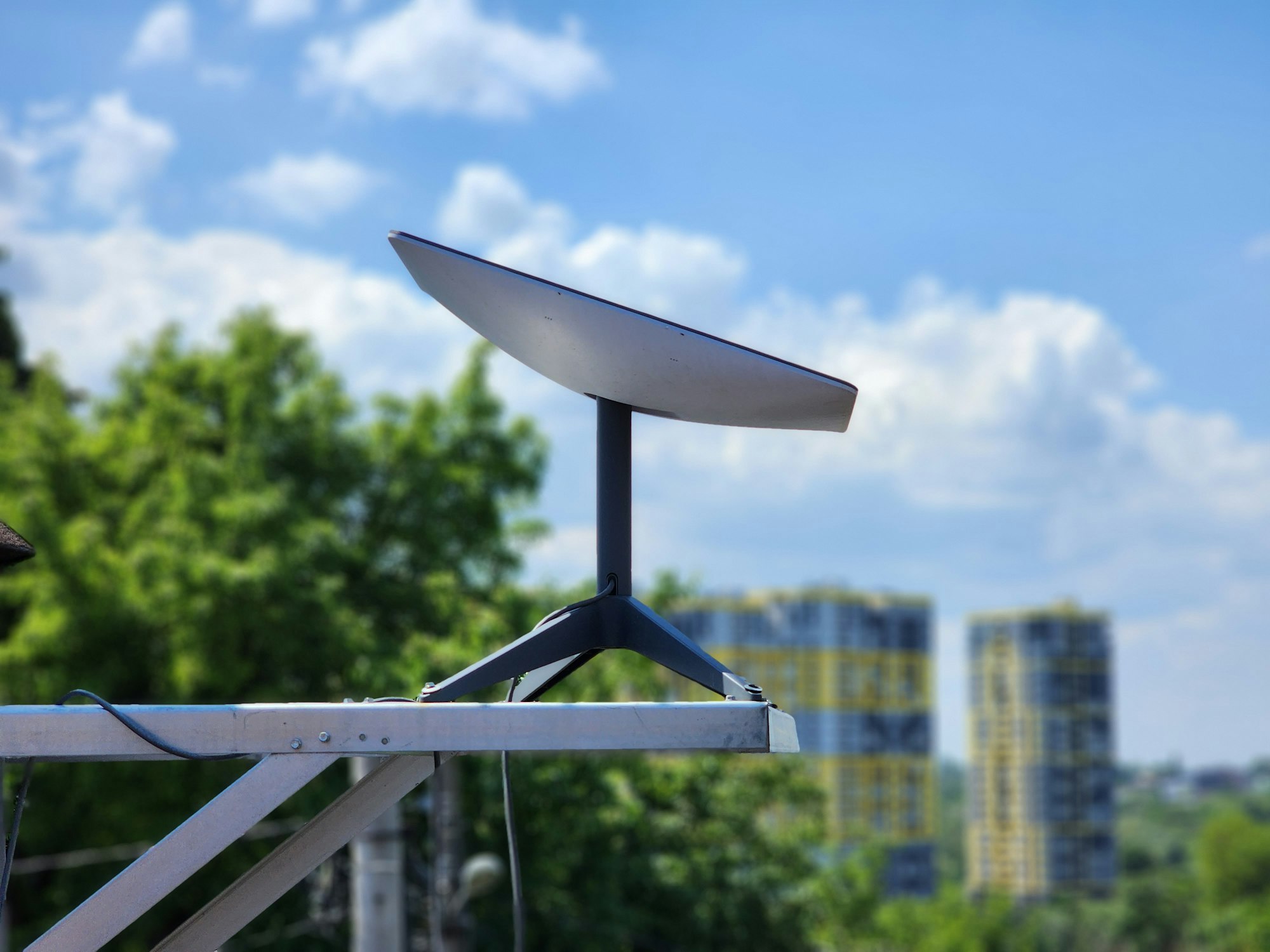
And from a rollout perspective? It’s leapfrogging, not replacing. There are no trenching cables or building new towers. Just plug in the dish, follow the app, and get online. For a government under pressure to deliver connectivity, it’s a shortcut, and one we’re starting to see more countries consider.
Starlink’s already got 7,600+ satellites in orbit, aiming for 12,000+. The tech isn’t perfect, and affordability remains a ceiling. But we’re watching an inflection point. Countries like Somalia, and maybe yours next, are asking: do we wait for the old system to catch up, or do we just skip the line?
For now, Somalia’s bet on speed over red tape is a signal.
 Oyinebiladou Omemu