



AI can generate a convincing character in one shot. The harder problem begins when that same character needs to survive episode two, episode five, and episode ten without gradually becoming someone else.
A face may become slightly narrower. Hair changes length. A jacket acquires a different collar. A scar introduced three episodes earlier is suddenly gone. Each change can seem minor in isolation, but in a microdrama, where the same characters recur across tightly connected episodes, small deviations accumulate fast. Viewers may not describe exactly what changed, but they can tell when the person on screen no longer feels like the same person.
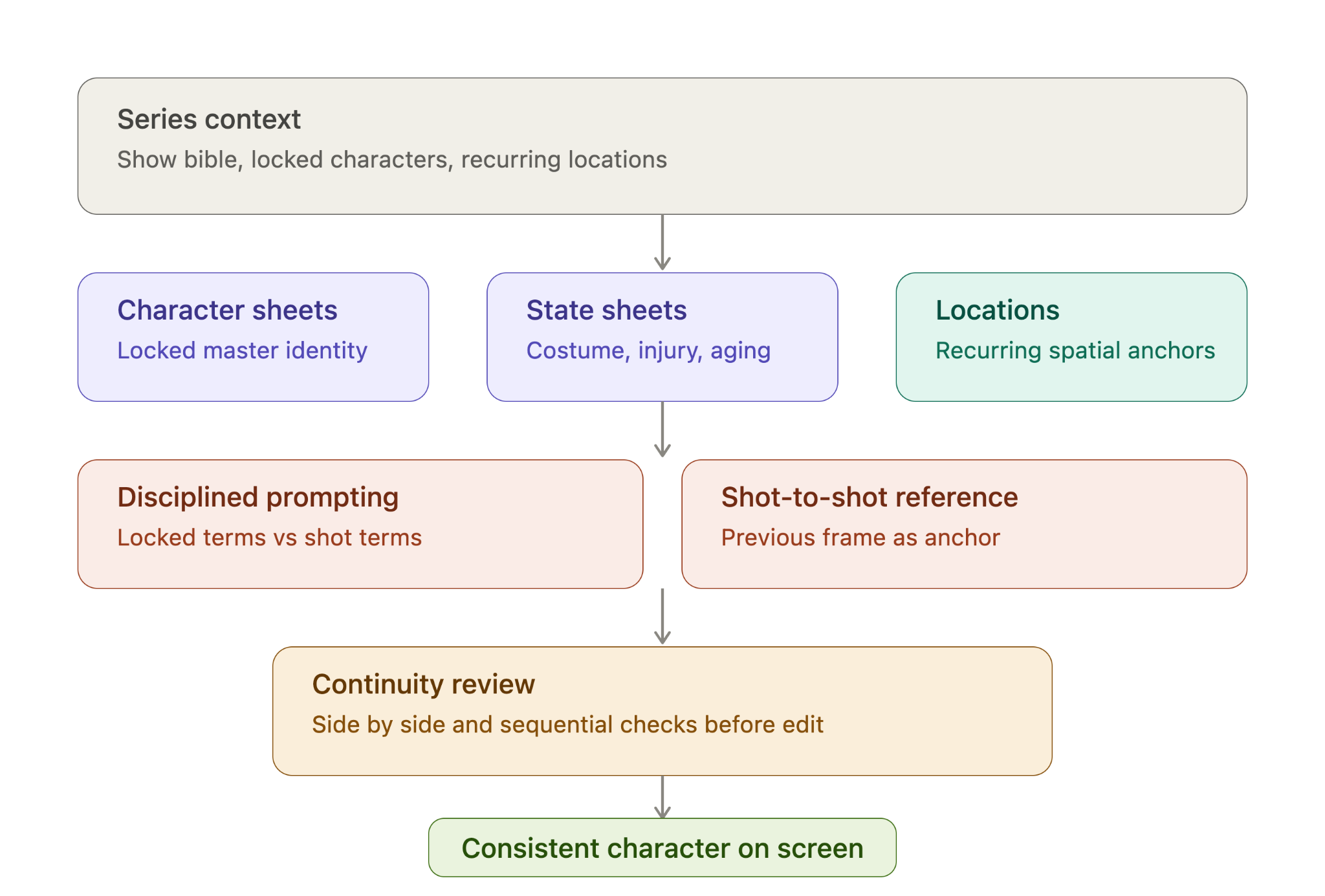
Character consistency in an AI microdrama isn't simply an image generation problem. It's a continuity system, one that combines a persistent source of truth, locked character references, controlled character states, disciplined prompting, consistent environments, shot-to-shot references, and ongoing review. Here's a practical way to build it.
Here is a practical way to build that system.
1. Start with a series-level source of truth
Before generating character images, establish somewhere that can hold the entire show, not just the current episode. Separate two layers of information: what stays true across the whole series, and what applies only to the scene being produced right now. One layer functions like a showrunner, knowing the world, characters, and arc. The other functions like a director on a given episode.
This is where a tool like invideo agent becomes relevant to episodic work. A project can hold a Context containing information that stays true across the series, with individual Briefs for each episode, so recurring characters and creative rules live at the project level while each episode has its own working brief.
Build a show bible before the first shot. For each major character, define name, appearance, hair, wardrobe logic, recurring accessories, distinctive marks, and any story events that alter their appearance. Treat it as the single source of truth so different team members aren't generating from different assumptions.
2. Create a master character sheet before generating video
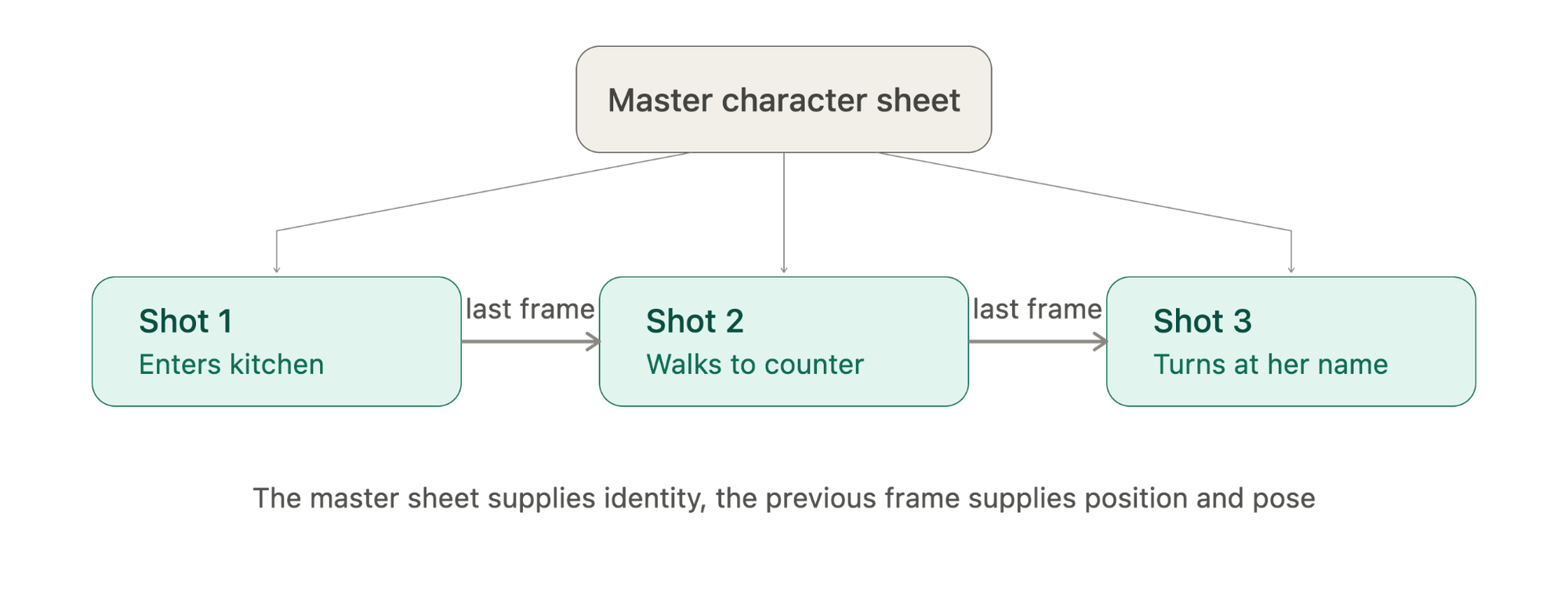
A single portrait only tells a model what a character looks like from one angle, under one lighting condition. A microdrama will eventually need close-ups, wide shots, profiles, and reactions. A useful master sheet covers the character at multiple distances and angles, ideally including close-up, frontal, back, and profile views. Once approved, lock the sheet. New generations should start from it, not from whatever frame looked good most recently.
3. Separate permanent identity from temporary character state
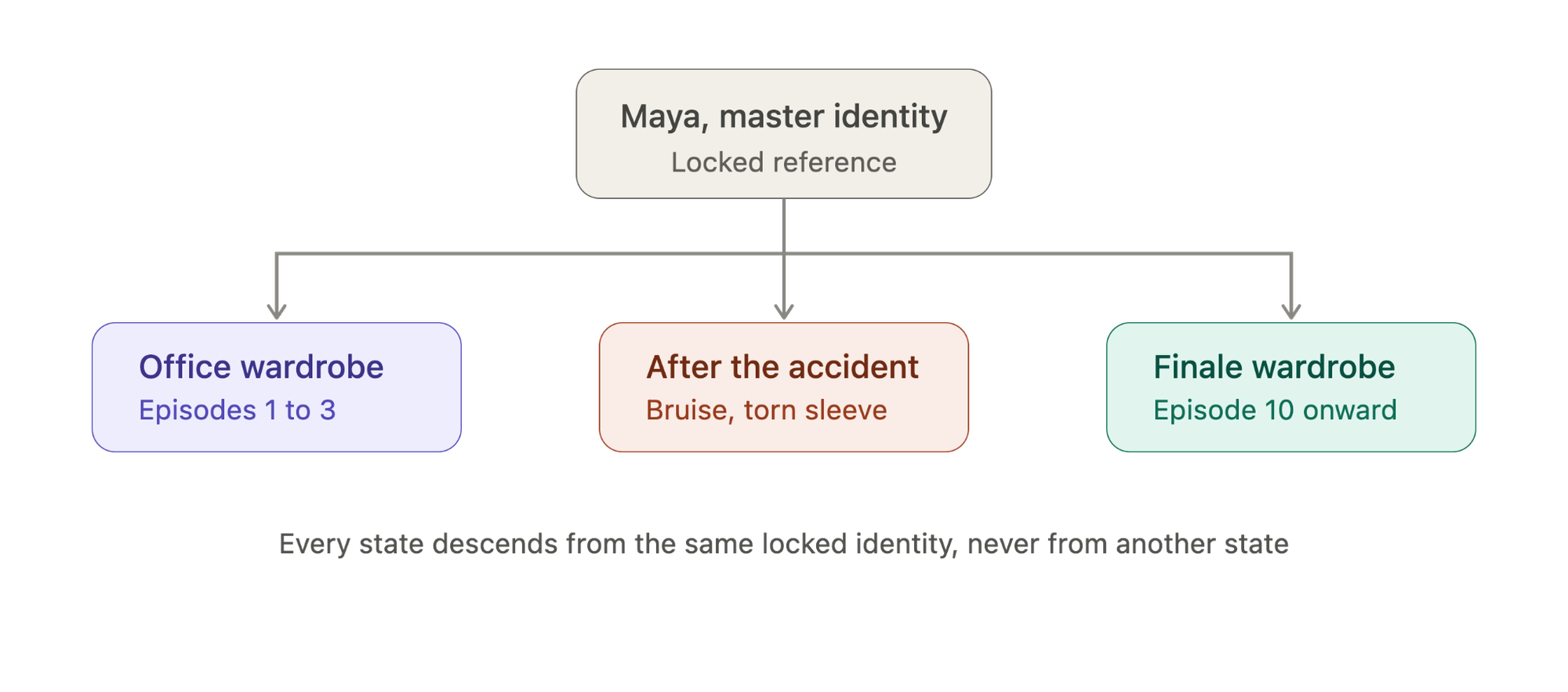
If a character's shirt gets torn in episode three, modifying the original sheet loses the clean version, but ignoring the change makes the character heal mysteriously between shots. The fix is state-based continuity: keep a canonical identity reference, then create additional state references whenever the story changes something visually significant, a costume change, an injury, an aging jump. Every state should descend from the same locked identity, producing controlled evolution instead of accidental drift.
4. Treat wardrobe as continuity, not decoration
Wardrobe often breaks continuity before faces do. Instead of writing "a black jacket," tie wardrobe to story time: which episodes it appears in, distinguishing details, and how it changes after a specific event. This turns wardrobe into continuity information that anyone picking up the next episode can reconstruct correctly.
5. Keep prompt language stable even when the scene changes
Describing the same person differently each time, "short dark hair" becoming "cropped brunette hair" then "messy black hairstyle", introduces drift a human wouldn't notice but a model will. Build a master description and reuse the same vocabulary. Split prompts into locked information (identity, hair, costume state, scars) and shot information (performance, camera, environment), and only change the locked section when the story requires it.
6. Keep locations consistent too
A face can match perfectly across two shots and the sequence can still feel wrong if the room has changed shape or the furniture has moved. Build location references with the same discipline as character sheets, covering major furniture, doors, windows, lighting, and materials.
7. Use the previous shot as continuity information
Character sheets maintain global identity, but sequences need local continuity too. Daisy-chaining a sequence, starting from a clear establishing shot and letting later generations reference what came immediately before, helps preserve pose, lighting, and spatial orientation across consecutive shots.
8. Review continuity before the final edit
Don't wait until every episode is finished to discover a character's face has gradually shifted. Review should happen throughout production, checking identity, hair, wardrobe, injuries, location layout, and current story state side by side and in sequence. A bad shot caught during generation is cheap to fix; one caught after sound and pacing work is built around it is not.
Final thoughts
The real goal of character consistency isn't producing the same face repeatedly. It's making the audience forget that maintaining the character was ever a technical problem. Start with a persistent series context, build a real show bible, lock strong character references, track character states, and review continuity before it reaches the final cut. The better the system becomes, the less time filmmakers spend reminding AI what happened before, and the more time they spend directing the next beat.


