



Kwame thought he was making a future-proof decision.
Standing inside a dealership in Johannesburg, staring at a sleek electric SUV, he imagined a life without fuel queues, rising petrol prices, or engine noise. Electric vehicles (EVs) are often framed as the inevitable future of transport, and it’s really no surprise why. They’re a quieter, cleaner, smarter mode of transport that is cheaper than petrol cars in the long run.
But upfront? Not so much. The headache begins before you even turn the key. In many African markets, EVs are treated as luxury imports rather than essential green tech. Reports claim that EVs get slapped with import tariffs as high as 25% compared to typical petrol cars that get hit with 18%. These high tariff costs translate to EVs being immediately more expensive than other cars in the market. In other words, going electric is still a premium decision rather than a practical one. The first major stumbling block for many looking to get it.
But Kwame is a man of means, so money isn’t exactly the issue here. He points at the one he likes, and after all the paperwork and back and forth, he’s on his way home with a new car.
That’s when the second wave of challenges begins. How does he recharge this thing?
South Africa has over 500 public charging stations with a 1:5 charger-to-EV ratio, better than the global 1:10 recommendation. But the reality is more nuanced.
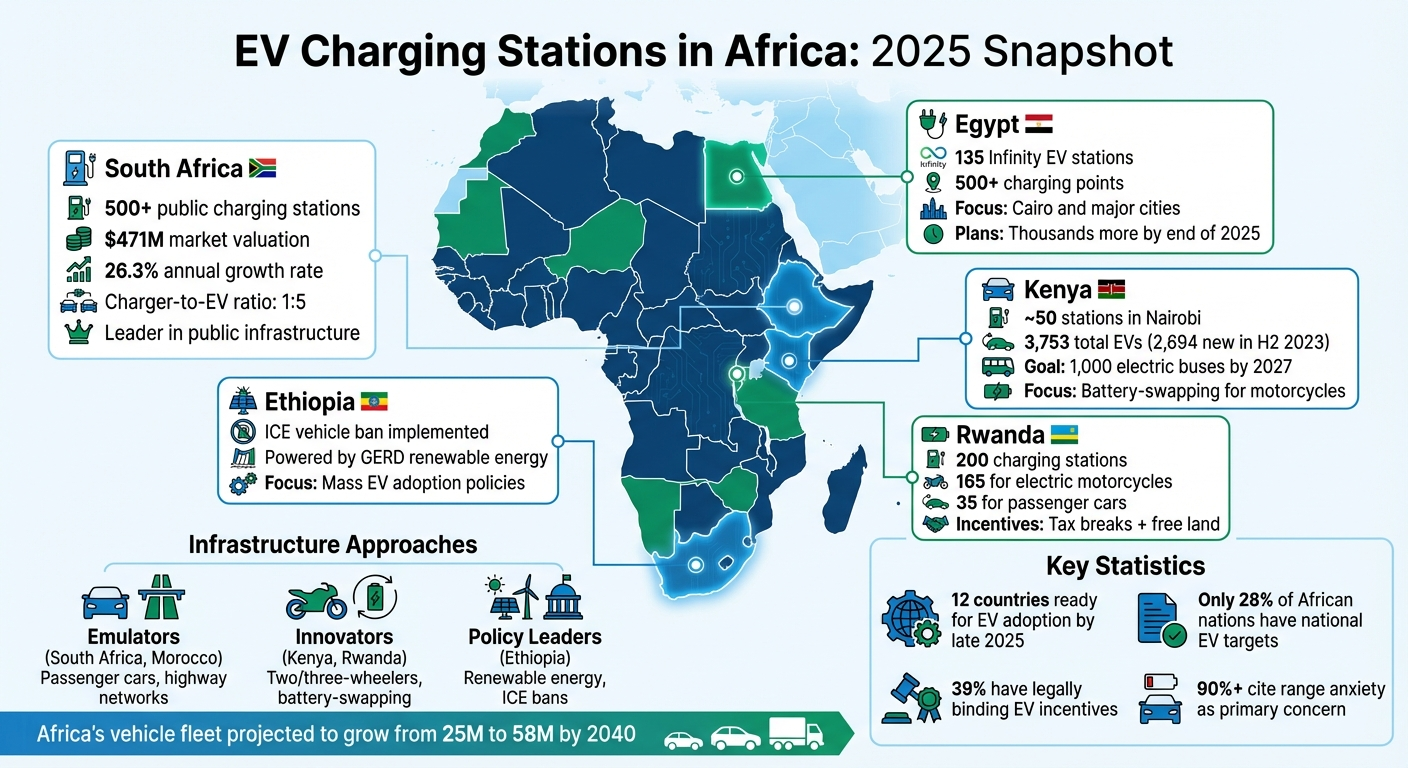
The first problem is that these stations are mostly concentrated in Gauteng, the Western Cape, and KwaZulu-Natal. In other words, large rural areas and long-distance routes remain underserved, meaning these cars could be more practical when used in the main cities instead of long-distance interstate travel trips. For Kwame, this means careful planning becomes part of everyday travel. A spontaneous road trip is no longer just about fuel stops; it requires mapping charging points and hoping they’re operational when he arrives.


