OPPO's Find X9 Ultra arrived in Italy in May 2026 as the ultimate flagship of the Find X9 series, carrying the "Your Next Camera" positioning. The camera collaboration with Hasselblad goes deeper here than it did in the Find X9s — the Ultra is built around serious imaging ambitions, and the video system reflects that.
8K Video: The Specification That Changes the Conversation
The OPPO Find X9 Ultra can record 8K at 30fps with 10-bit Log encoding — specifically O-Log2, OPPO's latest logarithmic profile designed with higher dynamic range and a wider color gamut than the previous generation. For Italian filmmakers and video creators working on projects where post-production color grading matters, the O-Log2 profile preserves tonal information in highlights and shadows that compressed formats discard. The footage goes through an ACES-certified color pipeline from shoot to edit, which means the color consistency between on-device capture and professional editing software stays predictable.
8K at 30fps is a spec that generates skepticism in some circles — the file sizes are large, editing demands serious hardware, and delivery platforms for 8K consumer content are still limited. These are legitimate points. The practical argument for 8K on the Find X9 Ultra is resolution banking: shooting at 8K and delivering 4K lets you crop, reframe, and stabilize in post while maintaining full 4K output quality. For Italian commercial producers shooting social content or brand films where reshoots aren't possible, this gives post-production flexibility that lower resolution capture can't match.
The Snapdragon 8 Elite Gen 5, with 20% faster CPU and 23% faster GPU than its predecessor, handles sustained 8K recording without the thermal throttling that plagued earlier mobile cinema attempts. The 3D Cryo-velocity Cooling System manages heat during extended capture sessions.
O-Log2 and Cinematic LUTs

The O-Log2 profile is where the video system gets interesting for experienced creators. Log footage shot on consumer cameras typically requires significant technical knowledge to grade usably — the flat, desaturated preview is genuinely disorienting for anyone accustomed to reviewing JPEGs. OPPO addresses this by supporting Cinematic LUTs that can be applied with a single tap during playback or burned directly into the exported file. Three finely tuned presets and support for importing custom Cube LUT files bring a film grading workflow to the phone environment without requiring a desktop intermediate step.
Hasselblad Tonality support adds the option to apply direct Hasselblad colors and tonal character in the video pipeline, with adjustable parameters for those who want to deviate from the preset.
The Camera System in a Video Context
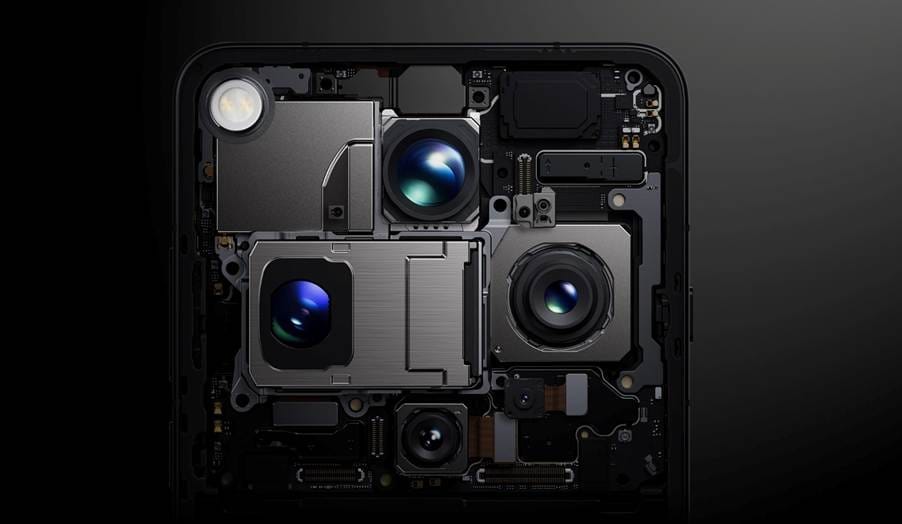
The dual 200MP cameras deserve attention here. The main camera uses a 1/1.12-inch Sony sensor at f/1.5 with Cinematic OIS and Simultaneous Triple Exposure — a feature that captures multiple exposures simultaneously to extend the usable dynamic range of video frames. The 3× telephoto at 200MP and 1/1.28-inch format with f/2.2 aperture draws in 36% more light than the OPPO Find X8 Ultra's equivalent lens, according to OPPO's measurements.
The 10× optical telephoto at 50MP and 230mm f/3.5, using OPPO's Quintuple Prism Reflection Periscope Structure, extends to 20× optical-quality zoom and 120× digital. In a video context, this gives creators spatial compression that changes compositional options significantly — pulling a distant subject closer with telephoto compression affects the visual language of a scene in ways that cropping a wide shot doesn't replicate.
Slow-Motion: 4K 120fps Dolby Vision
Cinematic slow-motion at 4K 120fps in Dolby Vision format works across multiple focal lengths. The Dolby Vision encoding preserves tonal range in the slow-motion footage, which matters when high-contrast scenes — stage lights against dark backgrounds, bright sun on subjects — need to look correct when slowed down by a factor of four or five.
Compared to the Find X9s, which caps out at 4K 60fps Dolby Vision video with no 8K capability, the Find X9 Ultra represents a substantial step in video ambition. The Find X9s is the right tool for casual travel creation; the Ultra is for creators who think about color grading and focal length selection.
Battery for Extended Shoots
The 7050mAh silicon-carbon battery supports long filming days, with 100W SUPERVOOC wired charging and 50W AIRVOOC wireless available. A location shoot that drains the battery can be back to usable capacity in under 45 minutes with wired charging. The PowerCore Battery Management Chip handles power delivery intelligently even in low-temperature outdoor Italian environments.
Where It Sits
The OPPO Find X9 Ultra lands in a position that hasn't existed in mobile video before — a phone that combines 8K Log recording, professional color tools, dual 200MP sensors, and a 10× optical telephoto in one device. For Italian video creators who want professional output without carrying professional equipment, the argument is coherent.