



Customer support teams live under constant stress. Tickets continue to arrive from customers demanding immediate responses, agents juggle chats, calls, emails and follow-ups simultaneously while keeping response times under control - even strong teams struggle when response times begin slipping.
Most delays do not stem from lack of effort, rather, they result from broken workflows, repetitive questions, manual routing processes. Conversational AI workflows offer an innovative solution to improve support operations.
Why Response Time Still Hurts Support Teams Today
Many support setups may appear innovative at first glance, using helpdesk tools, CRMs and chat widgets. But behind-the-scenes processes may remain slow.
A typical delay looks like this. A customer sends a message. The system queues it. An agent reads it. The agent asks for basic details. The ticket moves to another queue. The customer waits again.
This happens across industries. SaaS products, ecommerce brands, fintech platforms, logistics companies all see the same pattern.
- High volume of repetitive questions that agents answer many times a day.
- Manual routing that sends tickets to the wrong team before reaching the right one.
- Context loss when customers switch channels during the same issue.
- Limited coverage during nights, weekends, and peak hours.
Even well-trained agents cannot fix these problems alone. The workflow itself needs improvement.
What Conversational AI Workflows Really Mean
Conversational AI workflows go beyond mere chatbots by designing how conversations move from their inception through resolution using automation and intelligence.
Instead of simply reacting to tickets, support teams now guide conversations step-by-step using AI technologies such as Watson. AI handles early stages, gathers context for requests made and handles any simple issues on its own.
Workflows consist of elements including intent detection, data collection, system actions, escalation rules and feedback loops to reduce customer wait time before receiving assistance.
How AI Workflows Reduce Response Time in Practice
Response time improves when support teams remove friction from the earliest moments of a conversation. Conversational AI workflows do this in several ways.
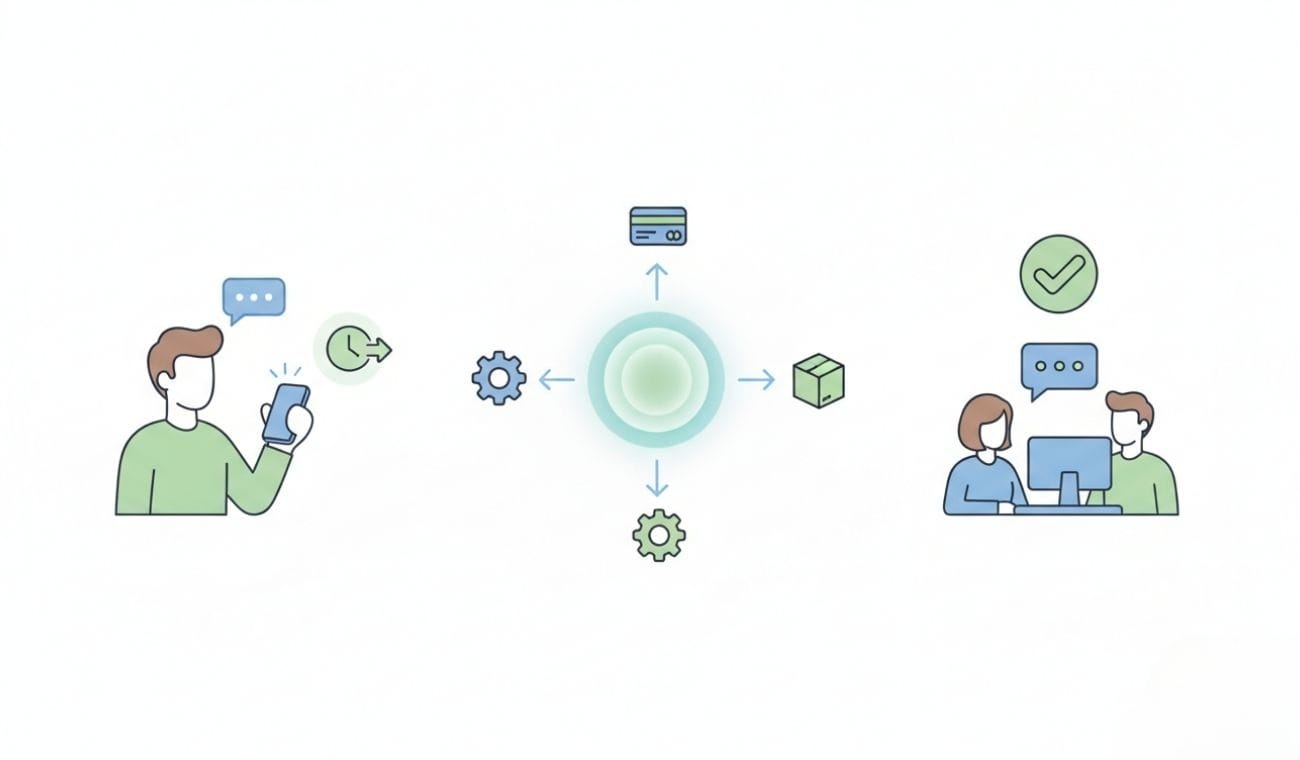
Instant first response without queues
Customers value acknowledgment. Even a quick confirmation reduces frustration. AI responds instantly, any time of day, without placing customers in a waiting line.
This first response is not a generic greeting. It asks relevant questions based on intent and customer history. The system already knows what to do next before an agent sees the ticket.
Automatic intent recognition and routing
One major delay comes from misrouted tickets. AI analyzes the message and routes it correctly from the start.
Billing issues go to finance support. Technical bugs reach product specialists. Order tracking requests get resolved automatically.
This prevents back-and-forth transfers that waste time for both customers and agents.
Resolving common issues without agent involvement
Many support questions follow predictable patterns. Password resets, order status, subscription changes, refund policies, account updates all fit structured flows.
AI workflows resolve these cases end to end. Customers get answers in seconds. Agents stay focused on complex cases that need deeper thinking.
Where Conversational AI Fits into The Support Team Structure
AI does not replace support teams. It reshapes their role. Instead of acting as first responders for every query, agents become problem solvers and relationship builders. Their time goes into higher value interactions.
Support teams using structured conversational workflows typically see faster onboarding for new agents. The AI handles the basics while humans learn edge cases gradually.
Designing Effective Conversational AI Workflows
Speed comes from good design, not from adding automation randomly. Poor workflows can frustrate customers even faster. Here is few principle of workflow
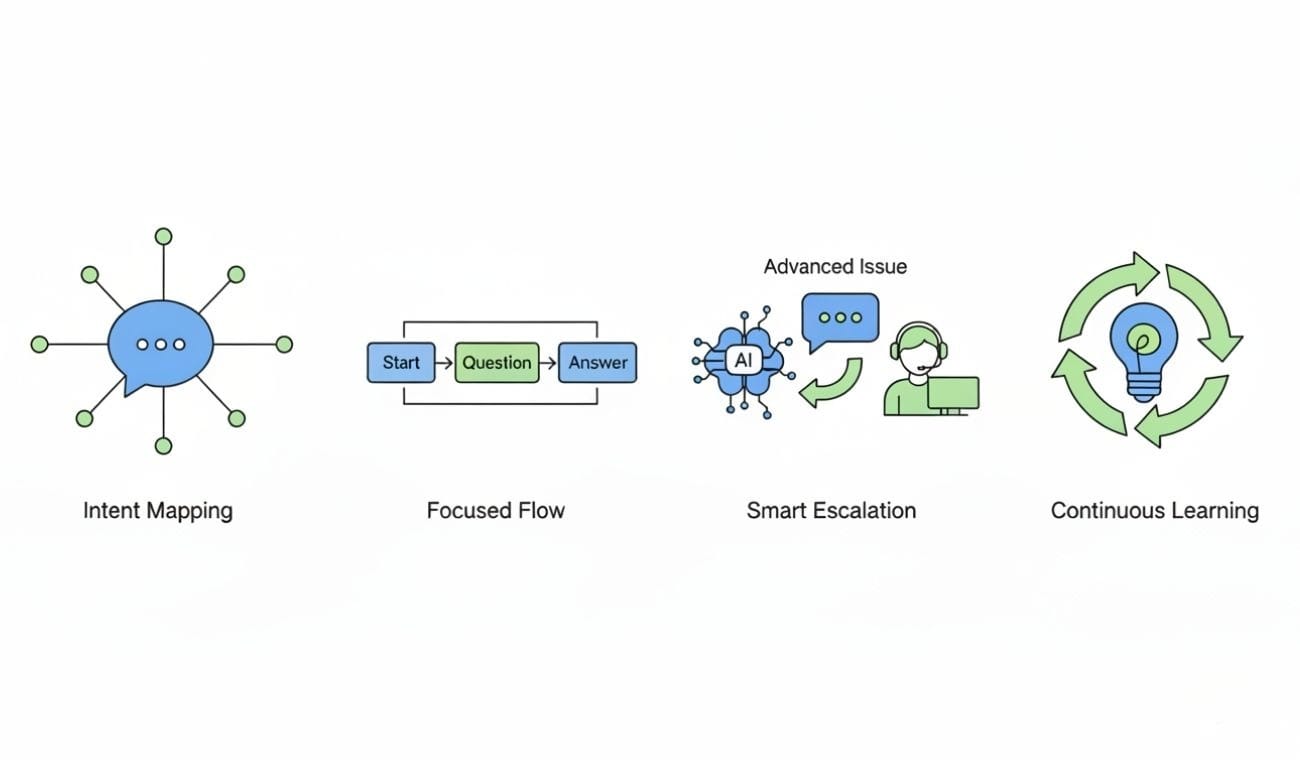
- Clear intent mapping that covers real customer questions instead of internal categories.
- Short, focused conversation paths that avoid unnecessary steps.
- Smart escalation rules that hand over to humans at the right moment.
- Continuous learning from resolved tickets and feedback data.
Teams that invest time in workflow design see steady improvements over weeks, not just quick wins.
Measuring Response Time Improvements The Right Way
Response time alone does not tell the full story. Fast replies mean little if customers still feel unresolved.
Support teams track a mix of metrics to understand real impact. First response time shows immediate speed. Time to resolution reflects workflow efficiency. Customer satisfaction scores confirm experience quality.
Where conversational AI workflows often improve all three when designed properly.
Scaling Support Without Sacrificing Quality
As businesses grow, support volume grows with them. Hiring scales linearly. Workflows scale exponentially.
This is why many teams evaluate platforms that provide the best conversational ai for customer service as part of their long-term support strategy. The focus stays on faster responses, controlled automation, and seamless human handoff without aggressive promotion.
When AI workflows integrate with existing tools, teams avoid rebuilding processes from scratch.
Common Mistakes Teams Should Avoid
Not every AI deployment leads to faster response time. Some mistakes slow things down further.
One issue comes from trying to automate everything at once. Another comes from copying generic chatbot scripts without adapting them to real customer language.
Teams also struggle when AI runs without proper monitoring. Logs, analytics, and feedback reviews matter as much as deployment.
Conversational AI workflows succeed when teams treat them as living systems, not set-and-forget tools.
Conclusion
Reducing response time in support requires more than faster typing. It requires smarter conversation flow.
Conversational AI workflows remove friction from the earliest touchpoints, guide customers efficiently, and empower agents to focus on what matters most.
When designed well, they shorten queues, improve resolution speed, and create a calmer support environment for everyone involved.
FAQs
Q1. How do conversational AI workflows reduce response time in support ?They automate first responses, route requests accurately, and resolve common issues instantly without waiting for agents.
Q2. Can conversational AI handle complex customer issues ?AI manages structured tasks while humans handle complex cases through smooth escalation paths.
Q3. Does faster response time improve customer satisfaction ?Yes. Faster acknowledgment and resolution directly improve trust and overall support experience.


