



We like to think of the cloud as infinite: racks of GPUs floating somewhere above us, powering everything from ChatGPT queries to TikTok’s recommendation engine. But on the ground, the cloud doesn’t run on magic. It runs on electricity. And in emerging markets like Mexico and Nigeria, that electricity is coming not from clean grids, but from roaring gas and diesel generators.
In Colón, outside Querétaro in Mexico, Microsoft’s shiny new data centre rises above a town of 67,000. Behind its grey walls, servers hum day and night. Yet for much of the year, the complex ran on seven massive generators, burning gas for up to 12 hours daily. The company’s own filings admit it won’t be fully plugged into Mexico’s grid until 2027. The result is emissions that are equivalent to 54,000 households, from a facility built by a company that has pledged to be carbon negative.
This isn’t a glitch. It’s the business model.
Mexico’s ambition, Nigeria’s reality

Mexico has pitched itself as Latin America’s digital hub, drawing $7 billion in data-centre investment since 2020. Querétaro alone already consumes 200 MW, 80% of the national load, and demand could triple by 2030. The state utility has promised $8.2 billion in transmission upgrades, but as one industry leader put it, “the transmission and distribution element worries us because it’s deficient.”
So generators, pitched as temporary, become the fallback. And once they’re normalized, they rarely leave.
In Lagos, Nigeria, the fallback is already the default. The city runs on an estimated 4.5 million generators, pumping out 39 MtCO₂e every year. Walk through its streets at night, and the air vibrates with their constant drone. For households, they’re survival kits. For businesses, they’re unavoidable. For data centres, they’re the baseline.
MTN’s Lekki Tier III data facility is a case in point. Built for 600 racks, it once leaned heavily on diesel before switching much of its load to natural gas—a move that cut fuel costs by 40% but locked the operation into fossil fuels. As one engineer put it: “If you want uptime here, you have to plan around the grid, not with it.”
 Ogbonda Chivumnovu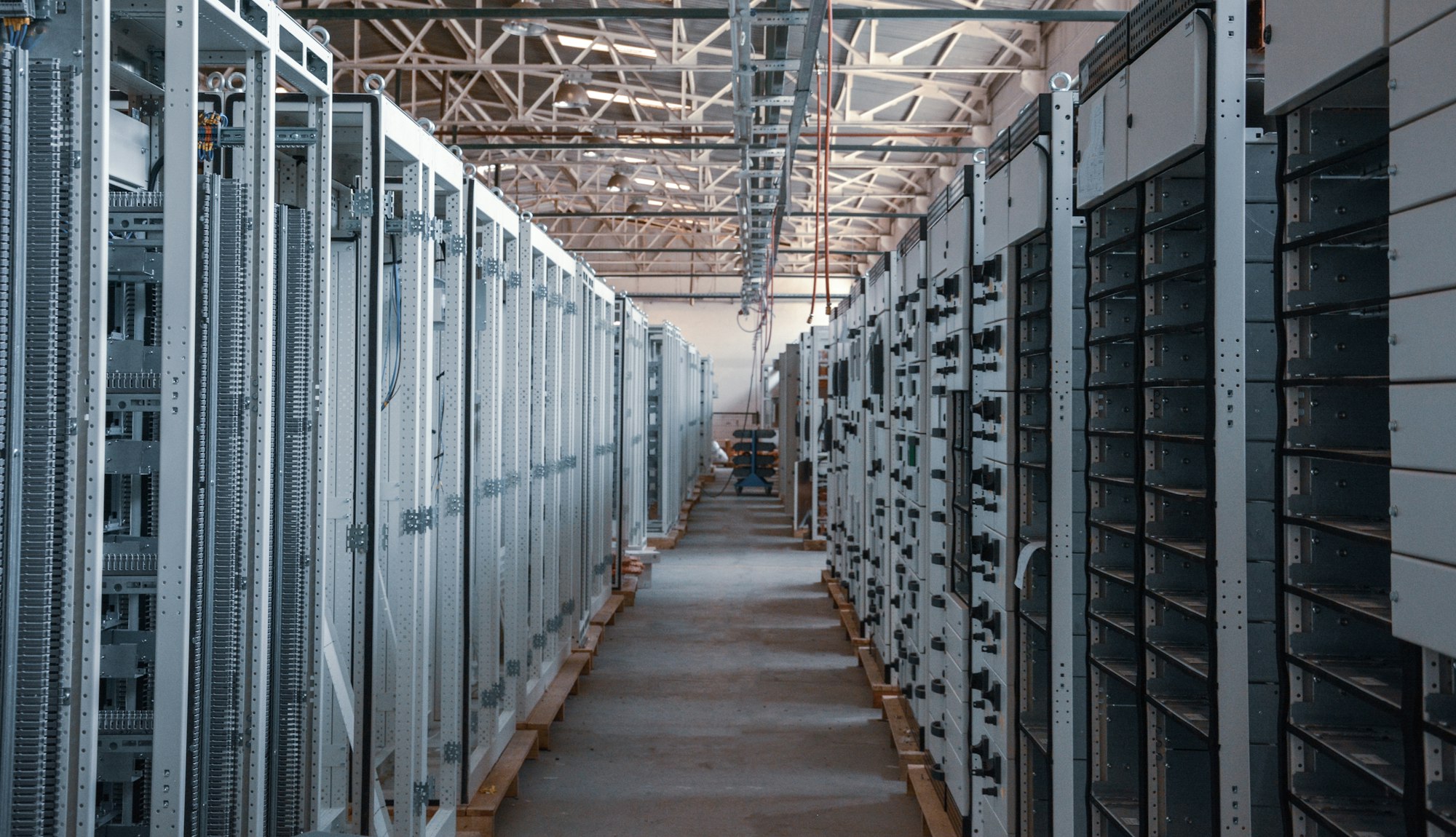
A global fault line
It would be easy to dismiss this as an emerging markets problem. It isn’t. Ireland has capped new connections after Dublin’s grid maxed out. South Africa battles rolling blackouts while AWS expands. Kenya promises to be East Africa’s hub, but can’t guarantee power outside Nairobi. Even in the U.S., Elon Musk’s xAI data centre in Tennessee is running on gas turbines while waiting for reinforcements.
The pattern is clear: digital ambition is sprinting, while physical infrastructure jogs behind.
Big Tech knows this looks bad. Microsoft says it will be carbon negative by 2030. Google brags about 100% renewables. Yet the International Energy Agency estimates nearly 60% of data-centre electricity still comes from fossil fuels. Renewables cover just a quarter. And demand isn’t leveling off as it’s set to double to ~945 TWh by 2030, growing four times faster than overall consumption.
 Henry Chikwem
That gap between marketing and megawatts is the cloud’s dirty secret. Emerging markets may want the jobs, prestige, and capital that come with Big Tech’s data centres. But until the grids catch up, their AI boom will run on gas and diesel. For operators, that means higher costs. For citizens, dirtier air. And for governments, climate pledges that collapse at the substation.
The “aha” moment is this: the future of AI won’t just be decided in labs and boardrooms. It will be decided in the hum of generators, and whether countries can power their digital dreams without choking on the smoke.


