OpenAI announced on over the weekend that it will begin testing advertisements on its free tier and new $8-per-month ChatGPT Go subscription in the United States in the coming weeks. The move marks the first time ChatGPT will display sponsored content directly in its interface.
"In the coming weeks, we plan to start testing ads in ChatGPT free and Go tiers," the company posted on X.
In the coming weeks, we plan to start testing ads in ChatGPT free and Go tiers.
— OpenAI (@OpenAI) January 16, 2026
We’re sharing our principles early on how we’ll approach ads–guided by putting user trust and transparency first as we work to make AI accessible to everyone.
What matters most:
- Responses in… pic.twitter.com/3UQJsdriYR
Ads will appear at the bottom of ChatGPT’s responses, clearly labelled as “Sponsored” and targeted based on users’ current conversations, not what the AI actually says. OpenAI says responses won’t be influenced by ads, and the company will “never” sell user data to advertisers. Users under 18 won’t see ads, and advertising won’t appear near sensitive topics including politics, health, and mental health.
The company’s paid tiers—Plus ($20/month), Pro ($200/month), Business, and Enterprise—will remain ad-free.
CEO Sam Altman wrote on X: “It is clear to us that a lot of people want to use a lot of AI and don’t want to pay, so we are hopeful a business model like this can work.” That’s a significant reversal from his earlier position. Altman previously said he “hates” ads and called the idea of combining them with AI “uniquely unsettling,” though he acknowledged OpenAI might eventually try the approach.
We are starting to test ads in ChatGPT free and Go (new $8/month option) tiers.
— Sam Altman (@sama) January 16, 2026
Here are our principles. Most importantly, we will not accept money to influence the answer ChatGPT gives you, and we keep your conversations private from advertisers.
It is clear to us that a lot… https://t.co/f9Dv53rWU7
With over 760 million people using the platform, the financial upside of this is enormous. In the third quarter of 2025, Google pulled in over $74 billion from ads, and Meta cleared $50 billion. If OpenAI can turn even a small portion of its free users into ad views, it stands to make a lot of money.
ChatGPT Go, which launched in India in August 2025, has since rolled out to 171 countries and is now OpenAI’s fastest-growing plan. Although the subscription tier offers distinct advantages—including 10 times more messages, uploads, and image creation, plus longer memory. In markets where Go has been available, the company says it has seen strong adoption for tasks like writing, learning, image creation, and problem-solving.
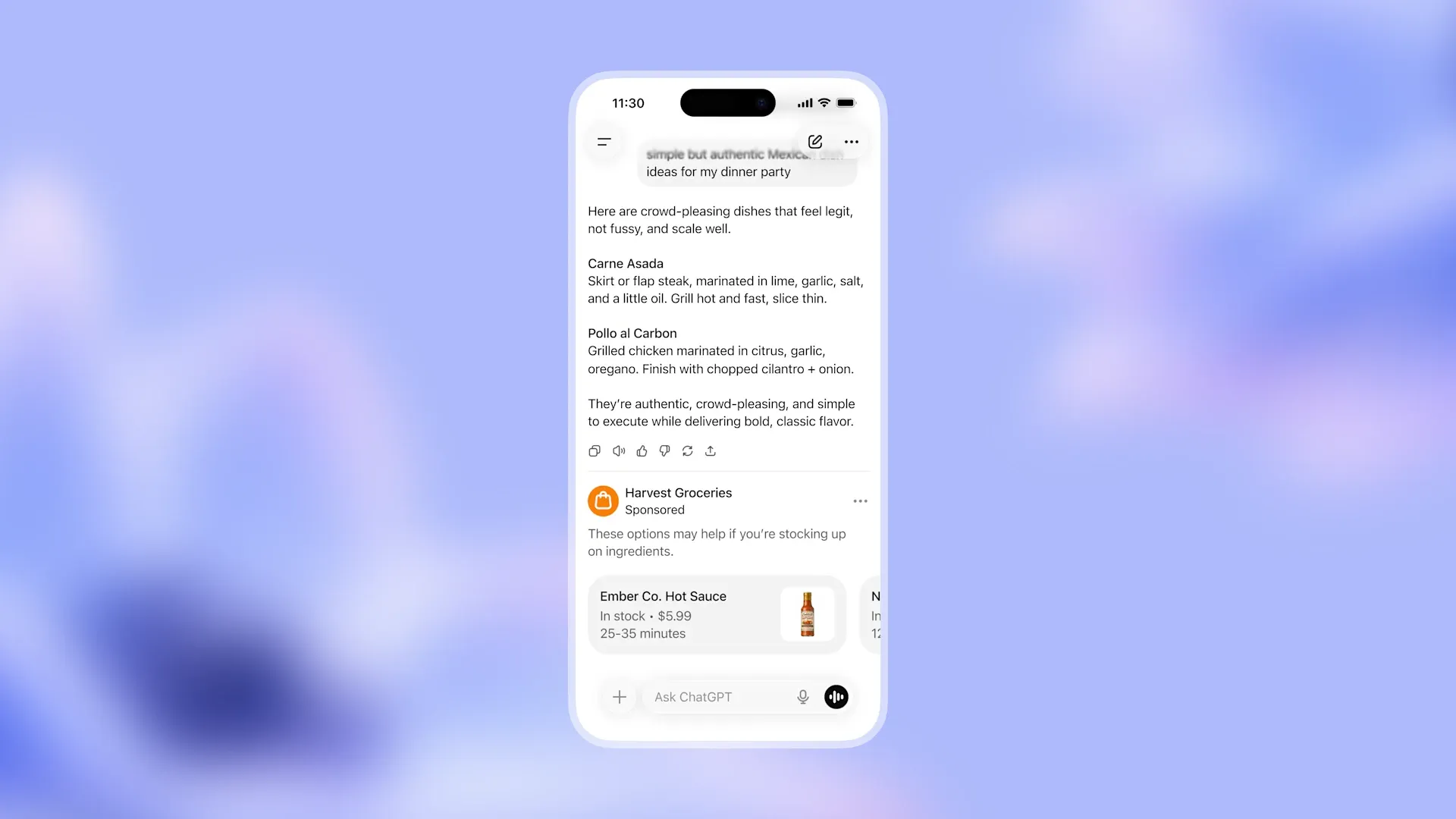
But introducing ads has created significant tension. Reactions on X to OpenAI’s announcement were overwhelmingly negative, with the company’s post garnering over 10.4 million views within hours as reply threads filled with scepticism and frustration. The question on many users’ minds: Will ChatGPT still suggest the best product, or the one that pays the most?
OpenAI insists ads will be clearly separated from answers and users will retain control over personalization, with options to opt out or dismiss individual ads. The company also says ads could benefit small businesses and emerging brands, giving them access to users during active decision-making moments—exactly when advertising works best.
For now, the company frames this as a test. But with competitors like Google’s Gemini and Anthropic’s Claude sitting just a browser tab away, OpenAI walks a tightrope between revenue generation and user trust.
 Damilare Odedina