



For almost as long as smart home tech has existed, rumours have swirled about Apple releasing a standalone home hub with a screen. Speculation ran wild for years; some envisioned a floating iPad mount, while others predicted a full HomePod with a display pasted on top.
Now, we finally have an answer: the Apple HomeView, a device that looks remarkably like an iMac G4 reincarnated as a 7-inch tablet anchored to a domed speaker base.
While Apple is just getting its feet wet in the display-led smart hub market, Amazon has been steering the ship since 2017 with its Echo Show line, and its flagship Amazon Echo Show 11 represents almost a decade of continuous refinements.
So, can Apple’s design-forward newcomer take on Amazon’s seasoned smart home champion? Here is how the two smart displays compare.
 Ogbonda Chivumnovu
/1. Design and Build
Apple and Amazon have taken radically different approaches to how a smart display should fit into your living space.
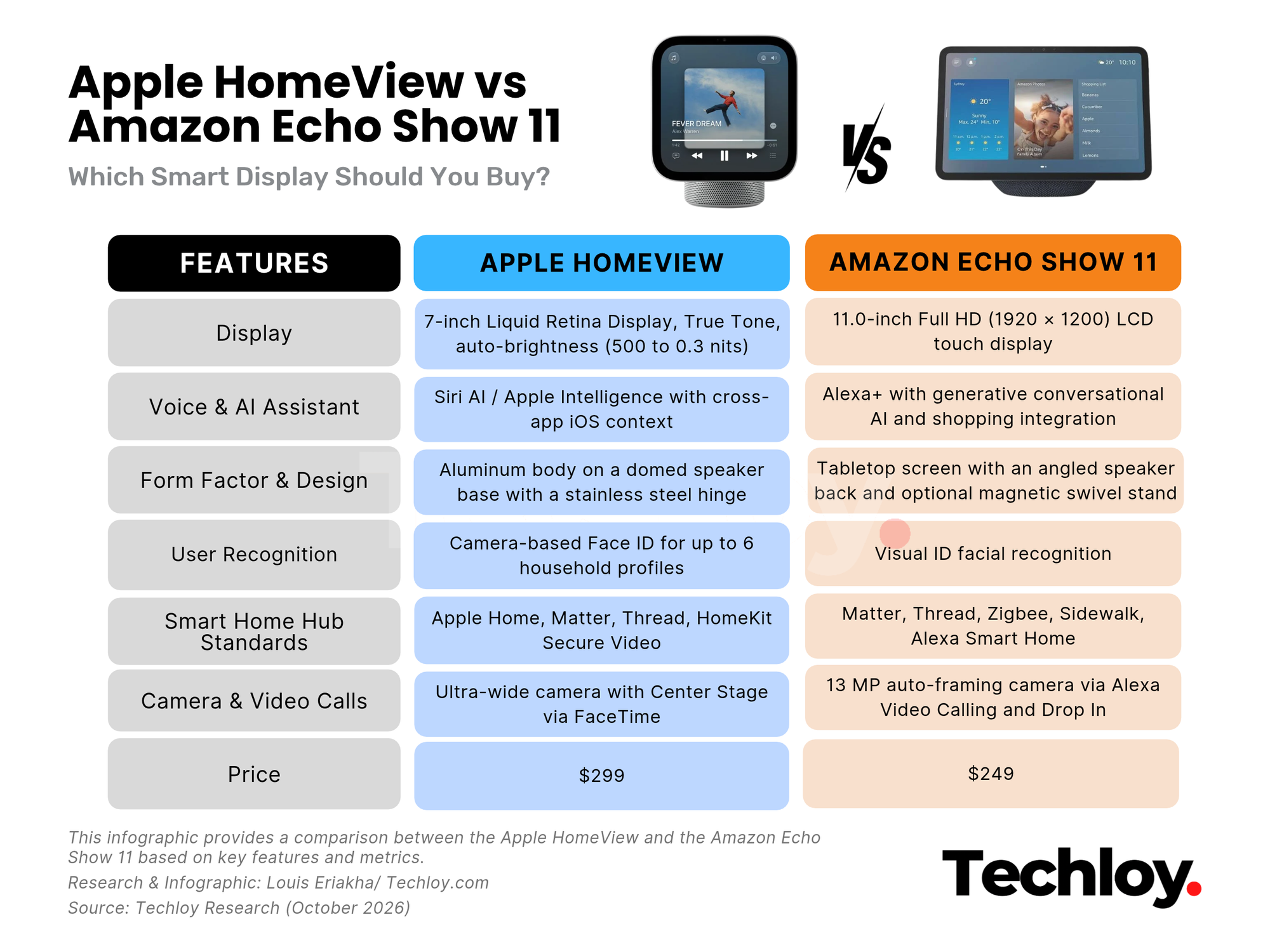
For one, Apple HomeView embraces a distinct retro-futuristic aesthetic. It features a 7-inch display attached via an adjustable stainless steel hinge to an anodised aluminium domed speaker base.
The design allows you to tilt the screen smoothly to eliminate glare, and Apple also offers wall-mounting variants (including USB-C, AC-wired, and Power-over-Ethernet options in partnership with Schneider Home). It comes in four finishes: Silver, Starlight, Rose Pink, and Space Grey. But the wall-mounted variant only comes in Silver and Space Grey
Meanwhile, the Echo Show 11 takes a more traditional, screen-first approach. It features a large 11-inch display with a bulkier, fabric-wrapped speaker housing on the back.
While it takes up considerably more counter space, its footprint is designed to give you a TV-like experience on a countertop or kitchen island. Amazon also offers an optional magnetic swivel stand for added positioning flexibility, but it lacks Apple's built-in wall-mounting versatility.
Apple’s compact build feels more refined and versatile for places like nightstands or walls, whereas Amazon prioritises screen real estate at the expense of a larger footprint.
/2. Display Size and Brightness
The Apple HomeView features a 7-inch Liquid Retina display with True Tone technology. It automatically adjusts its colour temperature and brightness—scaling down to 0.3 nits for bedside use without disrupting sleep, or up to 500 nits in bright sunlight. The screen size makes it ideal for glances at widgets, doorbell video feeds, and ambient artwork.
The Echo Show 11 counters with a much larger 11-inch Full-HD panel (1920 × 1200 resolution). The added screen size completely changes how you interact with the device: recipes are easier to read from across the kitchen, multi-camera home surveillance layouts fit comfortably on screen, and video streaming feels like a proper television experience rather than a quick watch.
If you want a subtle ambient display, Apple's smaller screen is well-calibrated. But for media consumption and visibility from across a room, Amazon’s larger canvas wins out.
/3. Camera and Smart Features
Both devices use their cameras to support video calls and personalise the experience for different household members.
The Apple HomeView features a 12MP Centre Stage camera for FaceTime calls, along with facial recognition that lets it display personalised content for different users. Depending on the person recognised, the screen can show relevant information from apps such as Messages, FaceTime, Calendar, Reminders, and Find My.
The Echo Show 11 features a 13MP camera with auto-framing and 3x zoom for video calls. Its Visual ID feature recognises enrolled household members and displays personalised content, including calendars, reminders, and interests. Amazon also provides camera and microphone controls that let users disable them when they want more privacy.
Both devices offer camera-based personalisation, but they approach it through their respective ecosystems. HomeView focuses on personal content from Apple's apps, while the Echo Show 11 connects recognition with Alexa profiles and household routines.
Subscribe for free to continue reading this article
Subscribe SubscribeAlready have an account? Log in


