



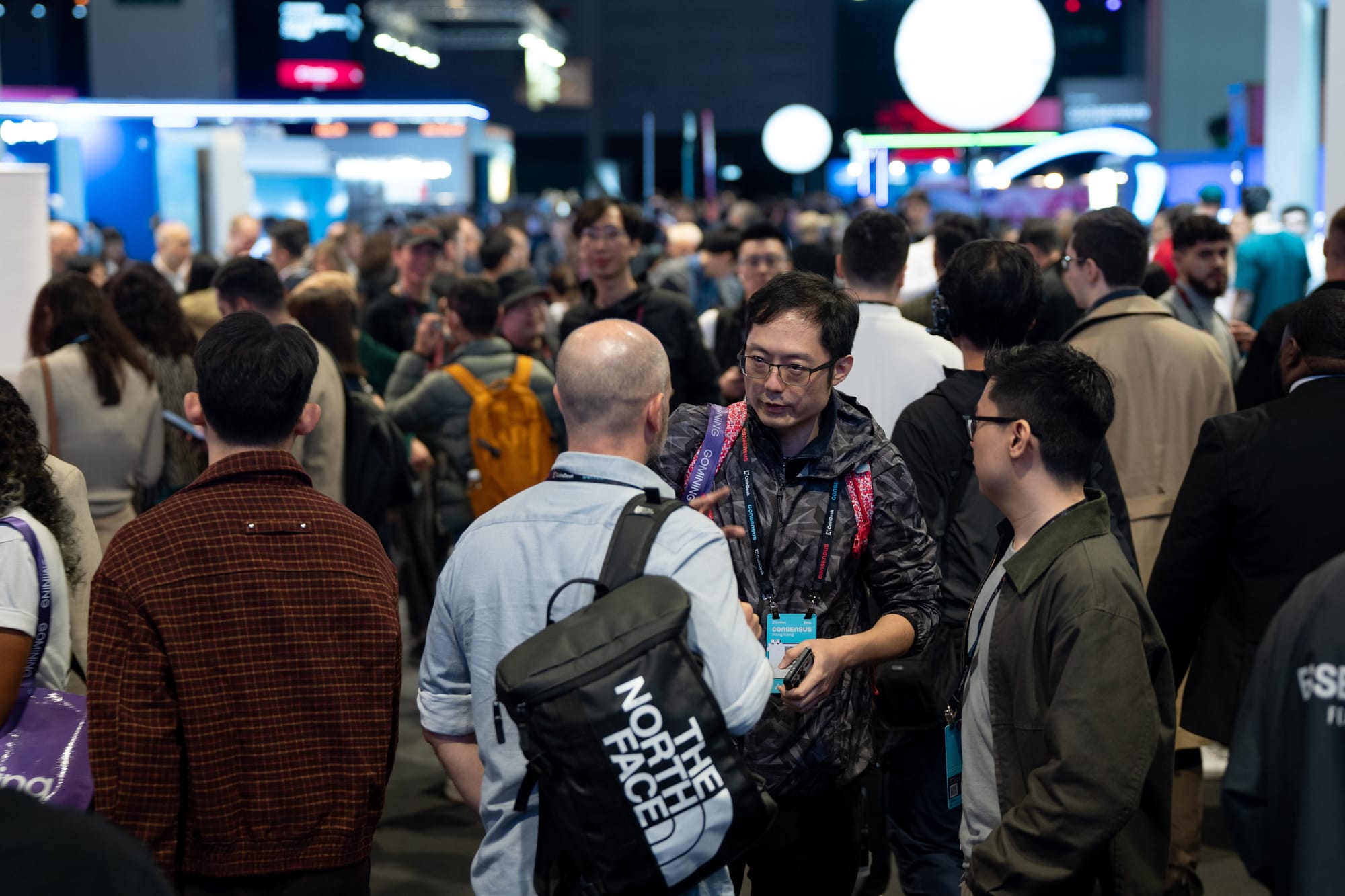
If you walked into the Hong Kong Convention and Exhibition Centre on the first morning of Consensus, you would not have felt the chaos that once defined early crypto gatherings. Instead, there was structure, security, and a noticeable presence of policymakers alongside founders and traders. That alone told a story. This year’s opening moments were not about hype cycles or meme tokens. They were about rules, roadmaps, and how serious capital plans to move next.
Mike Lau Jr, the chairman of Consensus and SVP at the digital asset exchange Bullish, and CoinDesk President Jay Yarrow opened the event by leaning into that theme of convergence. Lau said, "The tremendous success of Consensus Hong Kong proves the city's status as a leading global fintech center. We are seeing a definitive convergence of blockchain technology and mainstream finance, and hosting this here in Hong Kong-the gateway to Asia- is essential for that transition."
For readers who may still think of crypto as a fringe experiment, Day 1 made something obvious. Governments are building frameworks. Banks are rolling out services. Exchanges are preparing institutional products. The experiment phase is ending.
Here are the key highlights:
 Jemi Motesho
Hong Kong Doubles Down on Web3
Hong Kong’s leadership used the global stage to restate its ambition to be a regulated hub for digital assets. John KC Lee, Chief Executive of Hong Kong, delivered the opening address and reiterated the administration’s commitment to building a regulated and sustainable digital asset ecosystem by saying, "The HKSAR Government is committed to establishing Hong Kong as a global hub for innovation in digital assets. That's why over the past few years, Hong Kong has been actively building the regulatory framework to promote the steady and sustainable development of our Web3 ecosystem."
Paul Chan Mo-po, Financial Secretary of Hong Kong, expanded on that vision during his keynote on the Auros Global Stage. Emphasizing fintech’s role in the city’s economic future, Chan stated that “HK financial institutions are warming up to digital assets.” He revealed that Hong Kong banks have already begun offering tokenized deposit services, reaching approximately US$3.71 billion in value by last year.
Julia Leung of the Securities and Futures Commission echoed that sentiment in conversation with the CoinDesk journalist, Sam Reynolds. She emphasized that clear rules are attracting serious players who were previously hesitant to enter the market, noting that "the regulator has also drawn up a high-level framework enabling licensed trading platforms to offer perpetual contracts, a leveraged instrument that will be open to professional investors in the initial phase."
For institutions that have been waiting for regulatory certainty before allocating capital — and for those seeking sophisticated, regulated hedging tools — Hong Kong is positioning itself as ready.
Institutions Move From Watching to Acting
Beyond policy, Day 1 was defined by institutional momentum. In a major product announcement, Intercontinental Exchange revealed the launch of cryptocurrency futures contracts based on seven CoinDesk Indices. The contracts will include futures tied to the CoinDesk 20, CoinDesk 5, Bitcoin, Ethereum, Solana, XRP, and BNB. The move reflects growing demand for regulated exposure to crypto markets through familiar financial instruments.
The conversation then shifted to the United States regulatory environment during a fireside chat between Anthony Scaramucci, Founder of SkyBridge, and Thomas Farley, Chief Executive Officer of Bullish. Scaramucci commented on the political shift in the U.S., stating, “I’m not a fan, but Donald Trump is the crypto President.” He also addressed pending legislation, saying, “Libertarians might not like the bill, but the bill can’t be perfect immediately. The bill has to be in place, and soon there will be amendments to it eventually.”
Real-world assets were another key theme. Graham Ferguson of Securitize and Min Lin of Ondo Finance joined CoinDesk’s Krisztian Sandor to discuss the next stage of tokenization. One of the panelist said that “We need to make sure people want to use and utilize these tokenized assets. There’s no question about the advantages of tokenization. But it is up to us to figure out distribution.” The discussion made clear that infrastructure may be ready, but adoption still depends on accessibility and demand.
Peter Mintzberg, Chief Executive Officer of Grayscale, spoke separately with Dave LaValle about adoption challenges. Mintzberg explained that access to crypto investment products has improved significantly and that education is now the priority. “We provide clients the education materials that they can take to their clients. These are longer-term initiatives to hopefully lead to sustainable adoption,” he said.
While regulation and institutional products dominated the macro narrative, ecosystem updates added depth to the day. Lily Liu, President of the Solana Foundation, joined Mike Lau Jr to outline Solana’s 2026 outlook.
She highlighted the importance of Asia in blockchain development, stating, “Asia underpinned Bitcoin at any aspect. The most successful blockchain organizations have come from APAC.” She also clarified Solana’s global positioning, noting that the network “has always been globally focused, no geographic home.”
 Partner Content
A Shift You Could Feel
If there was one defining takeaway from Day 1, it was this: the tone of crypto is changing. Instead of promises about future revolutions, the focus was on licenses, futures contracts, tokenized deposits, and compliance frameworks. The language of disruption has been replaced by the language of integration.
For attendees walking out of the venue in the evening, the impression was clear. Crypto is not trying to overthrow the financial system. It is negotiating its place within it. And if Day 1 of Consensus Hong Kong 2026 is any indication, that negotiation is happening with regulators, institutions, and ecosystem leaders sitting at the same table.
As the conference continues, the real question is not whether institutions will participate in digital assets. It is how quickly they will scale their involvement, and which jurisdictions will benefit most from providing the clarity that markets now demand.


