Microsoft Xbox chief Phil Spencer announced his retirement after 38 years at the company, including 12 years as head of gaming, as the gaming division faces major challenges. Revenue from the division fell by around 10% in December, and console sales had lagged compared to Sony’s PlayStations and Nintendo.
“It’s rare in life to know when a chapter is closing, but after 38 years at Microsoft, that moment has arrived for me,” Spencer wrote on X.
“I’ve made the decision to retire and begin the next chapter of my life. It’s a milestone that’s given me a chance to reflect on the incredible journey I’ve been fortunate enough to share with so many of you.”
It’s rare in life to know when a chapter is closing, but after 38 years at Microsoft, that moment has arrived for me. I’ve made the decision to retire and begin the next chapter of my life. It’s a milestone that’s given me a chance to reflect on the incredible journey I’ve been…
— Phil Spencer (@XboxP3) February 20, 2026
Asha Sharma, who joined the company in 2024 from Instacart, will replace Spencer as CEO of gaming and report to Microsoft CEO Satya Nadella. In a memo about the move, Nadella thanked Spencer for his contributions to the company.
“Last year, Phil Spencer made the decision to retire from the company, and since then we’ve been talking about succession planning,” Nadella said. “I want to thank Phil for his extraordinary leadership and partnership.”
Here’s the full timeline of the Phil Spencer Xbox era:
 Emmanuel Umahi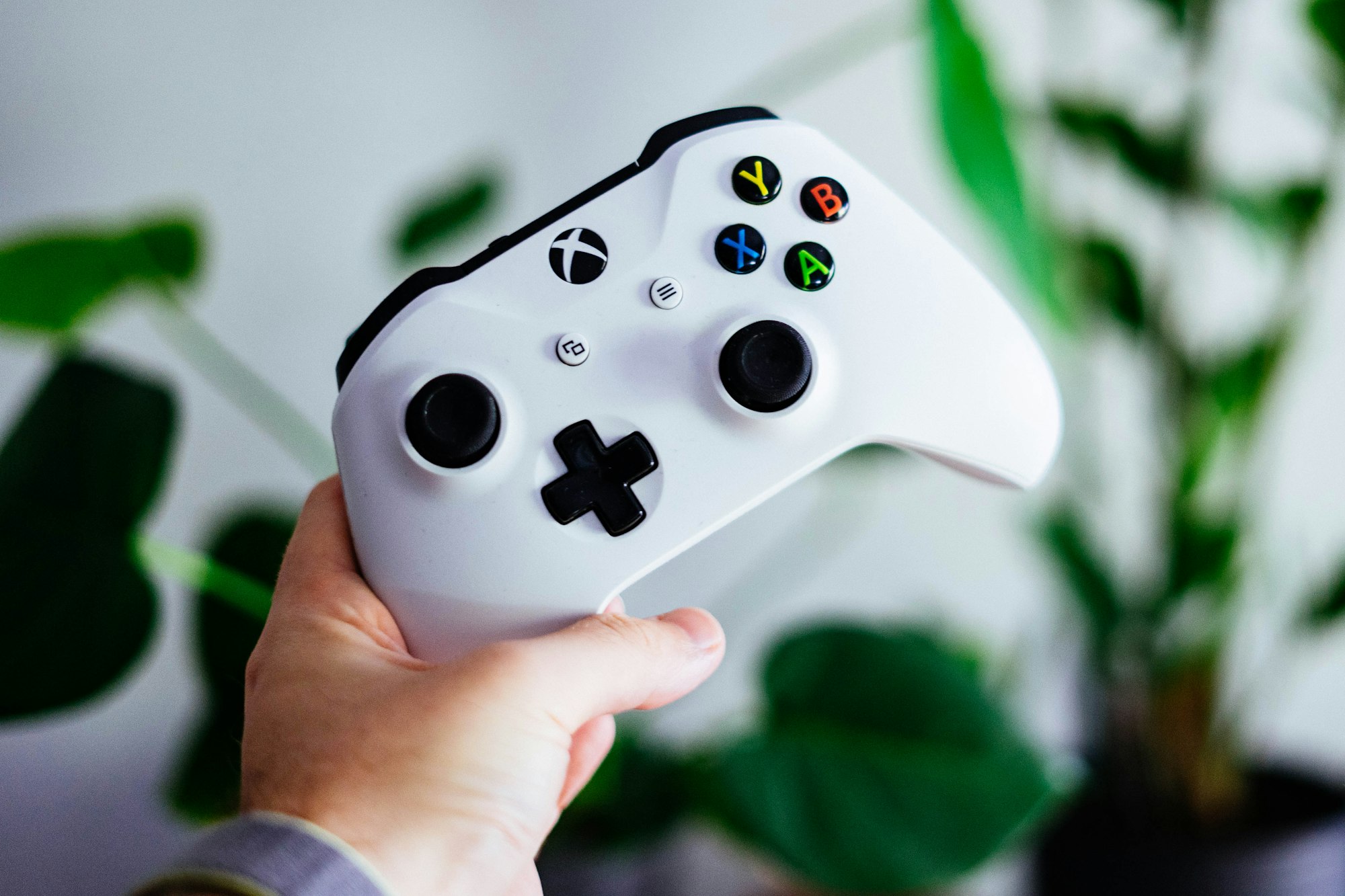
2014 — Xbox Hits Reset
When Spencer took over Xbox in March 2014, the Xbox One was unpopular
Spencer shifted Xbox back to what mattered most—games—prioritising transparency, listening to players, and rebuilding trust. Under his leadership, Xbox transformed from what many saw as a sidelined corporate product into a gamer-first platform, setting the stage for major innovations like Xbox Game Pass and cloud gaming, both of which continue to shape the direction of the industry today.
2014 — The Minecraft Moment
That same year, on September 15, 2014, Microsoft announced it would acquire Mojang Studios and the rights to Minecraft for $2.5 billion, finalising the deal on November 6, 2014, and bringing Mojang under what is now Xbox Game Studios. The sale was initiated by creator Markus "Notch" Persson, who chose to step away from the growing pressure of leading a globally dominant franchise.
Following the acquisition, Mojang’s team joined Microsoft with a focus on expanding Minecraft across Xbox, Windows, iOS, Android, and other platforms. Under Microsoft’s stewardship, the game went on to become the best-selling video game in history, surpassing 350 million copies sold by 2024. In May 2020, the studio officially rebranded to Mojang Studios.
2015 — New Updates to Xbox
In 2015, during a major Microsoft press conference, Phil Spencer announced that Xbox was responding directly to fan demand by introducing one of its most requested features: Xbox 360 backward compatibility on Xbox One.
Expanding on the reveal, Xbox executive Mike Ybarra explained that both digital and retail Xbox 360 titles would appear seamlessly in players’ libraries alongside Xbox One games, supporting online multiplayer and modern console features like screenshots, broadcasting, Game DVR, and streaming to Windows 10.
2016 — Xbox One S
In 2016, the Xbox One S was released. It was a refined hardware revision of the original 2013 Xbox One, addressing several criticisms. It was designed to be more compact, efficient, and better suited for modern home entertainment setups.
Also, the hardware offered a 40% smaller redesign than the original Xbox One, featuring a clean “robot white” finish and optional vertical stand.
It introduced 4K Ultra HD video streaming on platforms like Netflix and Amazon (via Prime Video), added 4K Blu-ray playback, and supported HDR for both games and video. Though not a full generational leap, it delivered a slight GPU overclock—from 853 MHz to 914 MHz—offering marginal performance improvements and more stable frame rates in certain titles.
The console also shipped with a refined controller featuring textured grips and Bluetooth for easier pairing with Windows 10 devices, swapped the capacitive power button for a physical one, repositioned a USB port to the front, added an integrated IR blaster, and removed the dedicated Kinect port (requiring a USB adapter for continued use of Kinect). Launched at $299, the Xbox One S was widely regarded as the definitive, more stylish, and consumer-friendly version of the original system.
2017 — Xbox One X
In 2017, Xbox launched Xbox One X, which brought about a new era of immersive 4K gaming and 4K entertainment to gamers across the globe. With 40 percent more power than any other console, Xbox One X is where console gamers can play the best versions of games.
The new console launched with the largest games lineup in Xbox history, with more than 70 Xbox One X Enhanced titles coming in the first week and more than 50 available on launch day, including “Forza Motorsport 7,” “Super Lucky’s Tale,” “Assassin’s Creed Origins,” “Middle-earth: Shadow of War" and “FIFA 18.”
2017 — Xbox Game Pass
In the same year, Spencer announced the Xbox Game Pass, a new digital gaming subscription service that gives you unlimited access to over 100 Xbox One and backward-compatible Xbox 360 games for $9.99 USD per month.
Game passes were first rolled out to the Xbox Insider Program, with a limited number of titles to test the features, which were tested and then pushed to the Xbox community in 31 markets, and shared the entire catalogue of over 100 great games. Beginning.
Game Pass would become Spencer’s boldest strategic bet.
Instead of asking players to buy more games individually, Xbox built a subscription ecosystem, one that would later anchor its expansion into cloud and PC.
 Emmanuel Umahi
2020-2021 — The Generation Leap
The launch of the Xbox Series X and Xbox Series S marked a technical leap.
On March 9, 2021, Microsoft finalised its $7.5 billion acquisition of ZeniMax Media, significantly strengthening Xbox Game Studios with eight new development teams and bringing blockbuster franchises like “The Elder Scrolls,” “Fallout,” "DOOM" and “Starfield” into its portfolio—many of which were added to Xbox Game Pass.
The deal included studios such as Bethesda Game Studios, id Software, ZeniMax Online Studios, Arkane Studios, MachineGames, Tango Gameworks, Alpha Dog Games, and Roundhouse Studios.
While some future titles became platform-exclusive, Microsoft pledged to honour existing agreements and continue supporting previously released games on other platforms.
This made Xbox become a publishing powerhouse.
2022–2023 — The $69 Billion Earthquake
In January 2022, Microsoft announced plans to acquire Activision Blizzard for nearly $69 billion, officially closing the $68.7 billion deal on October 13, 2023, after extensive regulatory scrutiny in the U.S. and U.K.
The acquisition—now the largest in video game history—made Microsoft the world’s third-largest gaming company by revenue and brought major franchises like “Call of Duty” and “Warcraft” into its ecosystem, with plans to expand their presence on Xbox Game Pass.
Approval came after the U.K.’s Competition and Markets Authority signed off on a restructured agreement, with Microsoft agreeing to sell the cloud streaming rights for Activision Blizzard’s PC and console titles to Ubisoft to ease competition concerns around cloud gaming.
Activision Blizzard CEO Bobby Kotick remained in his role, reporting to Spencer.
2026 — The End of the Spencer Era
On Friday, after 38 years at Microsoft, Spencer announced his retirement.
In his message to employees, he reflected on starting as an intern in 1988 and helping guide Xbox through one of its most transformative periods.
“I never could have imagined the path ahead. I’ve been lucky to work with so many passionate creators, partners, colleagues, and players across the industry; people who challenged me, taught me, and made this work full of joy and wonder,” he said.
Thinking back to my start as an intern in 1988, I never could have imagined the path ahead. I’ve been lucky to work with so many passionate creators, partners, colleagues, and players across the industry; people who challenged me, taught me, and made this work full of joy and…
— Phil Spencer (@XboxP3) February 20, 2026
 Emmanuel Umahi