If you work in tech, seeing headlines about 135,000 job cuts in one year is unsettling and can make the entire industry feel unsafe.
But when we looked at the figures behind the 2026 total, we found that some don't necessarily represent layoffs completed this year.
And the companies making cuts don't tell the whole story about the job market.
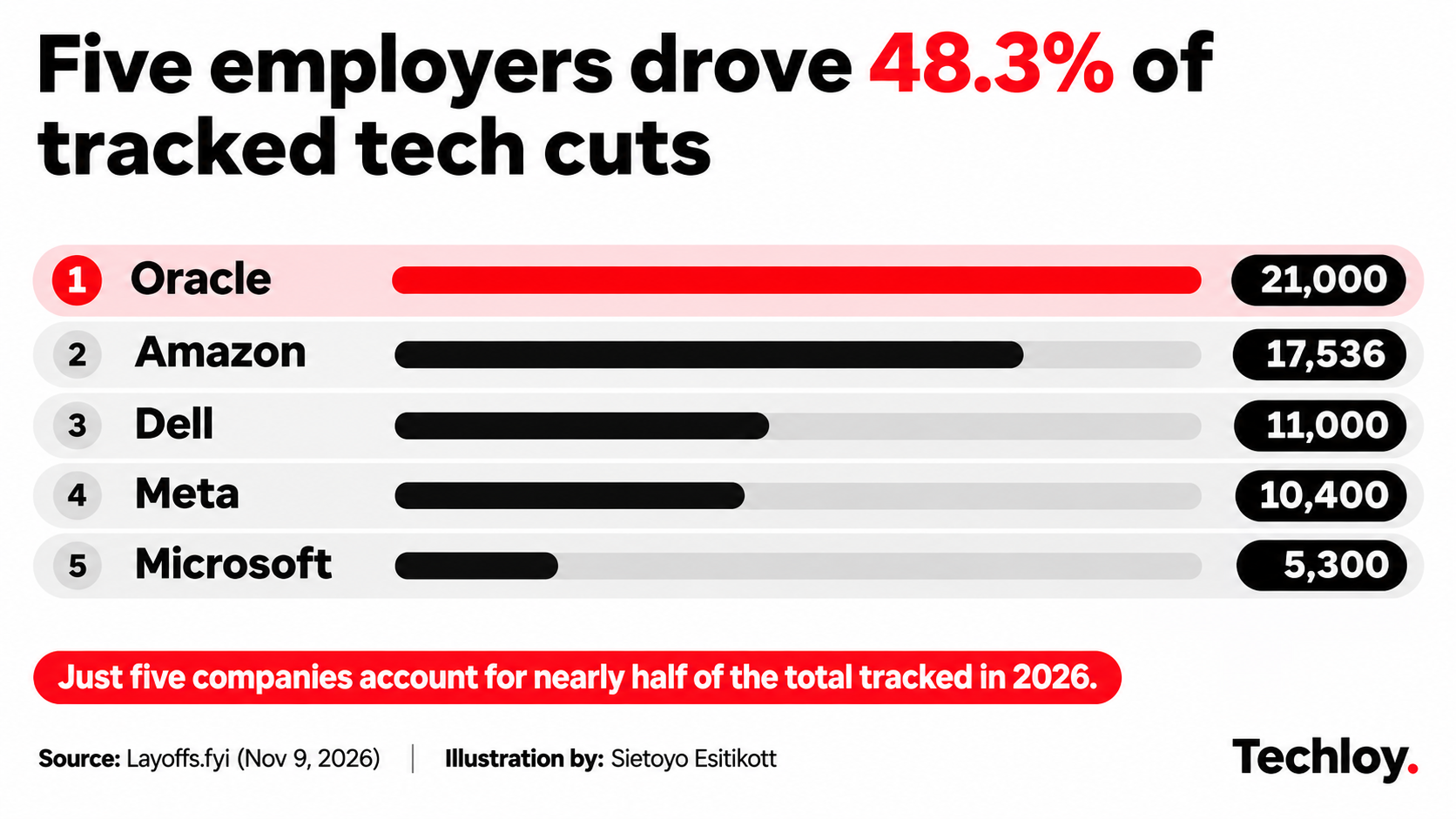
Five companies account for nearly half of tracked tech layoffs
As of November 9, Layoffs.fyi listed 135,183 job cuts across 331 technology companies. Oracle accounted for 21,000, Amazon 17,536, Dell 11,000, Meta 10,400, and Microsoft 5,300.
Together, those five companies account for 65,236 reported reductions, or 48.3% of the total.
But three entries, covering Oracle, Dell and WiseTech, need closer examination. Their combined 34,000 reductions represent 25.2% of the tracker total, yet the figures describe different periods and, in some cases, different measures of workforce change.
 David Adubiina

Oracle, Dell and WiseTech: what the numbers show
Oracle's workforce fell from roughly 162,000 employees in May 2025 to 141,000 in May 2026, a net decline of around 21,000. That doesn't establish that exactly 21,000 people were laid off. Headcount can also change through resignations, attrition, and other departures.
Crunchbase excluded Oracle's figure from its own tracker because the number and timing of the reported layoffs were unclear.
Dell, too, reported a decline from around 108,000 employees to 97,000 during its fiscal year ending January 30, 2026. Eleven of those twelve months fell in 2025, meaning the full-year headcount change cannot be treated as 11,000 layoffs completed in calendar year 2026.
WiseTech's reported 2,000 reductions relate to a restructuring programme extending into fiscal 2027. Its 2026 annual report identified more than 500 roles eliminated between July and December 2025 and around 1,200 between January and June 2026. Those figures provide a clearer timeline, but they don't establish the company's total cuts for the entire 2026 calendar year.
Job cuts have occurred at all three companies. The issue is how those cuts are counted. Combining net headcount changes, fiscal-year reductions, and multi-year restructuring plans in one calendar-year total makes the headline harder to interpret.
Removing all 34,000 reductions from the tracker would not solve the problem, either. The available evidence does not establish a verified alternative total.
Subscribe for free to continue reading this article
Subscribe SubscribeAlready have an account? Log in