



For more than a decade, social media has been built around what we see: photos, short videos, stories, and filters. Lately, though, a growing number of users are drifting toward something older and simpler, which is the human voice. From live audio rooms to casual group calls, voice-first social experiences are finding a steady audience, and the reasons say a lot about where online communication is heading.
Screen fatigue is real
Many people now spend most of their waking hours looking at screens. Video calls dominate the workday, and feeds demand constant visual attention in the evening. Voice offers a break from that. You can listen while cooking, commuting, or lying on the couch, and you don’t need to worry about how you look or whether your room is tidy.
That low-pressure quality matters. Speaking without being on camera lowers the barrier to joining a conversation, especially for people who feel self-conscious about appearing on video. For shy users, non-native speakers, and anyone who simply prefers a quieter kind of socializing, audio can feel far more approachable than a camera-first platform.
The appeal of real-time, unscripted talk
Most social content is polished and permanent. Posts are edited, curated, and archived. Live voice conversations work differently. They are spontaneous, they disappear once the session ends, and they reward listening as much as speaking. That impermanence encourages people to relax and talk the way they would with friends in person.
This is also why voice chat rooms have become a recognizable format across the industry. Instead of broadcasting to followers, users drop into a shared space organized around a topic, a language, or a mood. They can listen quietly, raise a hand to speak, or leave whenever they like. The structure mirrors a café table or a community hall more than a social feed.
From pandemic experiment to lasting habit
Social audio first drew widespread attention during the pandemic, when people were isolated and looking for new ways to connect. Early enthusiasm cooled after the initial surge, and several high-profile launches faded. But the underlying behavior didn’t disappear. It was absorbed into mainstream apps, gaming platforms, and messaging services, and it continues to evolve in smaller, more focused communities.
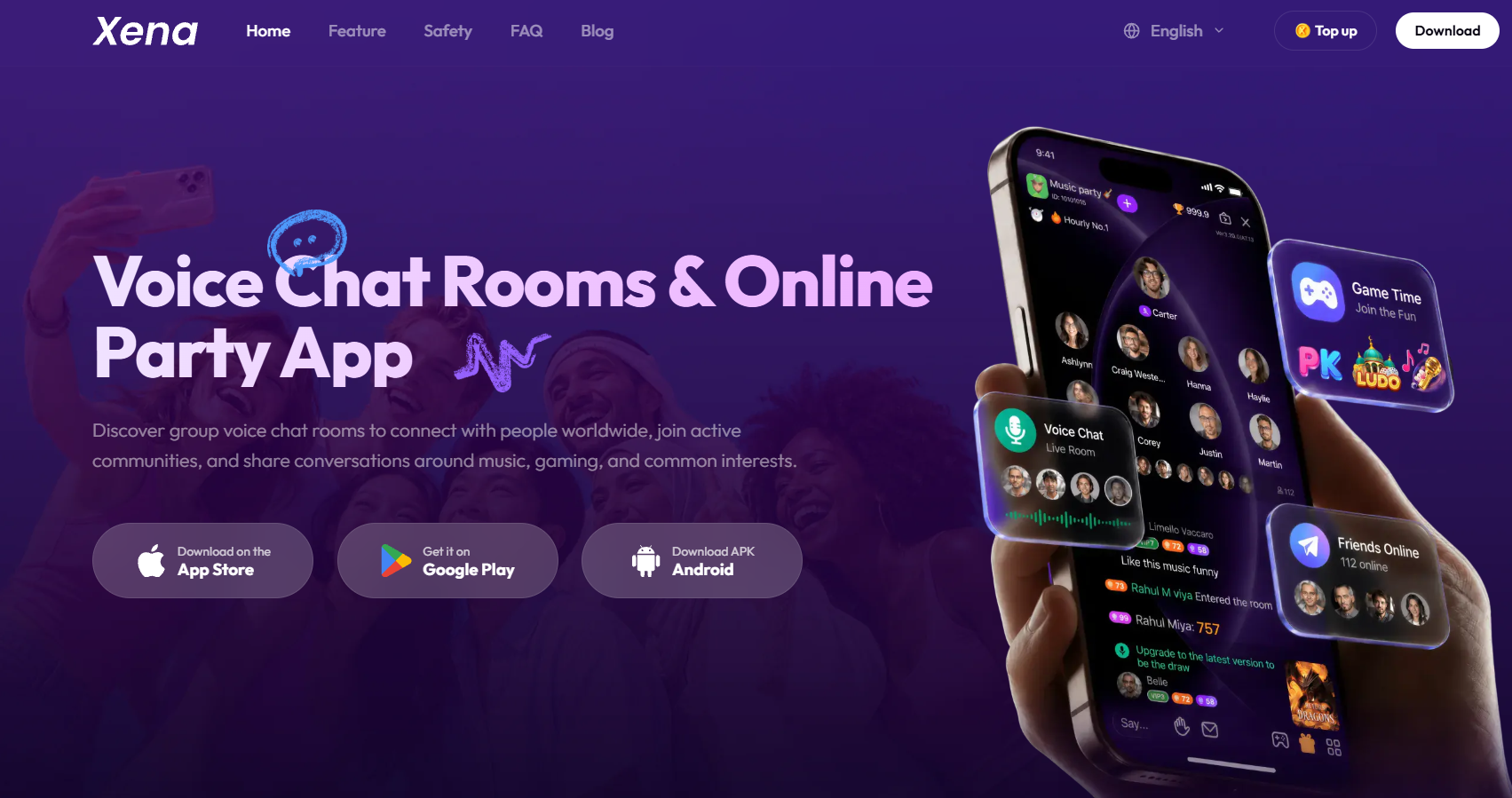
Today’s voice platforms tend to be more modest in ambition and more practical in design. Rather than trying to replace the main social feed, they serve specific needs: practicing a language, chatting with people in another time zone, finding company late at night, or simply hanging out in a casual group. Apps such as Xena, which people can download on their phones, are part of this broader wave of services that center on live conversation rather than content consumption.
What makes voice communities work
Building a healthy voice community is harder than it looks. Text and video can be moderated after the fact, but live audio happens in real time, which makes safety a central challenge. Successful platforms generally rely on a mix of approaches:
- Clear community guidelines that set expectations around respectful behavior.
- Reporting and moderation tools that let users flag problems quickly and let hosts manage the rooms they run.
- Privacy controls that give users a say in who can contact them and how their activity appears.
- Age and identity safeguards that reduce the risk of harassment or misuse.
Users have a role to play as well. Setting boundaries, avoiding sharing personal information with strangers, and leaving rooms that feel uncomfortable are sensible habits on any social platform, voice or otherwise.
A new path for creators and communities
Voice also changes who gets to participate as a creator. A hosting role doesn’t require editing skills, a studio setup, or a polished on-camera presence. Teachers run informal study groups, musicians hold listening sessions, and hobbyists gather around shared interests. For small communities, a live room can feel more personal than a comment thread, because people hear tone, humor, and emotion that text rarely carries.
There are open questions, of course. Monetization models are still developing, discoverability remains a challenge, and keeping conversations welcoming at scale requires sustained investment. Platforms that treat audio as a feature to bolt on may struggle, while those that design around conversation from the start tend to build more loyal communities.
What comes next
Looking ahead, voice is likely to become one layer in a more flexible social experience rather than a replacement for existing formats. Advances in real-time translation, noise suppression and spatial audio could make cross-language conversations smoother and live rooms more immersive. At the same time, regulators and platforms will keep refining how they handle safety, privacy and accountability in live audio spaces.
For users, the takeaway is simple. Not every interaction online needs to be seen, shared or saved. Sometimes people just want to talk and be heard, and the continued growth of voice-first communities suggests that this basic need is not going away.