



Xiaomi’s HyperOS is known for its customisation options, unusual features and design choices that sometimes borrow elements from other software. That has helped it build a loyal following among Xiaomi users.
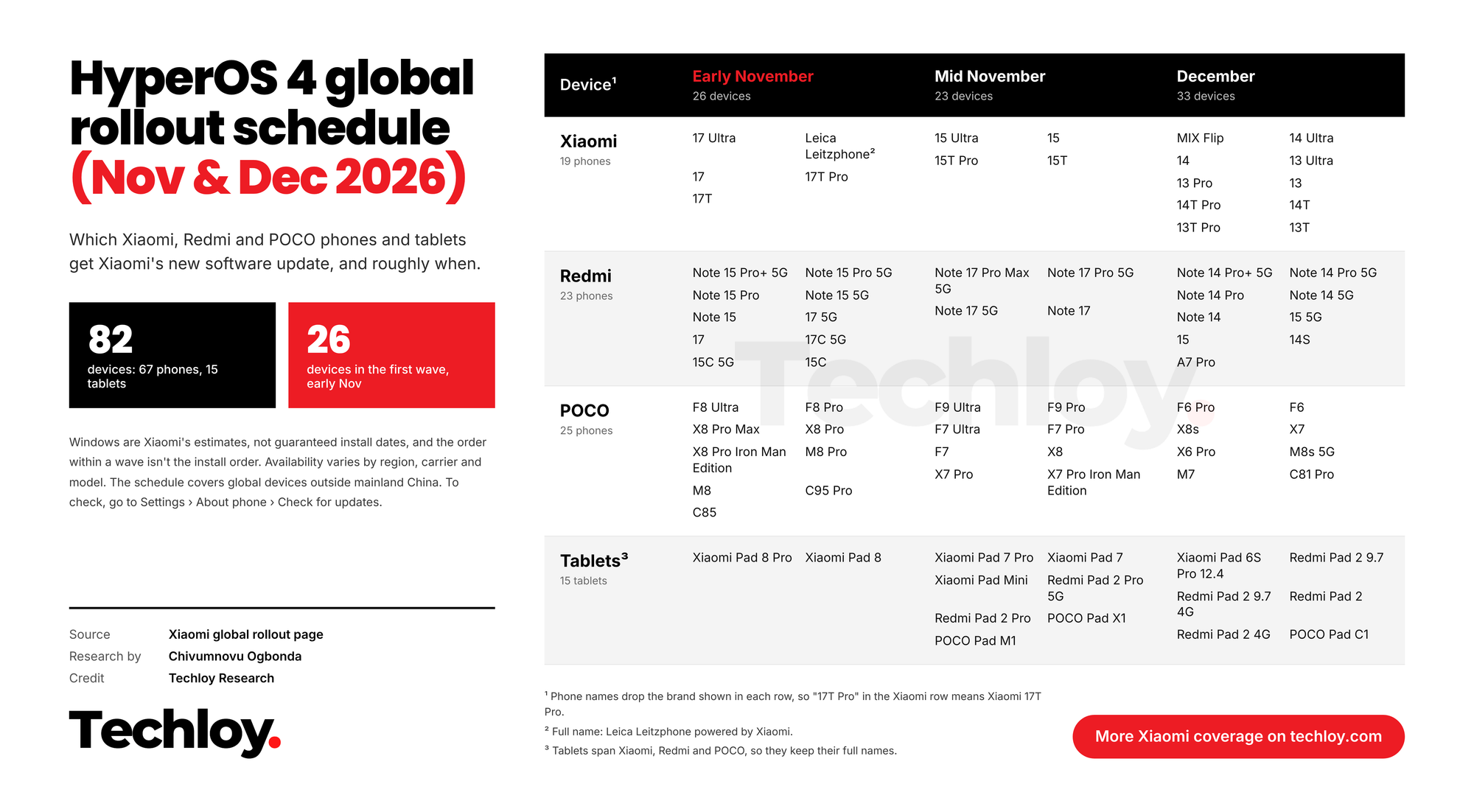
And if you’re a fan of the software, there’s good news. Xiaomi has published the global rollout schedule for HyperOS 4, its latest software update. It will reach 82 devices across its Xiaomi, POCO, and Redmi brands, including 67 smartphones and 15 tablets.
The global stable rollout begins in early November 2026 and continues through December. It also covers older devices, including the Xiaomi 13T series, which launched in 2023.
In other words, Xiaomi is extending the update to a sizeable number of devices from its recent product range. However, getting the update doesn’t mean every device will receive all its new features.
 Ejiro Onose
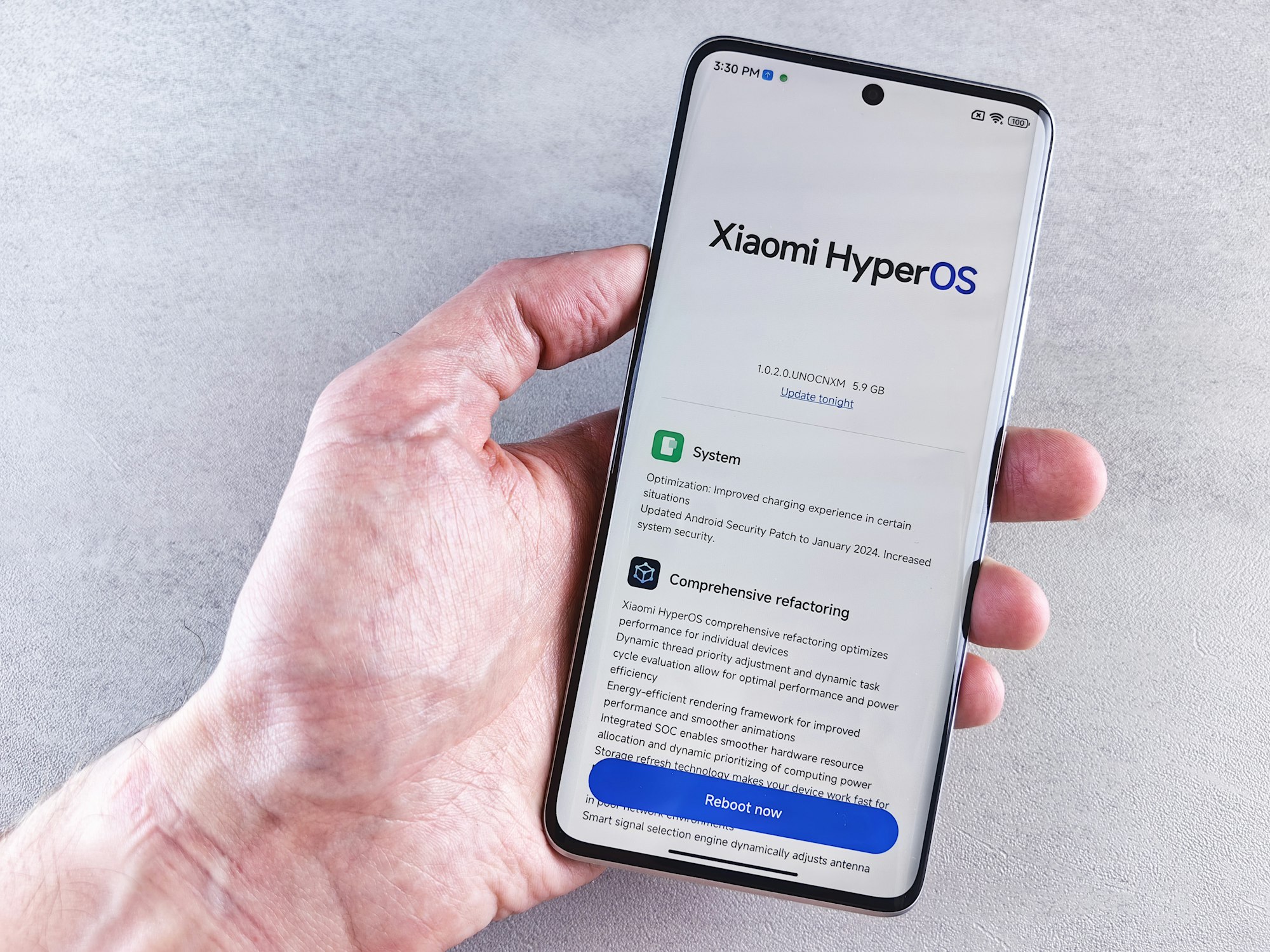
The rollout is scheduled in three waves
Xiaomi is splitting the global stable rollout into three phases. The first devices are scheduled to receive the update in early November, followed by another group in mid-November. The remaining devices are expected to join in December.
Early November 2026
Xiaomi phones
- Xiaomi 17 Ultra
- Leica Leitzphone powered by Xiaomi
- Xiaomi 17
- Xiaomi 17T Pro
- Xiaomi 17T
Redmi phones
- Redmi Note 15 Pro+ 5G
- Redmi Note 15 Pro 5G
- Redmi Note 15 Pro
- Redmi Note 15 5G
- Redmi Note 15
- Redmi 17 5G
- Redmi 17
- Redmi 17C 5G
- Redmi 15C 5G
- Redmi 15C
POCO phones
- POCO F8 Ultra
- POCO F8 Pro
- POCO X8 Pro Max
- POCO X8 Pro
- POCO X8 Pro Iron Man Edition
- POCO M8 Pro
- POCO M8
- POCO C95 Pro
- POCO C85
Tablets
- Xiaomi Pad 8 Pro
- Xiaomi Pad 8
Mid-November 2026
Xiaomi phones
- Xiaomi 15 Ultra
- Xiaomi 15
- Xiaomi 15T Pro
- Xiaomi 15T
Redmi phones
- Redmi Note 17 Pro Max 5G
- Redmi Note 17 Pro 5G
- Redmi Note 17 5G
- Redmi Note 17
POCO phones
- POCO F9 Ultra
- POCO F9 Pro
- POCO F7 Ultra
- POCO F7 Pro
- POCO F7
- POCO X8
- POCO X7 Pro
- POCO X7 Pro Iron Man Edition
Tablets
- Xiaomi Pad 7 Pro
- Xiaomi Pad 7
- Xiaomi Pad Mini
- Redmi Pad 2 Pro 5G
- Redmi Pad 2 Pro
- POCO Pad X1
- POCO Pad M1
December 2026
Xiaomi phones
- Xiaomi MIX Flip
- Xiaomi 14 Ultra
- Xiaomi 14
- Xiaomi 13 Ultra
- Xiaomi 13 Pro
- Xiaomi 13
- Xiaomi 14T Pro
- Xiaomi 14T
- Xiaomi 13T Pro
- Xiaomi 13T
Redmi phones
- Redmi Note 14 Pro+ 5G
- Redmi Note 14 Pro 5G
- Redmi Note 14 Pro
- Redmi Note 14 5G
- Redmi Note 14
- Redmi 15 5G
- Redmi 15
- Redmi 14S
- Redmi A7 Pro
POCO phones
- POCO F6 Pro
- POCO F6
- POCO X8s
- POCO X7
- POCO X6 Pro
- POCO M8s 5G
- POCO M7
- POCO C81 Pro
Tablets
- Xiaomi Pad 6S Pro 12.4
- Redmi Pad 2 9.7
- Redmi Pad 2 9.7 4G
- Redmi Pad 2
- Redmi Pad 2 4G
- POCO Pad C1
Xiaomi stresses that these are estimated rollout windows, not guaranteed installation dates. The order of devices on the list also doesn’t indicate the order in which they will receive the update. Availability varies by region, carrier, model, and development progress.
What are the new features in HyperOS 4?
The biggest change is the design. Xiaomi calls it Soft Light Glass, a visual style built around translucent panels, light effects, depth, and layered interfaces.
It brings redesigned notifications, customisable lock screens, resizable home-screen folders and stacked widgets. The overall look has some similarities to Apple’s Liquid Glass design language.
Performance is another focus. Xiaomi’s internal testing found that launching 30 apps after nine hours of use took 40.3 seconds on HyperOS 3, compared with 36.8 seconds on HyperOS 4.
HDR photo capture time also fell from 313.38 milliseconds to 240.16 milliseconds, while the average frame-drop rate during video playback fell from 2.92% to 1.10%.
These are Xiaomi’s own laboratory results, however, rather than independent benchmark figures.
HyperAI is another major addition. Xiaomi is expanding its AI features with tools such as AI Voice Notes, AI Speech Recognition, AI Translate Conversation, AI Gallery Search and AI Creativity Assistant.
AI Voice Notes can organise recordings into structured notes, extract tasks, and create mind maps. AI Speech Recognition can summarise meetings, identify key points, and generate outlines. AI Gallery Search helps users find specific images, while AI Translate Conversation supports face-to-face translation.
Xiaomi has also upgraded its Super XiaoAi assistant in China to version 2.0, integrating its MiMo large language model. However, users should not assume that every feature available in the Chinese version will be included in the global release.
On privacy, Xiaomi is introducing post-quantum encryption for key delivery in certain end-to-end encryption scenarios, alongside edge-to-cloud AI data security. Some of these protections are limited to supported devices and services.
Will India have a different release window?
Xiaomi’s published schedule covers its global devices outside mainland China. It does not provide a separate India-specific calendar on the global rollout page.
That means Indian users shouldn’t assume that every device listed for early November will receive the update on the same day. The rollout is gradual, and availability can depend on the device’s regional software variant and carrier.
There are some caveats to this update
Being eligible for HyperOS 4 doesn’t guarantee access to every advertised feature.
Some features, particularly those under HyperAI, are restricted by device model, region, and language. Even the Soft Light Glass design may look different across devices because of hardware limitations.
The update also comes with some substantial performance and storage requirements. Notebookcheck reported that the POCO F8 Pro’s HyperOS 4 update exceeded 8GB when installed over the stable HyperOS 3 version.
And while Xiaomi has published impressive performance figures, these come from its own internal laboratory tests using the Xiaomi 17 Ultra. Actual results will vary depending on the device and how it is used.
How to check for the HyperOS 4 update
Subscribe for free to continue reading this article
Subscribe SubscribeAlready have an account? Log in