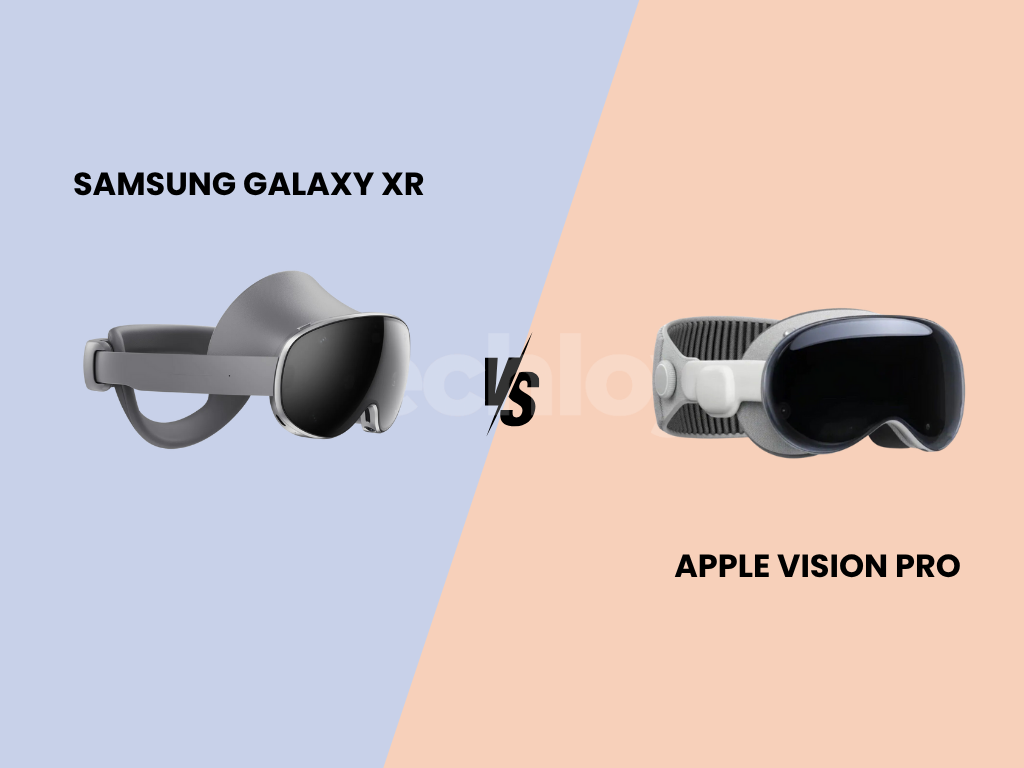
For a product that was supposed to represent the future of spatial computing, the Apple Vision Pro has had a not-so-great run. It hasn't really caught on amongst the masses, and one of the reasons many point to is its surprisingly thin app ecosystem in one very noticeable area: mainstream video platforms.
Sure, you could always open YouTube in a browser and get by, but it never quite felt right on a device built for immersive experiences.
After nearly two years, that is finally changing. Vision Pro now has a native YouTube app, and for the handful of people who own the headset, or splurged on the refreshed model, it means a much more fitting way to watch their favourite creators.
 Louis Eriakha
Until now, watching YouTube on Vision Pro meant loading up Safari or relying on third-party apps that often disappeared just as quickly as they arrived. It worked, but it felt clunky. The new native app aims to close that gap by bringing a purpose-built YouTube experience designed to lean into spatial computing.
And lean it does. The app introduces a more immersive approach to watching content. Users can scale videos to massive, wall-sized displays, place windows anywhere in their space, and multitask with other apps nearby. A dedicated Spatial tab highlights immersive content such as 3D, 180-degree, and 360-degree videos, giving creators a clear place to showcase experimental and cinematic projects. Gesture controls also make it easier to scrub through videos, resize windows, and navigate without relying on awkward virtual cursors.
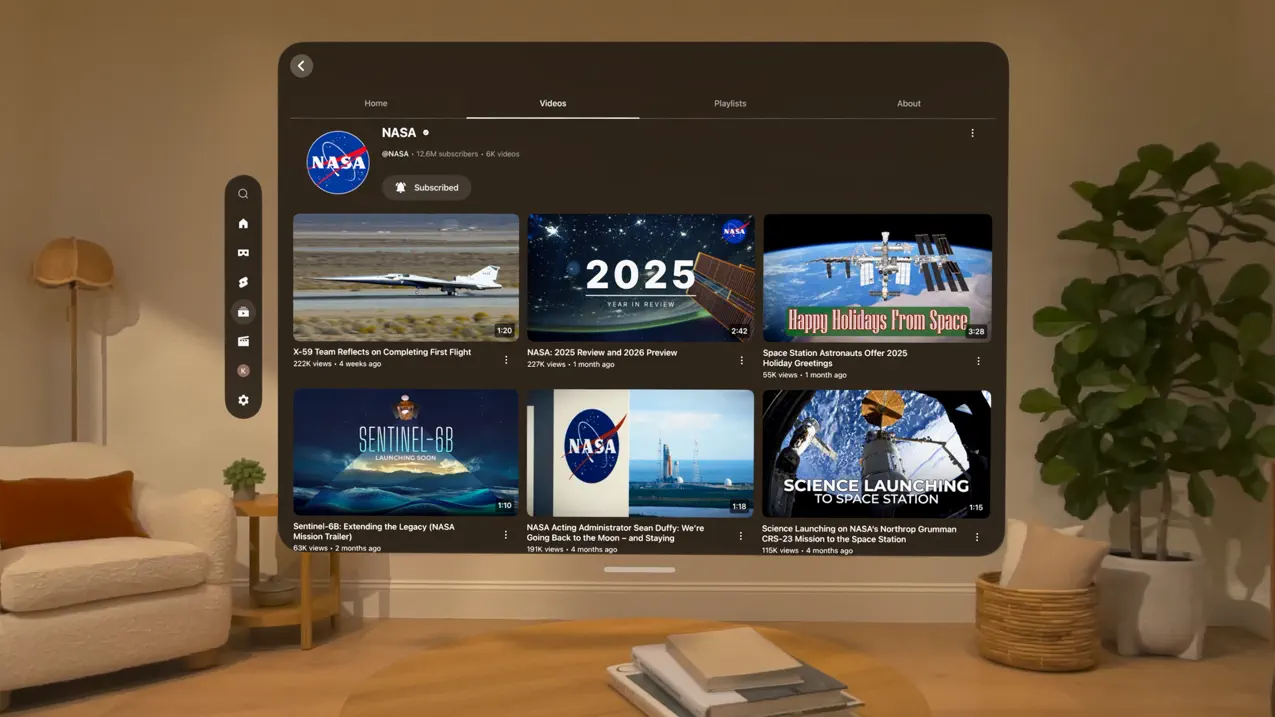
In many ways, this is YouTube finally meeting the Vision Pro where it always should have. The headset is built around the idea of presence and scale, and video is one of the most obvious ways to demonstrate that.
In a post announcing the update, Brendan Polley, a senior UX designer at Google, Polley explains that the team had to think beyond traditional screens. “YouTube can fill the place the user is in — be the space itself,” he says. "We built an entirely new design system that isolated core elements-comments, the play button, 'like' and 'dislike'-to fit any layout. We can support users who want to multitask and keep YouTube nice and compact, and we can support users who want large home-theatre experiences."
But in all this, the most interesting thing is the timing of this launch. Right now, the Vision Pro isn’t exactly riding a wave of momentum. High pricing and a limited catalogue of must-have apps have kept adoption relatively low, and even the refreshed models haven’t reignited mainstream excitement. Some reports suggest Apple has already cut back production due to weak demand.
Still, the arrival of a YouTube app joins a growing list of native streaming experiences already available, like Disney+ and HBO Max. More familiar, widely used apps could gradually make the platform feel less experimental and more practical.
 Oyinebiladou Omemu