



Engineering firms producing complex plastic components often struggle with inconsistent part quality, high defect rates from multi-step assembly, and material failures that appear only after products reach customers. These issues increase costs and damage client confidence. 2K injection molding (two-component or two-shot molding) addresses these challenges by integrating two different materials into a single part within one automated molding cycle. This technology significantly improves production reliability through precision tooling, robotic automation, closed-loop process control, and robust quality management.
Fundamentals of 2K Injection Molding and Its Reliability Benefits
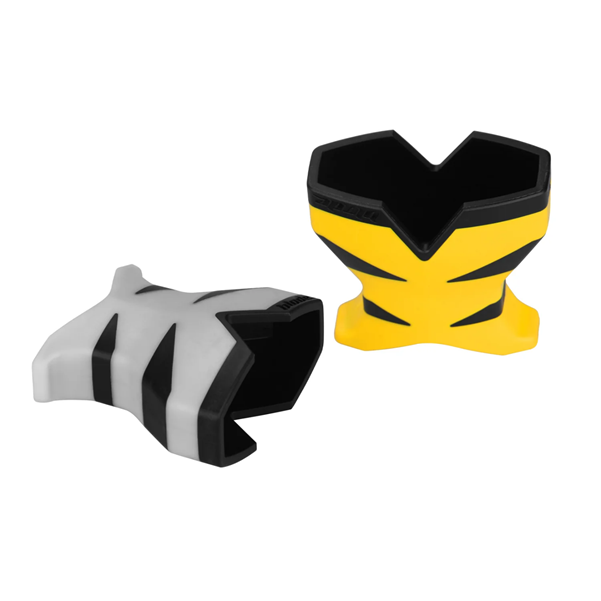
2K injection molding combines two materials—such as different polymers, colors, or hardness grades—into one finished part. The process typically uses sequential injection: the first material is molded, then the second is injected over or around it. Specialized machines with rotary platens, core-back mechanisms, or shuttle systems ensure precise alignment between shots, creating strong chemical bonds without adhesives or mechanical fasteners.
This integrated approach eliminates secondary assembly operations like gluing, welding, or snap-fitting. As a result, parts achieve consistent bond strength, dimensional accuracy, and surface quality. Functional benefits include permanent soft-touch grips on rigid housings, seamless sealing elements, and interfaces that resist delamination under thermal or mechanical stress.
By reducing the number of manufacturing steps, 2K molding lowers variability, decreases scrap rates, and delivers more predictable performance. This creates fewer failure modes compared to traditional multi-part assembly methods.
Advanced Tooling and Material Selection
Reliability starts with tooling designed for multi-material integration. Unlike single-shot molds, 2K tools must handle precise material positioning and tight tolerances over long production runs. Common systems include rotary platens (180-degree rotation for overmolding), core-back designs (retractable slides), and shuttle systems.
Material selection is equally critical. The two materials must be chemically compatible, with overlapping melt temperatures, similar shrinkage rates, and strong adhesion. For example, pairing polycarbonate with a TPE overmold requires a TPE grade specifically formulated for PC bonding. Mismatched thermal expansion can cause warping or delamination.
Implementation Tips for Tooling:
- Use Moldflow simulations to predict fill patterns, weld lines, and air traps for both shots.
- Build prototype tools in aluminum or soft steel to validate gate locations, venting, and ejection.
- Run 500–1,000 shot trials to identify wear patterns before producing hardened steel tools.
Implementation Tips for Materials:
- Perform peel and shear tests under ambient and accelerated aging conditions.
- Test thermal cycling and chemical resistance relevant to the end-use environment (e.g., automotive or medical applications).
- Maintain a validated material compatibility matrix with supplier support.
Robotic Integration for Consistency
Robotics removes human variability in 2K molding, where precision is measured in fractions of a millimeter. Six-axis robots provide positional repeatability below 0.02 mm for substrate transfer between shots. Automated systems handle insert loading (metal contacts, bushings) and vision-guided inspection for surface defects, incomplete fills, or dimensional issues immediately after ejection.
Implementation Steps:
- Map the current workflow and identify high-defect manual touchpoints.
- Select appropriate robots: side-entry for fast extraction, six-axis for complex transfers, or collaborative robots for inspection.
- Add process interlocks and force sensors to prevent defects.
- Validate automation by comparing process capability (Cpk) before and after—aim for at least 0.3 improvement.
- Schedule preventive maintenance for grippers and servos.
Process Control and Quality Management
2K molding involves twice as many critical parameters (temperatures, pressures, cooling rates) that interact at the material interface. Closed-loop control systems monitor cavity pressure, melt temperature, and injection velocity in real time, making automatic adjustments to maintain stability despite material lot variations or environmental changes.
Statistical process control tracks trends and flags drift before defects occur. Comprehensive quality frameworks ensure traceability for regulated industries.
Key Implementation Steps:
- Install cavity pressure sensors near the end of fill and infrared melt temperature sensors at nozzles.
- Use a centralized data acquisition system with alarm thresholds (2σ warning, 3σ reject) and automatic part diversion.
- Build quality systems on ISO 9001, adding IATF 16949 (automotive) or ISO 13485 (medical) as needed.
- Define detailed control plans, conduct measurement system analysis (GR&R <10%), and perform regular layered process audits.
- Require Cpk ≥ 1.67 for critical dimensions after any process change.
Practical Roadmap for Engineering Firms
Successful adoption requires a phased approach:
- Assessment & Foundation: Analyze current pain points (reject rates, assembly variability, field failures). Conduct Moldflow simulations, prototype tooling, and material trials.
- Automation: Introduce robotics at the highest-impact areas and validate performance improvements.
- Process Monitoring: Deploy real-time sensors and statistical control across all 2K cells with centralized dashboards.
- Quality Systems: Implement control plans, capability studies, and audit schedules for sustained results.
Companies following this incremental roadmap minimize disruption while achieving compounding gains in reliability.
Long-Term Benefits
2K injection molding enhances production reliability by addressing root causes of inconsistency. Precision multi-material tooling, validated material combinations, robotic handling, closed-loop control, and structured quality management work together to deliver lower defect rates, reduced field failures, and consistent part performance.
As smart manufacturing advances—with deeper sensor integration and AI-driven optimization—2K molding capabilities will continue to improve. Engineering firms that invest in these integrated systems can meet today’s demanding requirements and position themselves as leaders in precision manufacturing.


