



Using two iPhones usually means moving your SIM between them, paying for a second line, or relying on Apple’s existing Continuity features to make calls from another device.
iOS 27 could make that much easier. Apple is introducing a feature called iPhone Handoff that will let you use the same phone number across two iPhones, with the number switching between the devices when needed.
The feature was briefly listed by Apple at WWDC 2026 in June, but Apple didn't explain how it would work until a recent demonstration revealed more details. iOS 27 is expected to arrive this autumn as a free software update, although using iPhone Handoff will depend on having two compatible iPhones and support from your mobile carrier.
 Ogbonda Chivumnovu
How will iPhone Handoff work?
Apple's approach is based on eSIM technology rather than simply cloning a SIM card. One iPhone is designated as the main device and keeps the user's existing eSIM, while the second receives a companion eSIM connected to the same number. Users can then switch the number between the two phones.
Users are expected to set it up through the Settings app by going to Cellular. The main iPhone will remain responsible for managing cellular settings, while the companion device acts as the secondary phone. Location sharing will also follow the iPhone that is currently using the number.
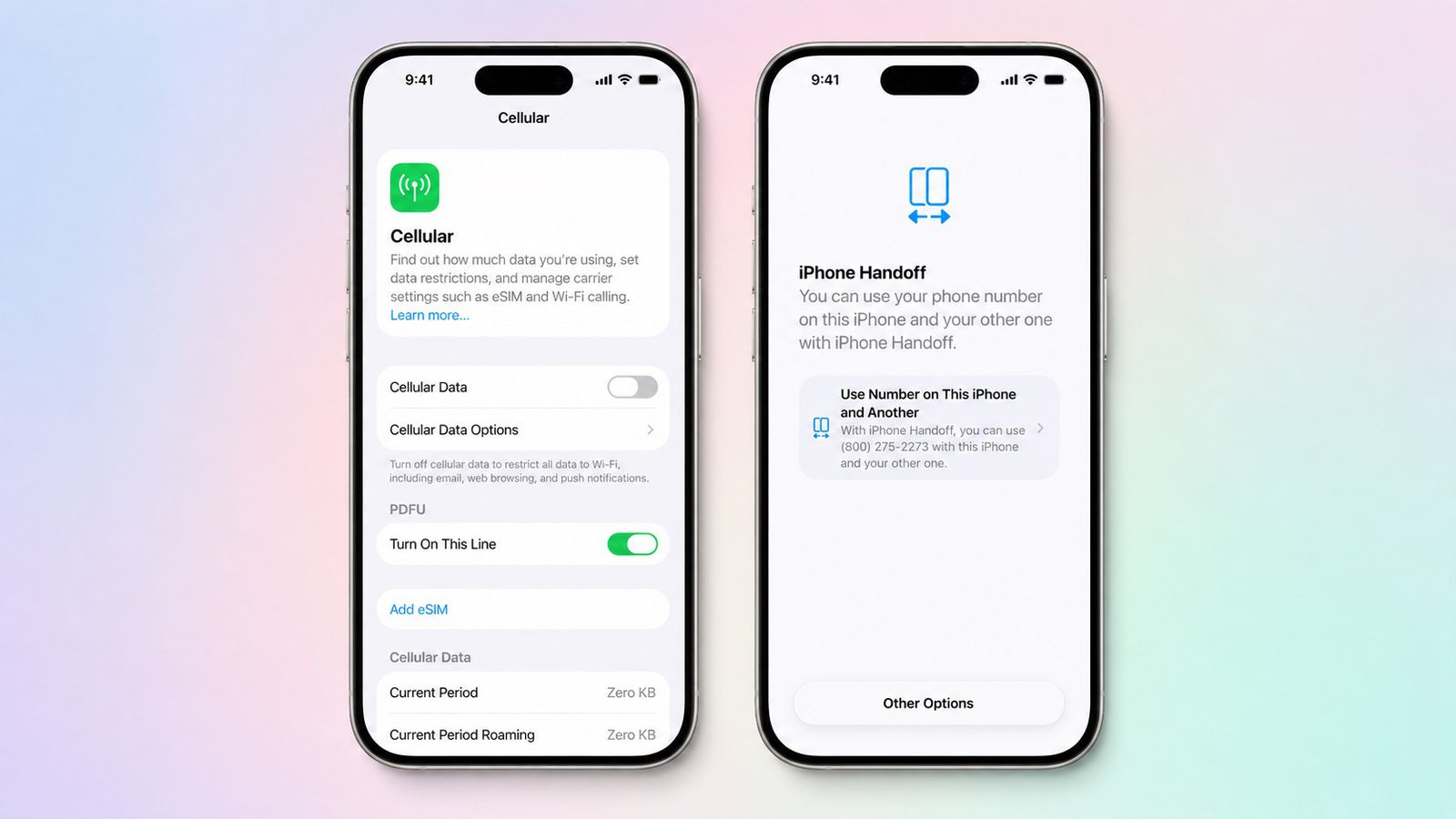
A demonstration shared by a MacRumors forum member showed the feature running on two simulated iPhones inside Apple's Xcode 27 development environment. This means the demonstration wasn't performed on two commercially available iPhones, so some details could still change before the final release.
Why does Apple need a carrier for this?
Both phones will need to run iOS 27, but Apple's software alone cannot activate the companion eSIM. The mobile network must also support the service. MacRumors reports that T-Mobile in the US and Deutsche Telekom in Germany could be among the first operators to support it.
That requirement could determine how useful the feature is outside those early markets. Apple has not yet published a complete list of supported carriers, so iPhone owners in countries such as Nigeria will need confirmation from their network provider before assuming the feature will work.
The limitation also makes sense from a technical perspective. A phone number is ultimately managed by a mobile network, so Apple cannot independently decide that any two iPhones should share a cellular line. The companion eSIM arrangement requires cooperation between Apple's software and the carrier's network.
Who could actually benefit from IPhone Handoff?
The feature is unlikely to matter to someone who owns only one iPhone. Its value is much clearer for people who regularly move between two devices.
Subscribe for free to continue reading this article
Subscribe SubscribeAlready have an account? Log in


